
General
How can I use patient stories and expert opinions without being misled?
The short answer
Use patient stories to understand why someone sought care and what shaped their choices, not to predict your own diagnosis or outcome. Use expert opinions to build specific questions about your situation, evaluations, risks, and next steps.
Patient stories can be incredibly helpful for naming symptoms, spotting patterns, and feeling less alone, but they’re not a forecast of what will happen in your body. The most reliable way to use them is to focus on the reasons behind someone’s experience (what symptoms led them to seek care, what was found, what choices they made), rather than assuming the same diagnosis or outcome applies to you.
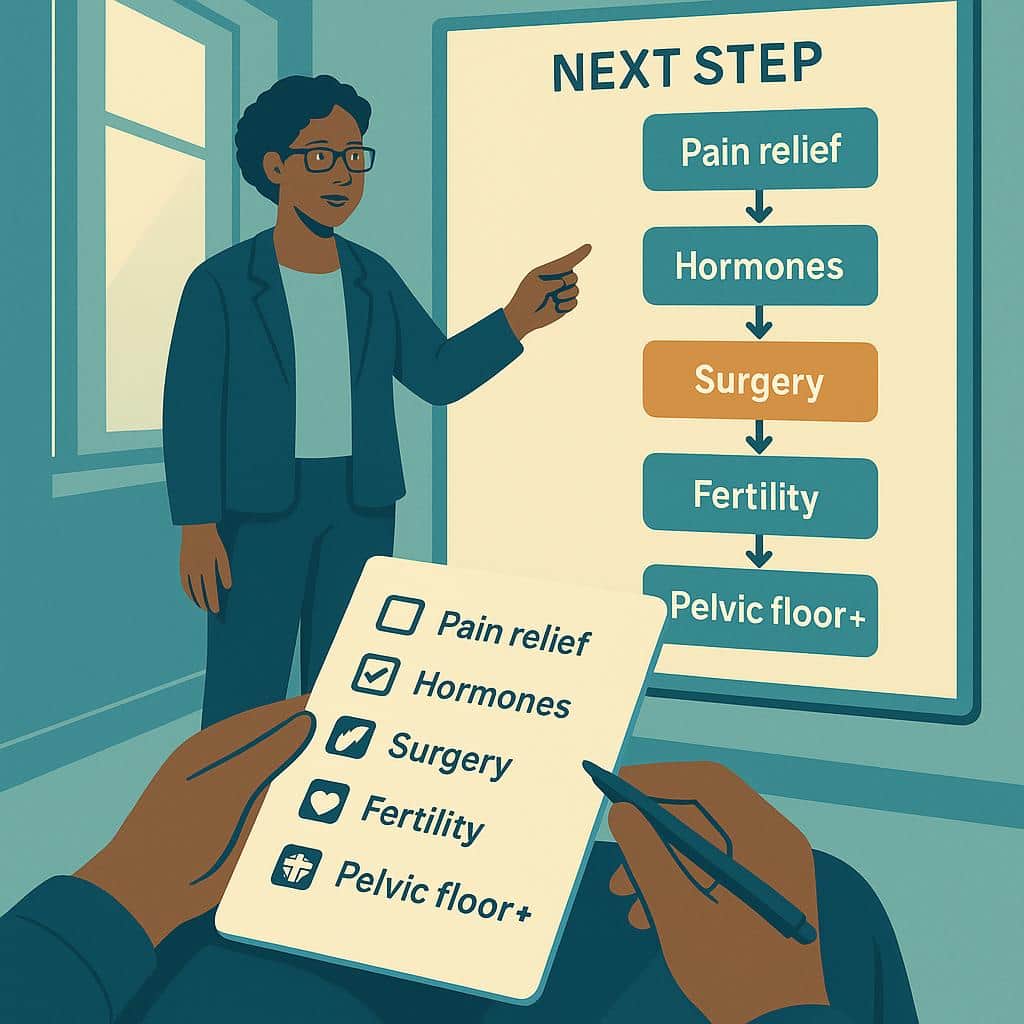
Expert opinions are useful, but they’re still interpretations based on the information available and the clinician’s experience. We encourage you to use expert commentary to form precise questions about your own situation: what diagnoses are being considered, what evaluations actually clarify them, what risks and tradeoffs matter for you, and what a reasonable plan looks like if symptoms persist. If you’re sorting through conflicting stories or advice, our team can help you turn what you’re reading into an individualized next-step plan and decide what’s most relevant for your case.
Where to go from here
Understand it, compare it with what you're feeling, then talk it through with us.
Step 2 · Speak with Us
Get Clear, Personalized Answers
Patient stories offer support, but your experience is unique. Our specialists help clarify symptoms and guide your care with expert insight tailored to you.
Questions people ask next
All general questionsHow do I know if online endometriosis advice is evidence-based?
Evidence-based endometriosis advice usually points to peer-reviewed research, explains what is known and uncertain, and describes benefits and risks. Be wary of promises to cure everyone, absolute language, or testimonials presented as proof.
Why do endometriosis studies sometimes disagree?
Endometriosis studies can disagree because they include different forms of the condition, patient groups and prior treatments. Research teams may also use different diagnostic standards, measure different outcomes or follow patients for different lengths of time.
Why do doctors recommend different treatments for the same symptoms?
Doctors recommend different treatments because similar pelvic pain symptoms can have different underlying causes. Their training, available tools, and your goals, such as pain relief or fertility planning, can also shape their recommendations.
Further reading
Trusting Instagram With Your Endometriosis Care
Explore how to navigate Instagram for endometriosis and adenomyosis support while ensuring you receive accurate and trustworthy health information.
Clearing Up Confusion in Endometriosis Care (Part 2)
Part 2 demystifies endometriosis treatment confusion, reviews major guidelines, and distills evidence-based recommendations you can use.
Clearing Up Confusion in Endometriosis Care (Part 1)
Part 1 clarifies myths in endometriosis care: where surgery helps, what medical management can and can’t do, and how complementary therapies fit into a plan.