


Ovarian Cystectomy
An ovarian cystectomy removes an ovarian cyst—often an endometrioma (“chocolate cyst”)—while preserving as much healthy ovary as possible. It can relieve pain, protect ovarian function, and support fertility goals when a cyst is symptomatic or concerning.
Overview
An ovarian cystectomy is surgery to remove a cyst from the ovary while keeping the ovary itself. It’s commonly recommended for persistent ovarian cysts and for endometriomas, which are ovarian cysts associated with endometriosis. The goal is to treat the problem cyst and preserve hormonal function and fertility whenever possible.
For many patients, ovarian cysts are discovered during an evaluation for symptoms like pelvic pain, painful periods, bloating, or fertility concerns (see infertility). Some cysts come and go on their own, while others grow, recur, or cause inflammation/scarring that can worsen pain and affect the pelvic organs.
At Lotus Endometriosis Institute, cystectomy planning is typically part of a bigger picture—understanding whether a cyst is isolated or part of complex disease (like endometriosis and adhesions). Learn more about our approach through evaluation and diagnosis and our services.
When Is It Recommended?
Your clinician may recommend an ovarian cystectomy when a cyst is persistent, growing, painful, or affecting fertility, or when imaging features raise concern that it is not a simple, benign cyst. If you have an endometrioma, cystectomy may be considered to help reduce pain and inflammation, improve access to follicles for fertility treatment, and address the underlying disease when combined with expert excision.
Cystectomy is also considered when cysts contribute to repeated ER visits, ongoing daily symptoms, or cycle-related flares such as worsening ovulation pain, nausea, and pressure/bloating. If pain is impacting intimacy or relationships, it may be part of a broader endometriosis pattern (see pain during intercourse).
Just as important: cystectomy is not always the best next step. Some functional cysts can be safely observed, and some symptoms come more from endometriosis elsewhere in the pelvis than from the cyst itself. A specialist evaluation can help match the plan to your goals (pain relief, fertility, ovarian preservation). If you’re unsure what you’ve been told, you can schedule a consultation.
What to Expect
Most patients consider ovarian cystectomy for one (or more) of these reasons: pain relief, fertility preservation, or clarity about what the cyst is. Many people experience meaningful improvement in pressure-type pain and cyst-related flares after surgery—especially when cyst removal is paired with treatment of associated endometriosis and adhesions.
If the cyst is an endometrioma, it’s important to understand the trade-off: removing the cyst wall can reduce recurrence and pain, but surgery can also impact ovarian reserve depending on cyst size, prior surgeries, and how much normal ovarian tissue is affected. A patient-centered plan discusses fertility goals up front, including whether you should consider egg/embryo freezing before surgery or coordinate timing with a reproductive endocrinologist.
You should also expect a more comprehensive conversation than “remove the cyst.” Patients with endometriomas frequently have endometriosis in other locations, which may drive symptoms like bladder pain, constipation, diarrhea, or painful bowel movements. Treating the full pattern—not just the cyst—often offers the best chance at lasting improvement.
About the Surgery
Ovarian cystectomy is typically performed using minimally invasive surgery. The surgeon separates the cyst from the healthy ovary, removes the cyst, and aims to preserve as much normal ovarian tissue as possible. The removed tissue is usually sent to pathology to confirm the diagnosis.
When the cyst is suspected or known to be an endometrioma, cystectomy is often planned alongside evaluation for other endometriosis sites. In many cases, the most meaningful symptom relief comes from addressing both the ovarian cyst and the broader causes of inflammation and scar tissue—such as adhesions or deep endometriosis—using a comprehensive approach like surgery and advanced excision.
Your plan should be individualized based on your age, symptoms, fertility goals, cyst features, and any prior pelvic surgeries. If adenomyosis symptoms (heavy bleeding, cramping) are also part of your story, your team may discuss parallel treatment options for adenomyosis.
Recovery Expectations
Recovery varies depending on cyst size, whether endometriosis is treated at the same time, and your baseline pain sensitivity. Many patients go home the same day. It’s common to have fatigue, bloating, and abdominal soreness for several days, with gradual improvement over 1–2 weeks. Some people feel ready for desk work within 1–2 weeks, while more physically demanding jobs may take longer.
If your surgery included treatment beyond the ovary (for example, endometriosis excision or adhesiolysis), you may notice a more layered recovery—less “sharp surgical pain” over time, but also a period where pelvic tissues feel tender as inflammation settles. Pelvic floor muscles can remain guarded after years of pain; Pelvic Floor Therapy can be a valuable part of recovery for persistent pain, painful sex, or bladder/bowel symptoms.
Your follow-up plan may include symptom tracking, medication adjustments, and support for long-term maintenance, including hormonal therapy or an integrative approach through integrative medicine and lifestyle care. If pain continues, it doesn’t mean you “failed”—it means you deserve a deeper, endometriosis-informed plan.
Why Expertise Matters
Ovarian cystectomy is not “one-size-fits-all,” especially when endometriosis is involved. Endometriomas can be densely attached to the ovary and surrounded by inflammation and adhesions. Preserving ovarian function while reducing recurrence risk requires judgment, precision, and a plan that accounts for both today’s symptoms and your future fertility and hormonal health.
Specialist expertise matters because ovarian surgery can affect ovarian reserve. A surgeon who frequently treats complex endometriosis is more likely to recognize when symptoms are coming from disease beyond the cyst and to treat the full picture—potentially reducing the chance of persistent pain and repeat surgeries. That broader skill set is central to endometriosis care, where the “visible cyst” is often only part of the problem.
At Lotus Endometriosis Institute, Dr. Steven Vasilev is a leader in complex minimally invasive gynecologic surgery and endometriosis care. You can read more about Dr. Steven Vasilev and our comprehensive approach to surgery and advanced excision. If you’re deciding between observation, drainage, ablation, or true cystectomy with excision, we encourage you to schedule a consultation for a personalized plan.
Patients Often Ask
Why does ovarian cyst pain keep coming back?
Ovarian cyst pain can feel “recurrent” for a few different reasons. Some cysts are functional (they form with ovulation and then resolve), so the pain returns in a similar spot month after month even though it’s not the exact same cyst. In other cases, the cyst itself can come back or persist, especially if it’s an endometrioma (an ovarian cyst caused by endometriosis), which can behave differently than a simple cyst and may be associated with deeper pelvic disease.
Another common reason is that the cyst isn’t the whole story: endometriosis on the pelvic sidewall, uterosacral ligaments, bowel, bladder, or around the ovary can irritate the same nerves and tissues and make it feel like “my cyst is back” when the driver is actually inflammatory disease nearby. Adhesions (scar-like bands) can also tether the ovary and cause recurring pulling or sharp pain, even when imaging doesn’t show a large cyst. If your pain cycles, escalates, returns quickly after a “normal” ultrasound, or keeps recurring despite prior treatment, our team can help you map the pattern, interpret imaging with an endometriosis lens, and decide whether targeted evaluation and, when appropriate, excision surgery is the next best step.
Can endometriosis cause infertility and pelvic pain in your 20s?
Yes. Endometriosis can absolutely show up in your late 20s and it can be a driver of both chronic pelvic pain and fertility challenges. Pain can include severe or worsening period cramps, pain with sex, bowel or bladder pain, and “flare” patterns that track with your cycle, although symptom severity doesn’t always match how much disease is present.
Endometriosis can affect fertility in several ways, including adhesions that distort tubo‑ovarian anatomy, inflammation and immune signaling that interferes with fertilization or embryo development, and ovarian factors, especially when endometriomas are involved. For some patients, the uterine environment also matters, particularly when adenomyosis is present alongside endometriosis. In our practice, we focus on listening to your full symptom and fertility story and then building an evaluation that looks for endometriosis while also checking for common look‑alikes or coexisting issues, so we can tailor a plan to your goals, whether that’s pain relief, preserving fertility, or both.
Can a ruptured ovarian cyst cause severe pelvic pain?
Yes. A ruptured ovarian cyst can cause sudden, severe pelvic pain, often sharp and one-sided, and it may be intense enough to feel alarming, especially if there’s internal bleeding or irritation of the lining of the pelvis. Some people also notice nausea, shoulder-tip pain, dizziness, or pain that worsens with movement, while others have a milder ache that fades over hours to days.
Because pelvic pain has many look-alikes and coexisting causes (including endometriosis, adenomyosis, ovarian/paraovarian cysts, torsion, bladder pain, or pelvic floor spasm), what matters is the pattern of your symptoms, your exam, and correctly interpreted imaging like ultrasound or MRI when appropriate. Our team focuses on sorting out whether a cyst rupture is the whole story (or one piece of a bigger picture) so you’re not stuck treating the wrong problem. If you’re having severe pain, recurrent “cyst” episodes, or pain that tracks with your cycle, reach out to schedule an evaluation so we can pinpoint the driver and map out next steps.
Are ruptured ovarian cysts linked to endometriosis?
Yes, sometimes. People with endometriosis can develop ovarian endometriomas (“chocolate cysts”), and those cysts can leak or rupture and cause sudden, intense pelvic pain and inflammation. Endometriosis can also distort pelvic anatomy and irritate the ovary, which may make cyst-related pain feel more frequent, more severe, or harder to distinguish from an endometriosis flare.
That said, a ruptured ovarian cyst isn’t automatically endometriosis. Functional cysts can happen in anyone, and imaging doesn’t always clearly tell what type of cyst ruptured. If you’ve had recurrent “ruptured cyst” episodes, complex cysts, or ongoing pain between events, it’s worth exploring whether an endometrioma or other endometriosis subtype is part of the bigger picture.
Our team can help you sort out what’s most likely based on your symptom pattern, ultrasound/MRI findings, and fertility goals, and when appropriate, discuss options like strategic minimally invasive excision and other ovary-sparing approaches for endometriomas. If you’re looking for clarity after a rupture (or repeat scares), reach out to schedule a consultation so we can map out a plan tailored to you.
How do I know if an ovarian cyst has burst?
A ruptured ovarian cyst often causes a sudden, sharp pain on one side of the lower abdomen or pelvis, sometimes after exercise, sex, or around ovulation. The pain may then shift into a deeper, persistent ache over the next hours, and you can also notice bloating, nausea, or pain that worsens with movement. Some people have light vaginal spotting, but others have no bleeding at all, so the pattern and intensity of the pain matter more than spotting.
Because pelvic pain can have more than one driver (including endometriosis, an endometrioma, torsion, fibroids, or even bladder or bowel conditions), the only way to know for sure is an evaluation that matches your symptoms with imaging and a focused exam. If you’re having severe or escalating pain, dizziness/fainting, shoulder-tip pain, fever, or heavy bleeding, that can signal significant internal bleeding or another urgent problem, and we want you assessed right away. If you’re dealing with recurrent “cyst rupture” episodes or ongoing one-sided pelvic pain, reach out to schedule a consultation with our team so we can look at the whole picture and build a plan that fits your goals.
Can I fly with a large endometrioma?
Yes, many people can fly with an endometrioma, even a large one, but safe depends on your individual risk profile and symptoms. The main in-flight concern with a larger ovarian cyst is an acute complication such as torsion (the ovary twisting) or, less commonly, rupture. These events can happen on any day but feel especially stressful when you’re far from care. Cabin pressure changes aren’t known to make endometriomas expand, but dehydration, constipation, prolonged sitting, and limited access to pain control can make a pelvic pain flare much harder to manage mid-flight.
If you’re having escalating one-sided pelvic pain, significant nausea/vomiting, fevers, dizziness/faintness, or pain that suddenly becomes severe, we generally want you to be evaluated before you travel. Those can be warning signs that change the plan. If you do fly, think through logistics that reduce strain: choose an aisle seat if possible, plan for gentle movement and hydration, and have a clear pain plan for the travel day so you’re not improvising at 30,000 feet. If the endometrioma is growing, very symptomatic, or affecting fertility planning, our team can help you map out next steps, whether that’s careful monitoring, symptom control while you travel, or discussing targeted treatment options designed to treat the disease rather than just chasing flares.
Can an endometrioma rupture?
Yes, an ovarian endometrioma (often called a “chocolate cyst”) can rupture, although this isn’t the most common course. When it ruptures, the thick, inflammatory cyst contents can spill into the pelvic cavity, triggering sudden, severe pain and significant irritation. People may describe a sharp, one-sided pelvic pain that comes on abruptly, sometimes with bloating, nausea, or a feeling that something is very wrong. Because other urgent problems, such as ovarian torsion, a ruptured non-endo cyst, or appendicitis, can feel similar, the situation needs prompt evaluation.
If you suspect a rupture or develop a sudden escalation in pain (especially with fever, faintness, vomiting, shoulder pain, or worsening abdominal swelling), don’t try to wait it out. Our team can help you determine what’s happening, use the right imaging and exam to clarify the cause, and decide whether monitoring, targeted medical support, or surgery is the safest next step. If you’re living with an endometrioma and worry about rupture risk, recurrence, or fertility impact, we can also discuss longer-term options such as excision-based surgical management or less invasive approaches in carefully selected cases.
Can endometriosis become cancer?
Yes, endometriosis can rarely undergo malignant transformation, but for the vast majority of people it does not “turn into cancer.” Endometriosis itself is not cancer, even though it can behave in cancer-like ways (invading tissues, scarring, and spreading beyond the pelvis). The best-supported association in research is with certain ovarian cancer subtypes, especially clear cell and endometrioid ovarian cancers, and the risk appears highest when the ovaries are involved (such as with endometriomas).
What matters most is context: your age, family history/genetics, imaging findings, and whether a cyst or mass is changing over time. If you’re worried about an endometrioma, deep disease, or persistent symptoms that don’t fit your usual pattern, our team can evaluate your full picture and help you understand what’s reassuring versus what deserves closer workup. If surgery is appropriate, strategic minimally invasive excision can both treat disease and allow tissue diagnosis when needed, so you’re not left guessing. Reach out to schedule a consultation if you’d like a personalized risk discussion and a clear plan.
Related Symptoms
This procedure may help address the following symptoms:
Related Procedures
You may also want to learn about these related procedures:
Related Articles
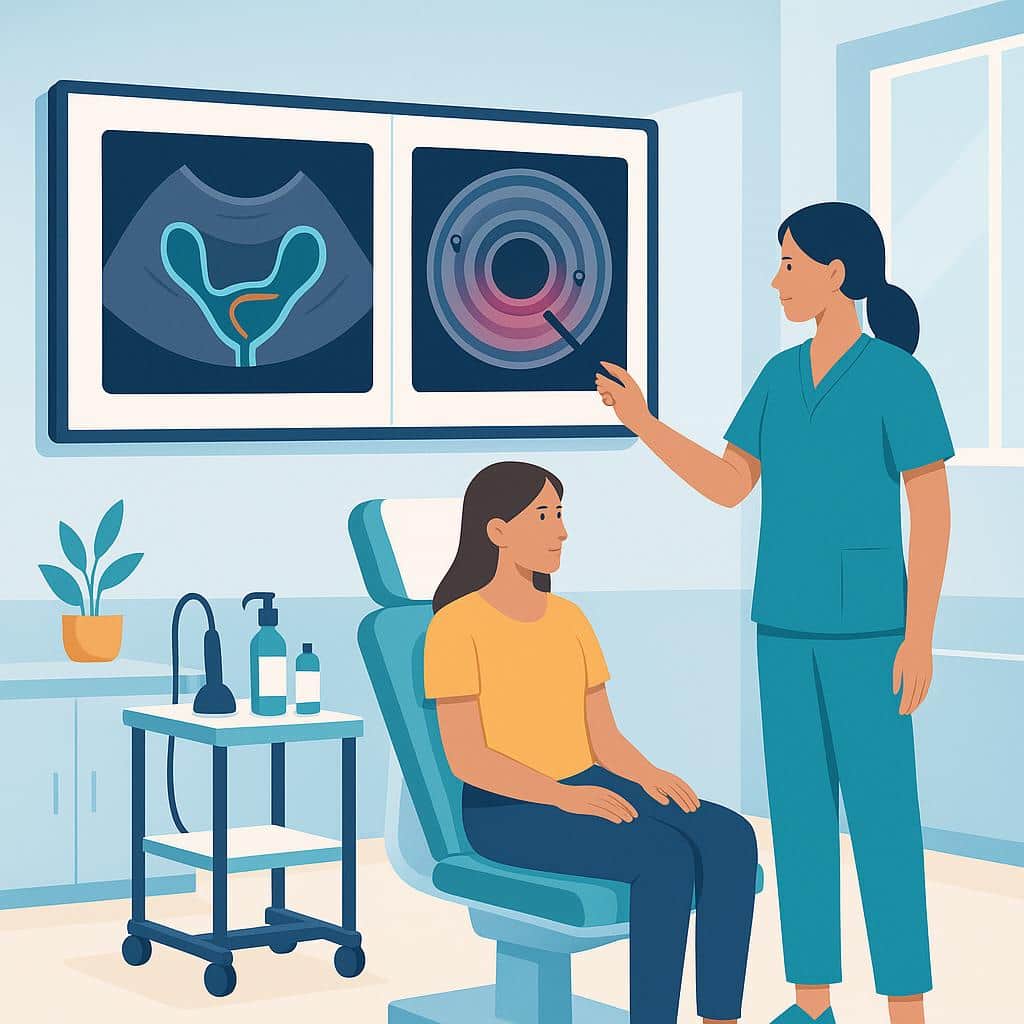
Do You Need Two Ultrasounds Before Bowel Endometriosis Surgery?
How TVS (transvaginal) and ERUS (endorectal) map rectal endometriosis, guide bowel surgery planning, flag stenosis and risks, and who benefits.
Does a Longer Endometriosis Surgery Mean More Complications? What a 2025 Study Found.
2025 study in stage III–IV minimally invasive endometriosis surgery: longer cases didn’t raise short-term complications but increased overnight-stay risk.
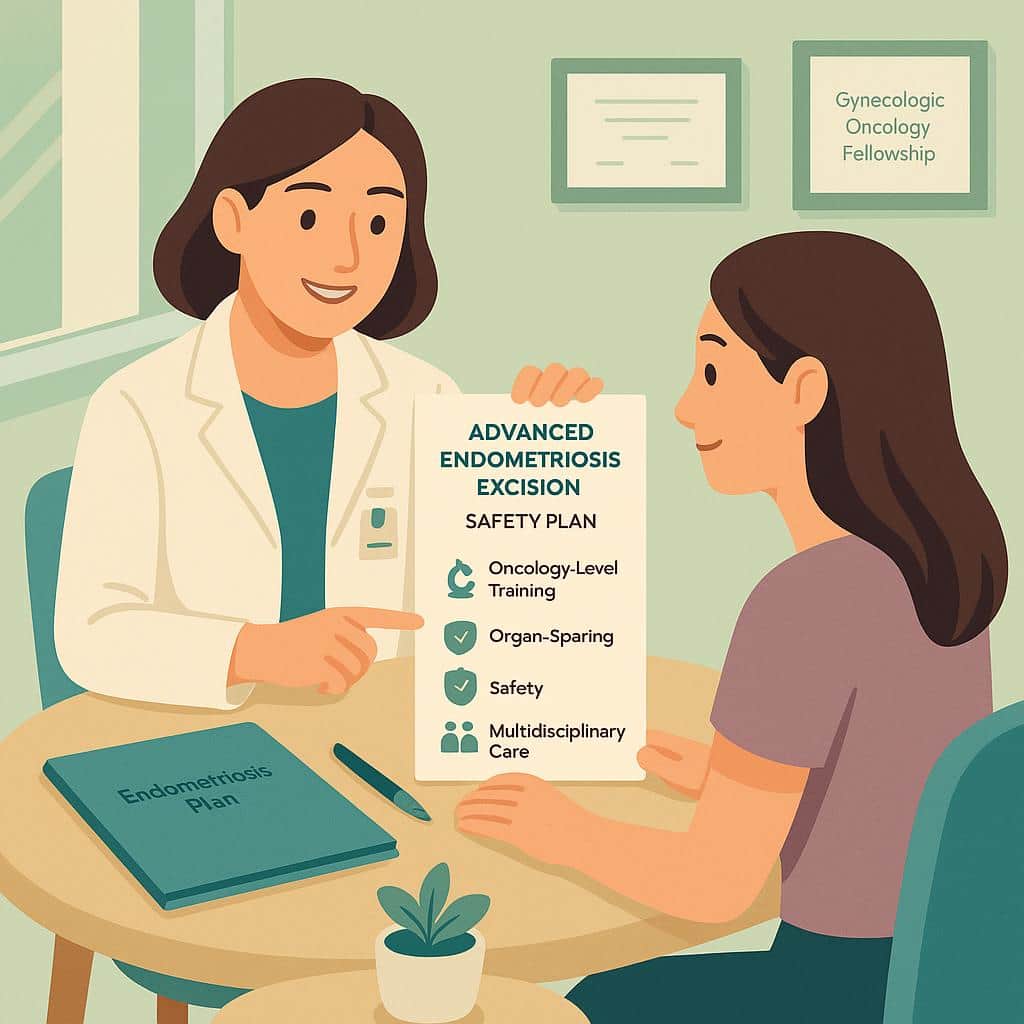
Gynecologic Oncologists - Safest Choice for Complex Endometriosis Surgery?
For deep or advanced endometriosis, oncology-trained surgeons often provide safer, more complete excision. Learn what this means for you at the Lotus Endometriosis Institute.
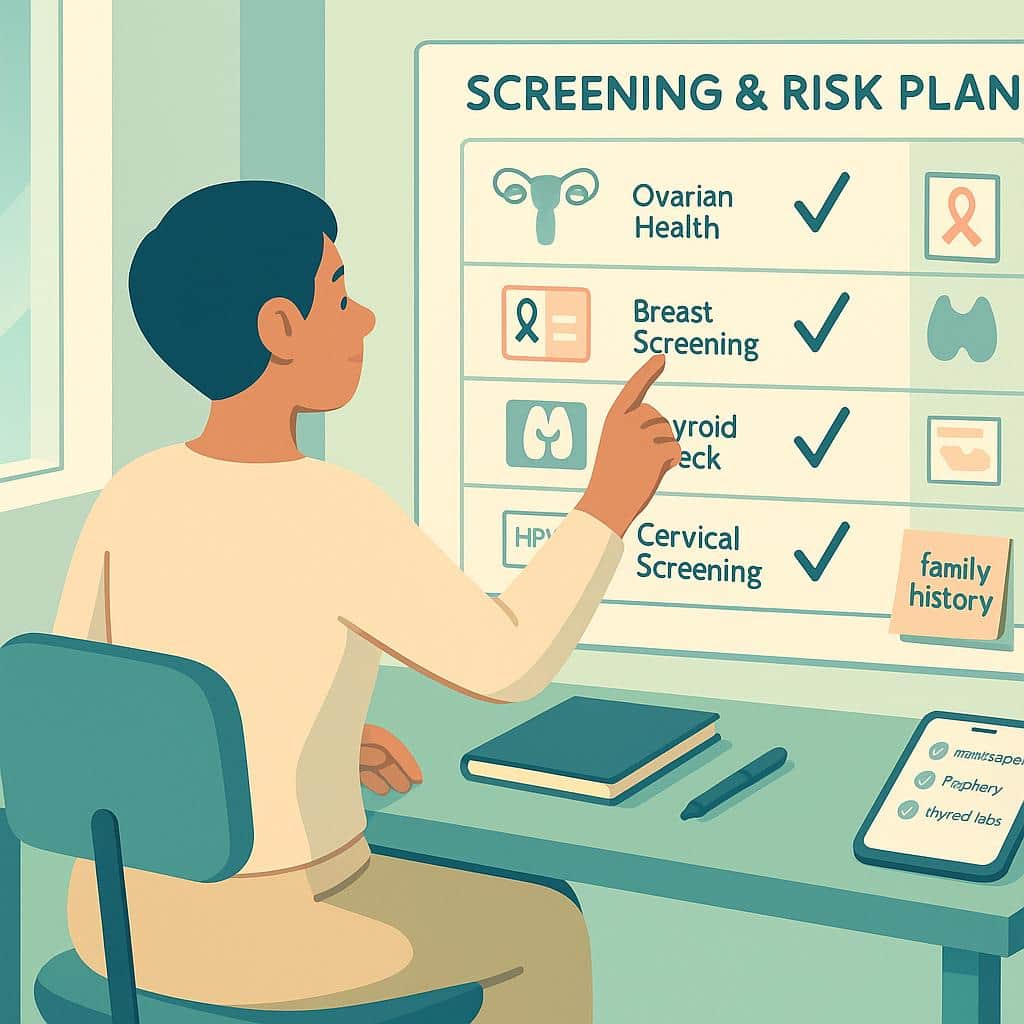
Evaluating Cancer Risk in Endometriosis
Understand how endometriosis affects ovarian, breast, thyroid, and cervical cancer risk, plus symptoms to watch, screening guidance, and ways to lower risk.
Considering Ovarian Cystectomy?
If you're exploring this procedure as a treatment option, our specialists can help you understand if it's right for your situation and answer any questions you may have.
Schedule a Consultation