

Bladder Pain
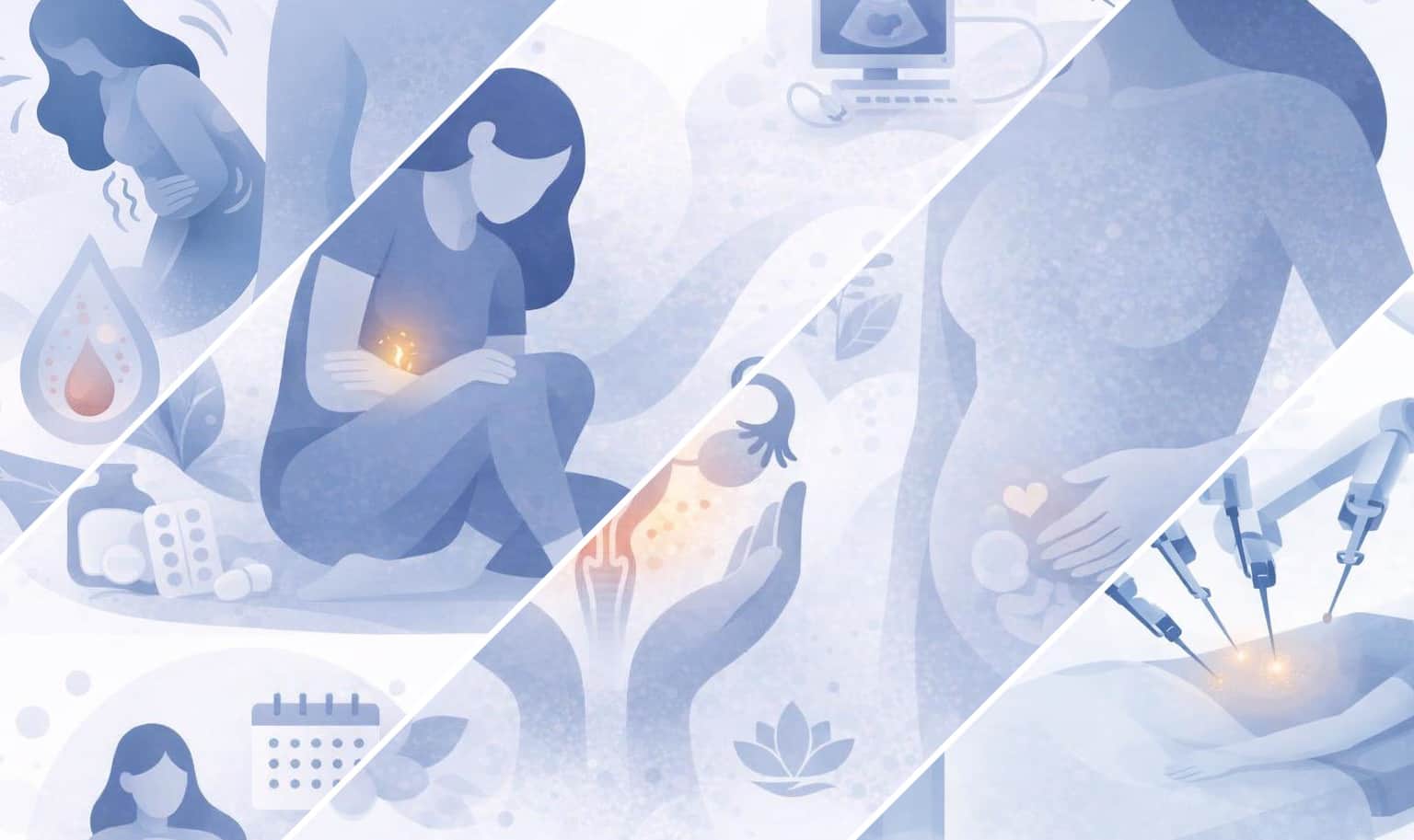
Bladder pain or pressure can be a real (and often misunderstood) symptom of endometriosis and adenomyosis—especially when inflammation, pelvic muscle tension, or deep disease involves the bladder or tissues around it. If your urinary discomfort is cyclical, persistent, or paired with pelvic pain, it deserves a specialist-level evaluation.
Overview
Bladder pain in endometriosis isn't always what it seems. It can show up as aching, pressure, or a persistent sense of fullness low in the pelvis—sometimes tied to urination, sometimes a constant backdrop that worsens as the bladder fills. The cause is often endometrial-like tissue on or near the bladder itself, though nearby pelvic structures sharing the same nerve pathways can produce nearly identical sensations.
Bladder pain can also occur with adenomyosis, even though adenomyosis is inside the uterine muscle wall. Adenomyosis can enlarge and inflame the uterus, increasing pelvic pressure and sensitizing pelvic nerves. That pelvic inflammation and “crowding” effect can aggravate urinary symptoms—especially in people who also have endometriosis, pelvic floor dysfunction, or bladder pain syndrome.
One reason bladder pain is so confusing is that it can mimic a urinary tract infection (UTI). Many patients are told they have recurrent UTIs despite repeatedly negative urine cultures. Others are treated for overactive bladder or “stress-related” symptoms, when the real driver is pelvic inflammation, deep endometriosis, or tight pelvic floor muscles. Because symptoms overlap with conditions like interstitial cystitis/bladder pain syndrome (IC/BPS), evaluation often requires looking beyond standard urine tests. (You can explore overlaps in our Related Conditions resources.)
Day to day, bladder pain can affect hydration habits, sleep (waking to urinate), exercise, work focus, and intimacy. It can also create a cycle where fear of pain leads to holding urine or “just in case” peeing—both of which may worsen urgency and pelvic floor tension over time. If this symptom is interfering with your quality of life, it’s a valid reason to seek care and a deeper diagnostic plan through Evaluation & Diagnosis.
What It Feels Like
Patients describe bladder pain in many ways: pressure like a heavy stone, burning without infection, sharp stabs when the bladder fills, or a deep pelvic ache that radiates into the vagina, urethra, or lower abdomen. Some feel it most right before urinating (as the bladder stretches); others feel it during or after urination, especially during flares.
A common endometriosis pattern is cyclical bladder pain—worse in the days before or during a period—or flares with ovulation. With deeper disease, pain may also be triggered by certain movements, exercise, sex, constipation, or prolonged sitting. Some people experience “false UTI” symptoms: urgency and frequency with negative cultures, sometimes with pelvic cramping.
Not everyone feels classic burning. For some, the dominant sensation is pelvic pressure, bloating in the lower abdomen, or a constant awareness of the bladder. When pelvic floor muscles tighten in response to pain, symptoms may shift toward urgency, incomplete emptying, or pain at the urethral opening—even if the bladder itself isn’t infected.
Over time, untreated pain can lead to central sensitization, where the nervous system becomes more reactive and symptoms spread or become less predictable. That doesn’t mean the pain is “in your head”—it means the nerves and immune signals in the pelvis may be stuck in a persistent alarm state that needs targeted treatment.
How Common Is It?
Urinary symptoms—such as bladder pain, urgency, or frequency—are common in people with endometriosis, especially when disease involves the bladder, the anterior pelvis (front side), or when pelvic floor dysfunction and IC/BPS overlap. Studies consistently show higher rates of bladder pain syndrome/IC-like symptoms in endometriosis populations than in the general population.
For adenomyosis, research suggests urinary complaints are also frequent, often related to uterine enlargement, pelvic inflammation, and coexisting endometriosis. Many patients have both conditions, which can make bladder discomfort feel more intense or more persistent across the cycle.
Importantly, bladder pain does not reliably correlate with “stage” of endometriosis. Some people with minimal visible disease have severe urinary pain, while others with extensive disease have few bladder symptoms. Symptom severity tends to correlate more with lesion location (bladder/anterior compartment), depth (deep infiltrating disease), nerve involvement, and pelvic floor reactivity than with stage alone.
Causes & Contributing Factors
In endometriosis, bladder pain can come from endometrial-like tissue on the bladder surface (serosa), within the bladder wall (intrinsic bladder endometriosis), or on tissues closely connected to the bladder such as the vesicouterine space. These lesions can bleed and inflame surrounding tissue, leading to swelling, irritation, and pain—often in a cyclical pattern.
Even without direct bladder lesions, endometriosis can irritate the bladder through peritoneal inflammation, adhesions that restrict organ movement, and “cross-talk” between pelvic organs that share nerve pathways. Inflammation can sensitize nerves in the pelvis, making normal bladder filling feel painful or urgent.
With adenomyosis, the uterus can become inflamed and enlarged, increasing pressure on neighboring structures and contributing to pelvic congestion. This may amplify bladder pressure sensations and can worsen pelvic floor guarding (a protective muscle tightening response), which itself can cause urinary frequency, urgency, and pain.
Several factors can worsen symptoms: constipation, dehydration (more concentrated urine can sting), high-stress periods (nervous system activation), and certain dietary bladder irritants (varies person to person). Improvement often comes from reducing pelvic inflammation, relaxing the pelvic floor, and addressing any true bladder pathology or endometriosis lesions with an expert plan.
Treatment Options
Treatment depends on the driver of the bladder pain—bladder endometriosis, pelvic inflammation from endometriosis/adenomyosis, pelvic floor dysfunction, IC/BPS overlap, or a combination. A thorough work-up through Evaluation & Diagnosis may include pelvic exam, urinalysis/culture, targeted imaging (often ultrasound or MRI), and collaboration with urology when needed—especially if there’s concern for bladder wall involvement or kidney/ureter issues.
Medical options may include anti-inflammatory and nerve-calming approaches, plus hormonal suppression to reduce cyclical inflammation. Hormonal treatments (like continuous combined hormonal contraception, progestins, or other suppressive strategies) can help some patients by decreasing endometriosis activity and period-related flares—learn more in Hormonal Therapy. Symptom-focused care is also important; our Pain Management approach addresses the “pain pathway,” not just the cycle.
When endometriosis is suspected to involve the bladder or deep anterior pelvis, surgery can be a key step. Excision surgery—carefully removing disease rather than burning the surface—is widely considered the gold standard for definitive treatment of endometriosis lesions, especially deep disease. At Lotus, advanced minimally invasive approaches are part of Surgery & Advanced Excision, led by Dr. Steven Vasilev, with careful attention to protecting urinary tract function.
For many patients, the best results come from combining disease-directed care with pelvic floor physical therapy (to reduce guarding and urgency), bladder-friendly habits, and integrative strategies. This may include heat, gentle movement, breathing/relaxation training, and flare planning—see Integrative Medicine & Lifestyle Care. If IC/BPS overlap is suspected, diet trials and bladder-specific treatments may be layered in thoughtfully; our content hubs like Urinary Symptoms and Interstitial Cystitis can help you understand the overlap.
What to expect: Some people notice improvement within 1–3 cycles on medical therapy; others need a different approach if symptoms persist or side effects are limiting. If bladder lesions or deep endometriosis are present, surgery may provide more durable relief—but recovery often still includes pelvic floor rehab and nervous-system downregulation to prevent the pain cycle from “sticking.” If you want a tailored plan, explore our services and consider a specialist consultation.
When to Seek Help
Seek urgent care right away if you have bladder pain with fever, chills, flank/back pain, vomiting, inability to urinate, visible blood in urine, or you feel acutely unwell—these can signal infection, kidney involvement, stones, or obstruction. Also seek prompt evaluation if you’re pregnant or immunocompromised and develop urinary symptoms.
Schedule a specialist appointment if bladder pain or pressure is recurrent, cyclical, worsening over time, linked to periods/ovulation, or repeatedly labeled “UTI” with negative cultures. It’s also worth being seen if symptoms affect sleep, work, sex, hydration, or mental health—those impacts matter and are treatable.
When you meet with a clinician, bring specifics: timing in your cycle, triggers (bladder filling, sex, exercise), urine testing history, and accompanying symptoms like pelvic pain, painful periods, bowel symptoms, or urgency/frequency. If you’re ready for a deeper evaluation and options that address root causes, you can schedule a consultation with Lotus Endometriosis Institute.
Experiencing Bladder Pain?
If you're dealing with this symptom, our specialists can help determine if endometriosis may be the cause and discuss your treatment options.
Schedule a ConsultationFrequently Asked Questions
How is multi-organ endometriosis treated without organ removal?
In many multi-organ cases, the goal is conservative surgery: removing endometriosis while preserving the organs themselves. That typically means meticulous excision of disease from surfaces and deeper planes around the bowel, bladder, ureters, ovaries, and pelvic sidewalls, freeing organs from scar tissue and restoring normal anatomy without removing the organ. Because endometriosis can hide in distorted or frozen anatomy, the safest way to preserve organs is often a highly precise approach that allows dissection around vital structures.
In our practice, we use robotic excision to improve visualization and fine control during dissection, which is especially helpful when disease involves multiple compartments or has been operated on before. When endometriosis is close to structures like the ureters, bowel, diaphragm, or certain nerves, treatment planning may include coordinated work with other surgical specialists so the disease can be fully addressed in one operation while still prioritizing organ-sparing techniques.
Organ removal is usually considered only when an organ is severely damaged, there are multiple large endometriomas that can’t be safely managed with tissue-sparing techniques, fertility-safety concerns arise (like a badly damaged tube), or there’s concern for tumor or malignant change. If you’re trying to avoid organ removal, we can help map likely disease sites, clarify your priorities for pain relief, function, and fertility, and outline what organ-preserving excision could realistically look like in your specific case. We can then build a surgical plan around that.
Why do I have painful urination and pelvic cramping between periods?
Painful urination with pelvic cramping between periods can happen when the bladder, ureters, uterus, pelvic floor, or nerves are irritated, sometimes in a subtle cycle pattern even if you’re not actively bleeding. Endometriosis can contribute by affecting the bladder wall or tissues around the bladder and ureters, and symptoms don’t have to include visible blood in the urine. Importantly, urinary tract endometriosis isn’t always obviously urinary, and ureter involvement can be quiet but still significant. That’s why we take these symptoms seriously.
These symptoms can also come from conditions that overlap with or mimic endometriosis, such as bladder pain syndrome/interstitial cystitis, pelvic floor overactivity, adenomyosis-related uterine cramping, or other pelvic pain drivers. In our evaluation, we focus on your full flare pattern: what triggers it, how it relates to your cycle, and whether urine tests have been repeatedly negative. We then use a targeted exam and the right imaging, often expertly interpreted ultrasound and/or MRI, to map what’s actually going on.
If you’re noticing recurring burning with urination, pressure, cramping, or symptoms that predictably flare mid-cycle or before your period, that pattern is useful diagnostic information, not something to dismiss. You can explore our urinary symptom and diagnostic evaluation resources to see how we approach UTI-like symptoms with negative cultures, and you’re welcome to reach out to schedule a consultation so our team can help you sort out whether this is bladder/ureter endometriosis, a look-alike condition, or a combination.
Why do I look pregnant from bloating with constant pelvic pressure?
Feeling so bloated you look pregnant, along with constant pelvic pressure, usually points to more than simple gas. Often, it’s a pelvic condition creating inflammation, swelling, or a sense of bulk. Endometriosis can irritate the bowel and pelvic lining, trigger scarring that tethers organs, and create the classic “endo belly” sensation that comes and goes (sometimes not perfectly cyclical). Pelvic pressure can also happen when endometriosis involves deeper tissues or nearby organs like the bladder, ureters, or rectum.
Just as important, these symptoms can be driven by conditions related to or coexisting with endometriosis, especially adenomyosis and fibroids, which can make the uterus feel heavy, full, or bulky and add pressure on the bladder and bowel. Ovarian cysts and other benign pelvic findings can contribute, and IBS-like bowel sensitivity can overlap so closely that symptoms alone don’t reliably distinguish the causes. Our team focuses on mapping the full picture (uterus, ovaries, bowel, bladder, and pelvic support structures) so treatment targets the true driver or drivers, not just the most obvious diagnosis.
If this pressure and/or bloating is persistent, worsening, or changing your ability to eat, move your bowels, or urinate comfortably, it’s a strong reason to pursue a deeper evaluation rather than being told it’s “normal.” You can explore our educational content on bowel symptoms, bladder symptoms, and overlapping conditions, and reach out to schedule a consultation so we can review your history, imaging, and symptom pattern and outline a plan aimed at lasting relief.
What is deep infiltrating endometriosis (DIE) and how is it treated?
Deep infiltrating endometriosis (DIE) is endometriosis that grows deeper into tissue, often described as more than ~5 mm below the surface. It commonly involves structures like the uterosacral ligaments, rectovaginal space, bowel, bladder, or ureters. Because it can inflame, scar, tether, or even narrow or obstruct nearby organs, DIE may cause non-gynecologic symptoms such as bowel or urinary pain, painful sex, nerve-type pelvic pain, or symptoms that don’t match a routine pelvic exam.
Treatment depends on where the disease is and what it’s affecting, but DIE is the subtype most likely to require specialized surgical planning. When surgery is appropriate, meticulous excision (removing disease at its roots rather than burning the surface) is the gold-standard approach for durable symptom relief and addressing organ involvement. In complex cases, this can include careful work around the bowel, bladder, and ureters. Our team focuses on advanced, precision excision, often using robotic technology, with a tailored plan that prioritizes safety, completeness, and your goals, whether that’s pain relief, fertility, or protecting organ function.
Because DIE can be missed on basic exams and even normal imaging, evaluation often requires a higher index of suspicion and the right strategy for mapping disease before any procedure. If DIE sounds like it could explain your symptoms, explore our detailed resources on deep disease and excision, or reach out to schedule a consultation so we can review your history, imaging, and next steps together.
What is pelvic dissection in endometriosis surgery?
Pelvic dissection in endometriosis surgery means carefully separating and opening tissue planes in the pelvis so we can see normal anatomy clearly and remove disease safely. Endometriosis can cause inflammation and scarring that glues organs together (sometimes called a frozen pelvis), so dissection is often the step where we free adhesions and restore normal relationships between the uterus, ovaries, bowel, bladder, and pelvic sidewalls.
In practical terms, pelvic dissection may include identifying and protecting critical structures such as the ureters, bladder, bowel, blood vessels, and pelvic nerves before excising endometriosis at its roots. Surgical precision matters here: the goal is to fully address disease while minimizing injury to healthy tissue, especially in complex or re-operative cases. If you see this term in an operative note or surgical plan, it usually reflects the complexity of the anatomy and the deliberate work needed to make excision both complete and safe. Our team can walk you through exactly what was dissected and why in your specific case.
What does a frozen pelvis mean with endometriosis?
A “frozen pelvis” isn’t a separate diagnosis: it’s a descriptive term surgeons use when the uterus is essentially stuck in place because endometriosis-related inflammation has caused dense scarring (adhesions). Rather than moving freely, the uterus may be tethered to nearby structures like the bowel, bladder, ovaries, or pelvic sidewall, sometimes pulling it into an abnormal position and making pelvic anatomy hard to distinguish. For this reason, some have also called it a “frozen uterus”.
This finding often suggests more advanced disease, such as deep infiltrating endometriosis and/or significant adhesions from prior inflammation or surgery. It can help explain symptoms like deep pelvic pain, painful sex, bowel or bladder symptoms, or pain that doesn’t match what a routine exam shows. In these cases, surgery is less about burning spots and more about carefully restoring normal anatomy: freeing organs, protecting ureters and bowel, and removing endometriosis at its roots. If you’ve been told your uterus is “frozen,” our team can help you understand what that means for imaging, surgical planning, and which adjacent organs may need to be evaluated as part of a complete excision strategy.
What is the Enzian score for endometriosis?
The Enzian score is a detailed way for clinicians to describe where deep infiltrating endometriosis (DIE) is located and how extensive it is. Unlike simple staging systems, Enzian focuses on endometriosis that grows into deeper tissues and can involve structures like the uterosacral ligaments, rectovaginal area, bowel, bladder, and ureters. These areas often drive bowel, urinary, or deep pain symptoms.
In practice, an Enzian classification helps your surgical team communicate the anatomic pattern of disease and plan the right imaging, operative approach, and multidisciplinary support when organs may be involved. It’s also a reminder that symptom severity doesn’t always match what’s seen on exam or imaging: deep disease can be easy to miss without a targeted evaluation. If you’ve been told your findings are “mild” but your symptoms suggest deeper involvement, our team can help interpret prior reports and discuss what an Enzian-style mapping and excision-focused plan could look like.
How long do endometriosis flare-ups last?
Endometriosis flare-ups don’t have one usual length: some people feel a spike in symptoms for a few hours to a couple of days, while others have flares that last through an entire cycle window or blend into more constant pain. Many flares track with hormonal shifts (often before and during a period), but bowel, bladder, pelvic floor, or nerve-related pain can flare at different times and may not follow a predictable calendar pattern.
When flares start lasting longer or happening more often, it can be a sign that multiple sources of pain are adding up: ongoing inflammation from lesions, adhesions/fibrosis that can tether organs, and sometimes central sensitization, where the nervous system becomes more reactive over time. That’s why symptom management alone can feel like a band-aid if active disease is still present. If you’re noticing prolonged, unpredictable, or escalating flares, our team can help you map your pattern, identify what’s likely driving it, and discuss a plan that addresses both symptom control and the underlying endometriosis.
Related Articles
Relugolix for Endometriosis Pain: What a 2025 Meta-Analysis Says About Relief, Quality of Life, and Side Effects
2025 meta-analysis of relugolix for endometriosis: pain relief, QoL gains, side effects and add-back therapy, plus comparison with leuprorelin.

Dienogest vs. Combined Oral Contraceptives for Endometriosis Pain: What a 2025 Meta-Analysis Found
A 2025 meta-analysis of dienogest vs OCPs for endometriosis pain: dienogest helps generalized pain; OCPs help pelvic pain/dyspareunia. Similar side effects.
Different Types of Endometriosis Pain Explained
Explore types of endometriosis pain, evaluation, and evidence-based treatments, including triggers, pelvic floor therapy, CNS sensitization, and adenomyosis.

Endometriosis Ovulation Pain: Impact and Relief Tips
Learn what ovulation pain feels like with endometriosis, how long it lasts, common symptoms like nausea and mittelschmerz, and evidence-based coping strategies.
Supportive Therapies That Help Ease Endometriosis Pain
Endometriosis pain relief with supportive, integrative therapies: diagnosis, medical and hormonal care, surgery's role, nutrigenomic and epigenetic insights.