

Painful Urination
Painful urination (burning, stinging, or deep pelvic discomfort with peeing) that flares around your period can be a sign of endometriosis affecting the bladder/urinary tract—or an overlap condition like bladder pain syndrome. Because many causes look similar, a specialist evaluation can help you get the right diagnosis and relief.
Overview
Painful urination—also called dysuria—means discomfort, burning, pressure, or pelvic pain when you pee. In people with endometriosis, this symptom is often cyclical, meaning it gets noticeably worse right before or during a period. Some people also feel it mid-cycle (around ovulation) or after sex, and others notice a constant baseline irritation with hormonal flares.
Endometriosis can cause painful urination when endometrial-like tissue and scarring involve areas near or on the urinary tract—especially the bladder surface, the space between the uterus and bladder, or deeper tissues (sometimes called deep infiltrating disease). Even when lesions aren’t directly inside the bladder, inflammation and pelvic nerve sensitization can make the bladder and urethra “overreact,” creating burning, urgency, and pain. (For more on bladder involvement, explore our Bladder Endometriosis resources.)
Adenomyosis can also contribute—usually more indirectly. Adenomyosis can enlarge and inflame the uterus, increasing pelvic pressure and irritability in nearby organs (including the bladder). The result may feel like bladder pressure, frequent urination, or discomfort with peeing—especially during heavy, painful periods.
It’s important to know that painful urination is not automatically a UTI, even when it feels like one. UTIs typically come with positive urine testing and may include fever or worsening symptoms over a short time. In contrast, endometriosis-related urinary pain is often recurrent and tied to the menstrual cycle, and it may coexist with pelvic pain, painful periods, or pain during intercourse. Other conditions—like interstitial cystitis/bladder pain syndrome, pelvic floor dysfunction, kidney stones, or vaginal infections—can mimic these symptoms, which is why a careful workup through Evaluation & Diagnosis matters.
Living with dysuria can affect hydration, sleep, work, and intimacy. Some people limit fluids to avoid pain, which can worsen bladder irritation and increase true infection risk. If this pattern sounds familiar, you deserve to be taken seriously and offered a plan that addresses root causes—not just repeated antibiotics.
What It Feels Like
People describe endometriosis- or adenomyosis-associated painful urination in a few common ways: burning at the urethra, sharp pain at the end of urination, or a deep ache/pressure behind the pubic bone (bladder area). Some feel a “pulling” or “tugging” sensation in the pelvis, especially when the bladder is full or as it empties.
A frequent story is: “It feels like a UTI, but my cultures are negative.” Others report urinary urgency (the sudden need to go), frequency (going often), or discomfort that lingers for minutes to hours afterward. Pain may radiate into the lower pelvis, vagina, or low back, and some people notice flares after exercise, bowel movements, or sex.
Symptoms can vary widely. You might only notice dysuria during your period, or you may have intermittent flares throughout the month with a predictable premenstrual worsening. Over time, untreated inflammation and nervous system sensitization can make the bladder more reactive—so what started as a “period-only” symptom may become more frequent or easier to trigger.
How Common Is It?
Urinary symptoms are common in endometriosis, but reported rates vary depending on the population studied and how symptoms are measured. In general, bladder-related complaints (pain, urgency, frequency, dysuria) are reported more often in people with endometriosis than in those without it—especially when disease involves the anterior pelvis (near the bladder) or when there’s overlap with bladder pain syndrome.
Not everyone with painful urination has bladder endometriosis, and not everyone with bladder endometriosis has obvious urinary symptoms. Symptom severity also does not always match lesion size or stage—someone with small, hard-to-see disease can have severe bladder pain, while another person with more extensive disease may have milder urinary symptoms.
Adenomyosis data specific to painful urination is more limited, but clinically, bladder pressure and urinary frequency can occur—often alongside heavy bleeding and cramping—because the uterus and bladder share tight pelvic space and nerve pathways.
Causes & Contributing Factors
With endometriosis, painful urination can be driven by lesions and scarring near the bladder, irritation of the bladder lining, and inflammation in the tissue planes between the uterus and bladder. If endometriosis involves the bladder wall or surrounding structures, bladder filling and emptying can mechanically stress inflamed tissue, triggering pain.
Inflammation also matters. Endometriosis is associated with inflammatory signaling in the pelvis, which can sensitize nerves and amplify pain responses. This can create a “cross-talk” effect where irritation in one pelvic organ (uterus, bowel, pelvic peritoneum) increases sensitivity in another (bladder). Over time, this can contribute to a chronic pain loop and symptoms that feel disproportionate to urine test results.
Adenomyosis tends to cause urinary discomfort through uterine enlargement, congestion, and cramping that increases pelvic pressure. During periods, the uterus can become more tender and swollen, and that pressure can make the bladder feel irritated or painful—especially if you already have pelvic floor muscle tension.
Other factors that can worsen symptoms include pelvic floor dysfunction (muscle guarding), constipation, dehydration, acidic or irritant foods/drinks, and true urinary infections. Because overlap is common, many people benefit from evaluating both gynecologic and urologic contributors (see Related Conditions).
Treatment Options
Treatment depends on why urination is painful—so the first step is a structured evaluation (symptom history, pelvic exam when appropriate, urine testing, and sometimes imaging). At Lotus, our approach starts with listening and mapping the full pattern so we can distinguish cyclical endometriosis-related dysuria from infections, bladder pain syndrome, pelvic floor dysfunction, and other look-alikes (learn more about Evaluation & Diagnosis).
Medical options may include anti-inflammatory medications, neuropathic pain strategies, and Hormonal therapy to reduce cyclical bleeding and inflammation that drive flares. Some patients get meaningful symptom reduction with cycle suppression; others find urinary pain persists, which can be a clue that deeper disease, scarring, or overlapping bladder pain syndrome/pelvic floor dysfunction is contributing. For structured support, explore Pain Management.
If endometriosis is suspected on or near the bladder—or if symptoms are persistent and life-limiting—surgery may be part of the plan. For endometriosis, excision surgery is considered the gold standard because it aims to remove disease at the root rather than simply burning the surface. Lotus specializes in advanced minimally invasive excision (Surgery & Advanced Excision) led by Dr. Steven Vasilev, which can be particularly important when disease involves complex pelvic anatomy.
For adenomyosis, treatments may include hormonal suppression, non-hormonal pain control, and individualized surgical planning depending on fertility goals and symptom burden. Because adenomyosis often co-occurs with endometriosis, many patients need a plan that addresses both conditions rather than treating them in isolation.
Lifestyle and supportive care can help calm bladder irritability while you pursue definitive diagnosis and treatment: staying well-hydrated, avoiding known bladder triggers (often caffeine, alcohol, carbonated drinks, spicy/acidic foods), using heat for pelvic cramping, and tracking symptom timing across your cycle. Many people also benefit from pelvic floor physical therapy to reduce muscle guarding and urinary pain, especially if urgency/frequency accompanies dysuria (see Pelvic Floor PT). Integrative strategies—like nervous system regulation and nutrition support—may further reduce flares (visit Integrative Medicine & Lifestyle Care).
When to Seek Help
Seek urgent care immediately if you have painful urination with any of the following: fever/chills, flank (side) pain, vomiting, visible blood in urine, inability to urinate, severe rapidly worsening pelvic pain, or you’re pregnant and think you may have a UTI. These can signal kidney infection, obstruction, or other conditions that shouldn’t wait.
Schedule a specialist appointment if you notice a pattern of UTI-like symptoms with negative cultures, urinary pain that reliably worsens around your period, or dysuria alongside other endometriosis/adenomyosis symptoms (pelvic pain, painful periods, painful sex, bowel pain, heavy bleeding). Bring a brief timeline: when symptoms began, cycle timing, urine test results, prior antibiotics, and what makes it better or worse. This helps your clinician look beyond “recurrent UTI” and toward root causes.
Early evaluation matters—endometriosis often takes 7–10 years to diagnose, and urinary symptoms can be overlooked. If you’re ready for answers and a plan, schedule a consultation with Lotus Endometriosis Institute to discuss comprehensive evaluation and treatment options, including advanced excision when appropriate.
Experiencing Painful Urination?
If you're dealing with this symptom, our specialists can help determine if endometriosis may be the cause and discuss your treatment options.
Schedule a ConsultationFrequently Asked Questions
Why do I have painful urination and pelvic cramping between periods?
Painful urination with pelvic cramping between periods can happen when the bladder, ureters, uterus, pelvic floor, or nerves are irritated, sometimes in a subtle cycle pattern even if you’re not actively bleeding. Endometriosis can contribute by affecting the bladder wall or tissues around the bladder and ureters, and symptoms don’t have to include visible blood in the urine. Importantly, urinary tract endometriosis isn’t always obviously urinary, and ureter involvement can be quiet but still significant. That’s why we take these symptoms seriously.
These symptoms can also come from conditions that overlap with or mimic endometriosis, such as bladder pain syndrome/interstitial cystitis, pelvic floor overactivity, adenomyosis-related uterine cramping, or other pelvic pain drivers. In our evaluation, we focus on your full flare pattern: what triggers it, how it relates to your cycle, and whether urine tests have been repeatedly negative. We then use a targeted exam and the right imaging, often expertly interpreted ultrasound and/or MRI, to map what’s actually going on.
If you’re noticing recurring burning with urination, pressure, cramping, or symptoms that predictably flare mid-cycle or before your period, that pattern is useful diagnostic information, not something to dismiss. You can explore our urinary symptom and diagnostic evaluation resources to see how we approach UTI-like symptoms with negative cultures, and you’re welcome to reach out to schedule a consultation so our team can help you sort out whether this is bladder/ureter endometriosis, a look-alike condition, or a combination.
What is deep infiltrating endometriosis (DIE) and how is it treated?
Deep infiltrating endometriosis (DIE) is endometriosis that grows deeper into tissue, often described as more than ~5 mm below the surface. It commonly involves structures like the uterosacral ligaments, rectovaginal space, bowel, bladder, or ureters. Because it can inflame, scar, tether, or even narrow or obstruct nearby organs, DIE may cause non-gynecologic symptoms such as bowel or urinary pain, painful sex, nerve-type pelvic pain, or symptoms that don’t match a routine pelvic exam.
Treatment depends on where the disease is and what it’s affecting, but DIE is the subtype most likely to require specialized surgical planning. When surgery is appropriate, meticulous excision (removing disease at its roots rather than burning the surface) is the gold-standard approach for durable symptom relief and addressing organ involvement. In complex cases, this can include careful work around the bowel, bladder, and ureters. Our team focuses on advanced, precision excision, often using robotic technology, with a tailored plan that prioritizes safety, completeness, and your goals, whether that’s pain relief, fertility, or protecting organ function.
Because DIE can be missed on basic exams and even normal imaging, evaluation often requires a higher index of suspicion and the right strategy for mapping disease before any procedure. If DIE sounds like it could explain your symptoms, explore our detailed resources on deep disease and excision, or reach out to schedule a consultation so we can review your history, imaging, and next steps together.
What is the AAGL endometriosis classification system?
The AAGL endometriosis classification system is a standardized way for surgeons to describe what they found at surgery: where endometriosis is located, how extensive it is, and how complex the disease appears. Its goal is to create a more consistent shared language than older staging alone provides, especially when symptoms and imaging don’t tell the full story.
Unlike simple stage labels, AAGL-style classification is meant to better capture surgical complexity, including deeper disease that can involve structures such as the uterosacral ligaments, rectovaginal space, bowel, bladder, or ureters. This matters because location and depth (for example, deep infiltrating disease) can drive very different symptoms and may change imaging choices and surgical planning. If you’re reading an operative report or trying to make sense of what a surgeon told you, our team can help explain what the classification likely means for your body, your symptoms, and the treatment path you’re considering.
What does a frozen pelvis mean with endometriosis?
A “frozen pelvis” isn’t a separate diagnosis: it’s a descriptive term surgeons use when the uterus is essentially stuck in place because endometriosis-related inflammation has caused dense scarring (adhesions). Rather than moving freely, the uterus may be tethered to nearby structures like the bowel, bladder, ovaries, or pelvic sidewall, sometimes pulling it into an abnormal position and making pelvic anatomy hard to distinguish. For this reason, some have also called it a “frozen uterus”.
This finding often suggests more advanced disease, such as deep infiltrating endometriosis and/or significant adhesions from prior inflammation or surgery. It can help explain symptoms like deep pelvic pain, painful sex, bowel or bladder symptoms, or pain that doesn’t match what a routine exam shows. In these cases, surgery is less about burning spots and more about carefully restoring normal anatomy: freeing organs, protecting ureters and bowel, and removing endometriosis at its roots. If you’ve been told your uterus is “frozen,” our team can help you understand what that means for imaging, surgical planning, and which adjacent organs may need to be evaluated as part of a complete excision strategy.
Can endometriosis cause kidney problems?
Yes, endometriosis can affect the kidneys indirectly when it involves the ureters (the tubes that drain urine from the kidneys to the bladder). Deep endometriosis can grow on or around a ureter and cause narrowing or blockage, which can lead to urine backing up into the kidney, known as hydronephrosis. Over time, that pressure can threaten kidney function.
Ureter involvement can be especially tricky because it can be silent: some people have minimal urinary symptoms, or symptoms that don’t feel like a kidney issue at all, until imaging shows swelling of a kidney. When urinary symptoms do happen, they may resemble bladder irritation (burning, pressure, painful urination) that worsens cyclically rather than obvious signs like visible blood in the urine.
If you have known or suspected deep endometriosis, new urinary symptoms, recurrent UTI complaints with negative cultures, flank or back pain, or imaging that mentions hydronephrosis, our team takes that seriously and evaluates the full urinary tract, not just the pelvis. We can help map where disease may be affecting the bladder and ureters and discuss treatment options, including minimally invasive excision when appropriate. Reach out to schedule a consultation.
Can endometriosis and interstitial cystitis happen together?
Yes, endometriosis and interstitial cystitis/bladder pain syndrome (IC/BPS) can occur together, and that overlap is one reason bladder symptoms can be so frustrating and persistent. Endometriosis can cause urinary urgency, frequency, burning, or bladder-adjacent pelvic pressure, but those same symptoms can also come from IC/BPS. Having one diagnosis doesn’t rule out the other, and when both are present, treating only endometriosis may not fully relieve bladder-driven pain.
A key step is sorting out what’s actually driving your symptoms: bladder endometriosis (lesions involving the bladder wall) is different from IC/BPS, even though they can feel similar. Bladder endometriosis often follows a cyclical pattern around periods, though not always, while IC/BPS typically causes pain or pressure related to bladder filling that may improve after urinating, with symptoms persisting over time despite negative urine cultures. Our team looks at the whole picture, including gynecologic, urinary, pelvic floor, and nervous system pain pathways, so we can build a plan that matches your specific symptom pattern rather than forcing everything into a single label.
If you’re dealing with ongoing urinary urgency/frequency, burning, or bladder pain, especially if prior endometriosis treatments haven’t helped as expected, reach out to schedule a consultation. We can help you determine whether this looks more like urinary tract endometriosis, IC/BPS, or a combination, and which next-step evaluation and treatment options make the most sense for you.
What tests can explain pain after endometriosis surgery?
Persistent or new pain after excision surgery can fall into a few different categories: normal healing in the first weeks, pain that never fully improved, or pain that improves and later returns. The most helpful test often starts with a structured review of your pain pattern (timing, triggers related to the bowel, bladder, sex, or movement, exact location, and whether the pain is cramping, burning, or electric). That review determines what we look for next, rather than ordering a one-size-fits-all panel.
From there, we typically use expertly interpreted pelvic imaging, such as ultrasound and/or MRI, to look for residual or recurrent endometriosis, adenomyosis, pelvic masses, and other pelvic causes that can mimic endo pain. Depending on your symptoms, we may also evaluate for overlapping conditions that commonly keep pain going after surgery: pelvic floor dyssynergia, hernias, pelvic venous congestion or May-Thurner patterns, bladder/bowel sensitization, and nerve-related contributors like small fiber neuropathy or central sensitization.
In selected cases, testing can go beyond imaging to clarify the underlying biology and personalize next steps. This can include targeted lab work for thyroid dysfunction, PCOS or adrenal imbalance, autoimmune overlap, and sometimes gut-related factors like dysbiosis/SIBO that can amplify inflammation and pain. When we have excised tissue available, specialized pathology markers (such as mitotic index, mast cell density, immune/molecular markers, and hormone receptor profiling) can offer more insight into why symptoms may persist and how to tailor a long-term plan. Share your surgical history and current symptom pattern with our team, and we can help identify which evaluations are most likely to be high-yield for you, without guesswork.
What are endometriosis red flags in teens?
Endometriosis can start in the teen years, and one of the biggest red flags is period pain that goes beyond normal cramps: pain that’s severe, escalates over time, or keeps returning month after month. Missing school, sports, or social plans because of periods, or needing stronger pain meds that still don’t touch the pain, is another common warning sign. Pelvic pain that isn’t limited to bleeding days (mid‑cycle pain, daily pelvic aching, or flares with activity) can also fit the pattern.
Other red flags include bowel or bladder symptoms that track with the menstrual cycle, such as painful bowel movements, diarrhea/constipation flares, painful urination, or pelvic pressure during periods. Pain with tampon use or pelvic exams, and pain with sexual activity in older teens, can also be clues. If these patterns sound familiar, our team can help you sort out what’s most likely driving the symptoms (including endometriosis and common look‑alikes), review any prior records or imaging, and map out clear next steps toward a real diagnosis and durable relief.
Related Articles

Relugolix for Endometriosis Pain: What a 2025 Meta-Analysis Says About Relief, Quality of Life, and Side Effects
2025 meta-analysis of relugolix for endometriosis: pain relief, QoL gains, side effects and add-back therapy, plus comparison with leuprorelin.
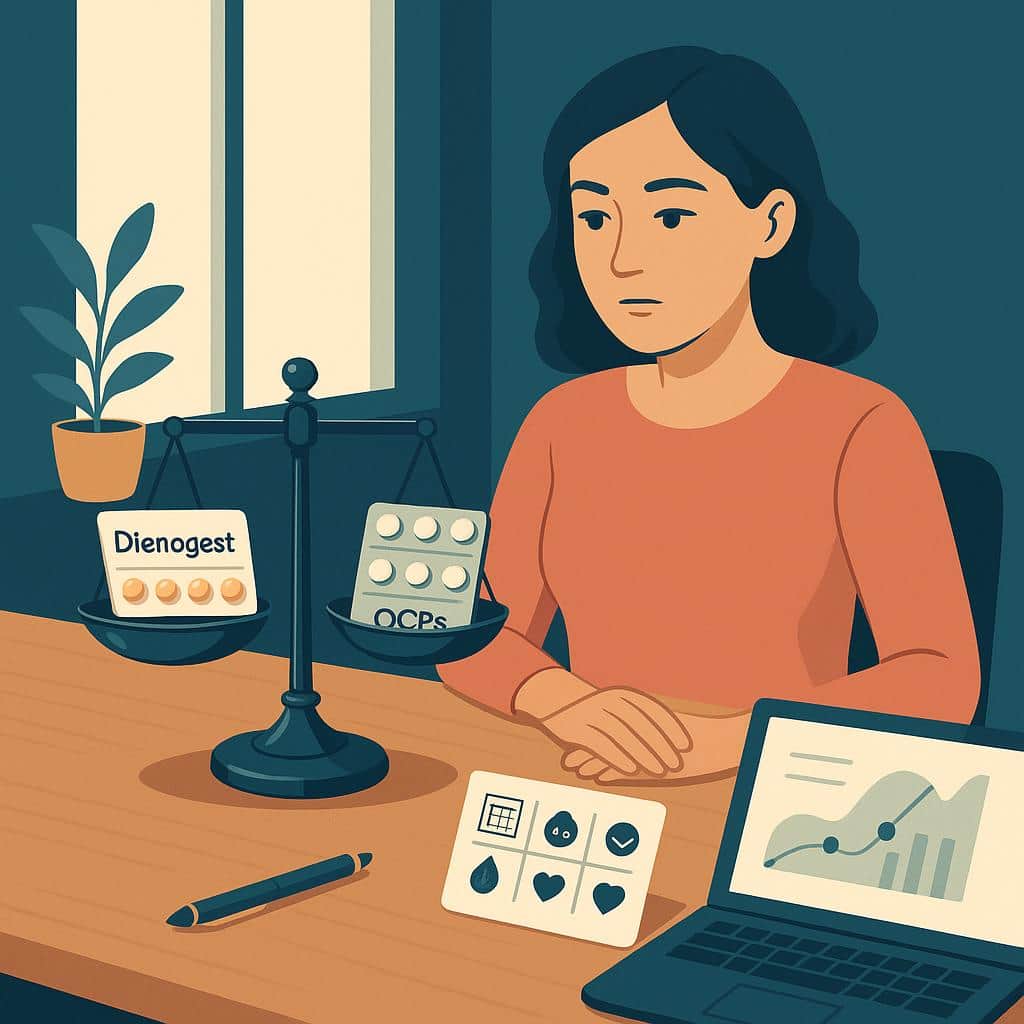
Dienogest vs. Combined Oral Contraceptives for Endometriosis Pain: What a 2025 Meta-Analysis Found
A 2025 meta-analysis of dienogest vs OCPs for endometriosis pain: dienogest helps generalized pain; OCPs help pelvic pain/dyspareunia. Similar side effects.
Different Types of Endometriosis Pain Explained
Explore types of endometriosis pain, evaluation, and evidence-based treatments, including triggers, pelvic floor therapy, CNS sensitization, and adenomyosis.

Endometriosis Ovulation Pain: Impact and Relief Tips
Learn what ovulation pain feels like with endometriosis, how long it lasts, common symptoms like nausea and mittelschmerz, and evidence-based coping strategies.
Supportive Therapies That Help Ease Endometriosis Pain
Endometriosis pain relief with supportive, integrative therapies: diagnosis, medical and hormonal care, surgery's role, nutrigenomic and epigenetic insights.