
Diagnosis
What is the AAGL endometriosis classification system?
The short answer
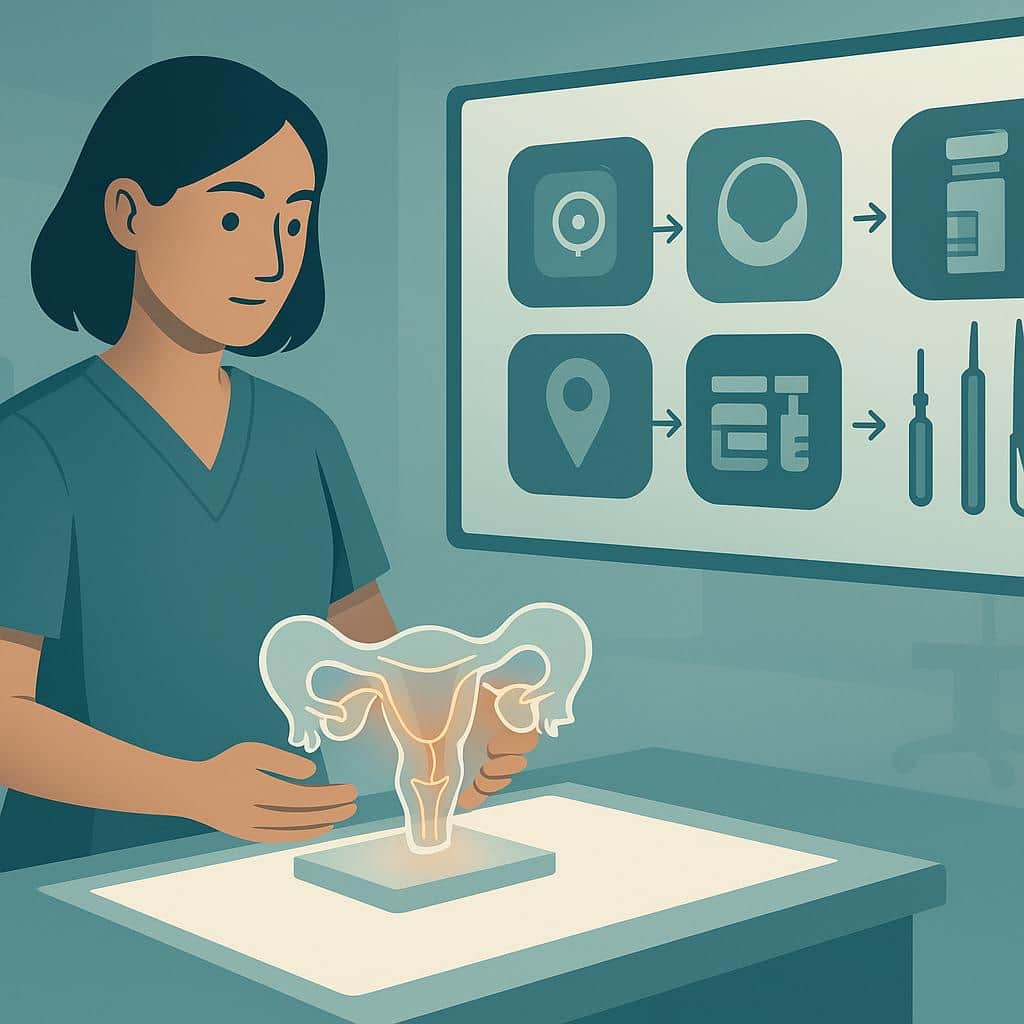
The AAGL endometriosis classification system is a standardized way surgeons describe where endometriosis is found at surgery, how extensive it is, and how complex it appears. It is meant to better capture deeper disease that may affect surgical planning.
The AAGL endometriosis classification system is a standardized way for surgeons to describe what they found at surgery: where endometriosis is located, how extensive it is, and how complex the disease appears. Its goal is to create a more consistent shared language than older staging alone provides, especially when symptoms and imaging don’t tell the full story.
Unlike simple stage labels, AAGL-style classification is meant to better capture surgical complexity, including deeper disease that can involve structures such as the uterosacral ligaments, rectovaginal space, bowel, bladder, or ureters. This matters because location and depth (for example, deep infiltrating disease) can drive very different symptoms and may change imaging choices and surgical planning. If you’re reading an operative report or trying to make sense of what a surgeon told you, our team can help explain what the classification likely means for your body, your symptoms, and the treatment path you’re considering.
Where to go from here
Understand it, compare it with what you're feeling, then talk it through with us.
Step 1 · Understand
Understand the condition
Step 2 · Compare
Symptoms it can relate to
Step 3 · Speak with Us
Make your surgery findings make sense
AAGL classification can clarify where endometriosis is and how complex it is—beyond a simple stage number. Our specialists can review your reports, explain what it means for your pain and fertility, and plan next steps.
Questions people ask next
All diagnosis questionsWhat is the Enzian score for endometriosis?
The Enzian score describes where deep infiltrating endometriosis is located and how extensive it is. It helps surgical teams plan imaging, surgery, and support from multiple specialties when organs such as the bowel, bladder, or ureters may be involved.
What do endometriosis stages I–IV actually measure?
Endometriosis stages I to IV mainly describe the visible amount and distribution of disease and scar tissue seen and scored at surgery. They do not directly measure pain or its effect on daily life, so someone with low-stage disease can still have severe symptoms.
Does endometriosis stage predict pain severity?
Endometriosis stage does not reliably predict pain severity. Stages mainly describe what’s seen at surgery, so someone with low-stage disease can have debilitating symptoms, while someone with more extensive disease reports surprisingly little pain.
What is an endometriosis ultrasound mapping exam?
An endometriosis ultrasound mapping exam is a specialized pelvic ultrasound to identify where endometriosis is suspected. In experienced hands, it looks for signs of deep disease and possible bowel involvement to help plan surgery, but imaging can miss disease.
Further reading
What is Deep Infiltrating Endometriosis? Understanding the Basics
Discover deep infiltrating endometriosis, its symptoms, and diagnosis. Learn how it differs from other types of endometriosis for better management.
Deep Infiltrating Endometriosis: Current and Future Treatments
Deep infiltrating endometriosis: symptoms, causes, diagnosis and treatment. Medical therapy, ICG-guided surgery, stenting, pathology, and future outlook.
Can Scans and Tests Find Endometriosis? Know the Limits
Discover why ultrasounds may miss endometriosis. Learn about imaging limits and recent research in our latest blog. Find clarity in your diagnosis.