
Deep Disease
What is the Enzian score for endometriosis?
The short answer
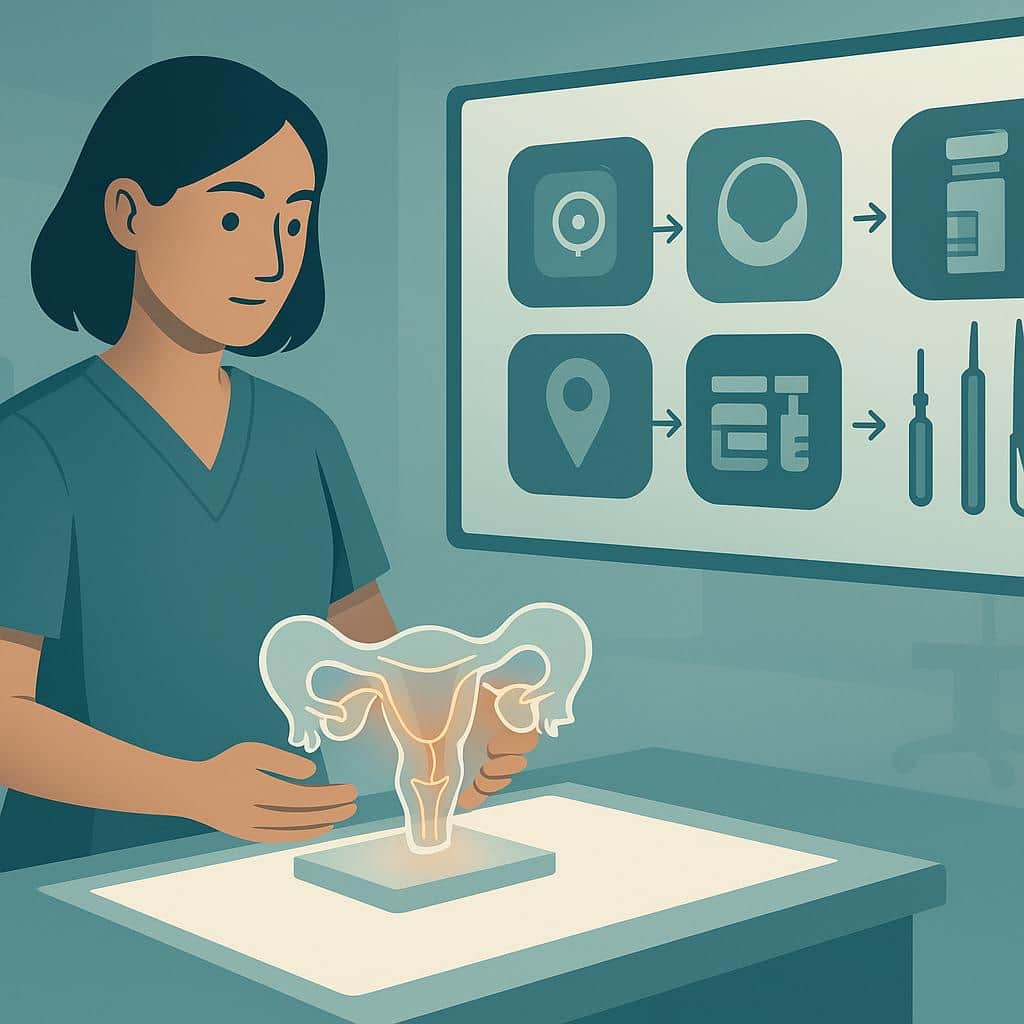
The Enzian score describes where deep infiltrating endometriosis is located and how extensive it is. It helps surgical teams plan imaging, surgery, and support from multiple specialties when organs such as the bowel, bladder, or ureters may be involved.
The Enzian score is a detailed way for clinicians to describe where deep infiltrating endometriosis (DIE) is located and how extensive it is. Unlike simple staging systems, Enzian focuses on endometriosis that grows into deeper tissues and can involve structures like the uterosacral ligaments, rectovaginal area, bowel, bladder, and ureters. These areas often drive bowel, urinary, or deep pain symptoms.
In practice, an Enzian classification helps your surgical team communicate the anatomic pattern of disease and plan the right imaging, operative approach, and multidisciplinary support when organs may be involved. It’s also a reminder that symptom severity doesn’t always match what’s seen on exam or imaging: deep disease can be easy to miss without a targeted evaluation. If you’ve been told your findings are “mild” but your symptoms suggest deeper involvement, our team can help interpret prior reports and discuss what an Enzian-style mapping and excision-focused plan could look like.
Where to go from here
Understand it, compare it with what you're feeling, then talk it through with us.
Step 2 · Compare
Symptoms it can relate to
Step 3 · Speak with Us
Get clarity on your Enzian score
If your report mentions Enzian, we’ll explain what it means for deep infiltrating endometriosis and where disease may be affecting bowel, bladder, or ureters. Our specialists use this information to guide imaging, surgical planning, and the right multidisciplinary care.
Questions people ask next
All deep disease questionsWhat do endometriosis stages I–IV actually measure?
Endometriosis stages I to IV mainly describe the visible amount and distribution of disease and scar tissue seen and scored at surgery. They do not directly measure pain or its effect on daily life, so someone with low-stage disease can still have severe symptoms.
How is deep infiltrating endometriosis diagnosed without surgery?
Deep infiltrating endometriosis is evaluated without surgery using specialized imaging, mainly an expert-performed transvaginal ultrasound. Pelvic MRI can add detail about the depth and extent of suspected lesions and their relationship to nearby organs.
What is the AAGL endometriosis classification system?
The AAGL endometriosis classification system is a standardized way surgeons describe where endometriosis is found at surgery, how extensive it is, and how complex it appears. It is meant to better capture deeper disease that may affect surgical planning.
Does endometriosis stage predict pain severity?
Endometriosis stage does not reliably predict pain severity. Stages mainly describe what’s seen at surgery, so someone with low-stage disease can have debilitating symptoms, while someone with more extensive disease reports surprisingly little pain.
Further reading
What is Deep Infiltrating Endometriosis? Understanding the Basics
Discover deep infiltrating endometriosis, its symptoms, and diagnosis. Learn how it differs from other types of endometriosis for better management.
Deep Infiltrating Endometriosis: Current and Future Treatments
Deep infiltrating endometriosis: symptoms, causes, diagnosis and treatment. Medical therapy, ICG-guided surgery, stenting, pathology, and future outlook.
How Endometriosis Can Affect Your Bowel and Digestion
Learn how endometriosis affects bowel health and digestion. Discover symptoms, diagnosis challenges, and treatment options. Get informed today!