
Surgery
What surgery treats deep infiltrating endometriosis (DIE)?
The short answer
The primary surgery for deep infiltrating endometriosis (DIE) is laparoscopic excision, sometimes with robotic assistance, to remove deep nodules. The goal is thorough removal while protecting nearby organs and pelvic nerves whenever possible.
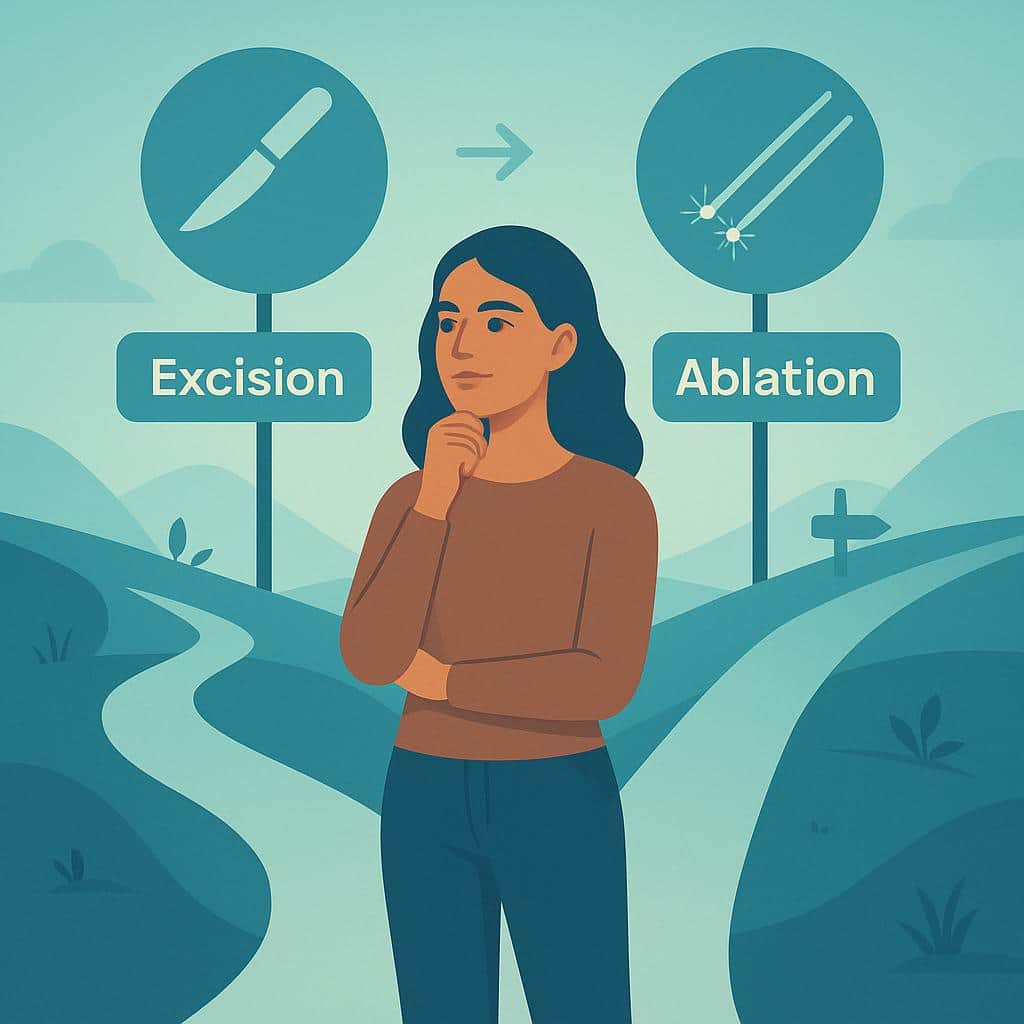
For deep infiltrating endometriosis (DIE), the primary surgical approach is laparoscopic excision, sometimes with robotic assistance, to carefully remove deep nodules rather than simply burning the surface. The goal is thorough disease removal while protecting nearby structures such as the bowel, bladder, ureters, and pelvic nerves whenever possible.
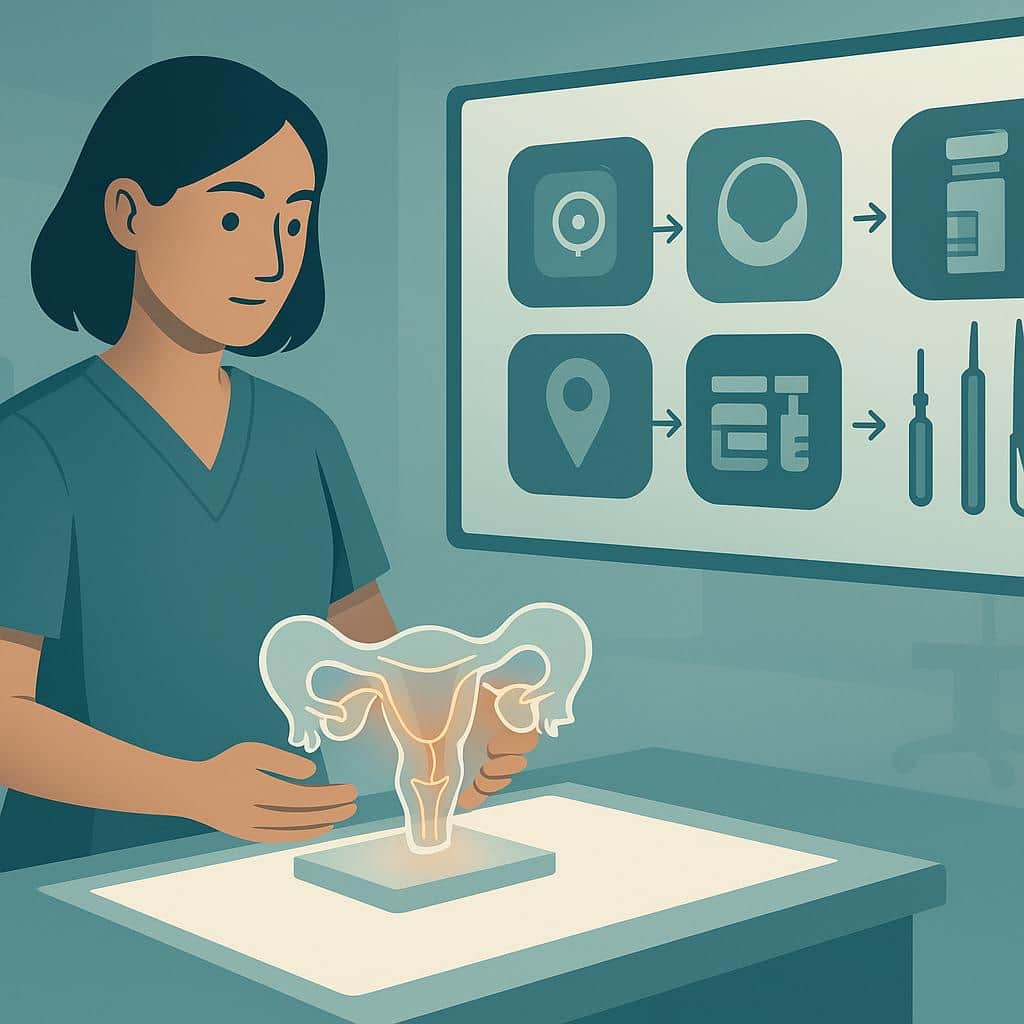
Because DIE can involve multiple organs and distorted anatomy, results are typically best when surgery is performed by a high-volume team with advanced excision experience, careful preoperative planning, and the ability to coordinate multidisciplinary support when needed. During a consultation, our team focuses on mapping suspected areas of DIE, discussing whether other specialists may be involved, and developing a plan centered on both symptom relief and long-term function.
Where to go from here
Understand it, compare it with what you're feeling, then talk it through with us.
Step 2 · Compare
Symptoms it can relate to
Step 3 · Speak with Us
Need Expert Surgery for DIE?
Our specialists perform precise laparoscopic excision to remove deep endometriosis while protecting your organs. Let us guide you through advanced surgical care tailored to your needs.
Questions people ask next
All surgery questionsHow is multi-organ endometriosis treated without organ removal?
In many multi-organ cases, conservative surgery removes endometriosis and frees organs from scar tissue while preserving the organs themselves. Robotic excision can improve precision, and treatment planning may include other surgical specialists.
Who is a good candidate for robotic endometriosis surgery?
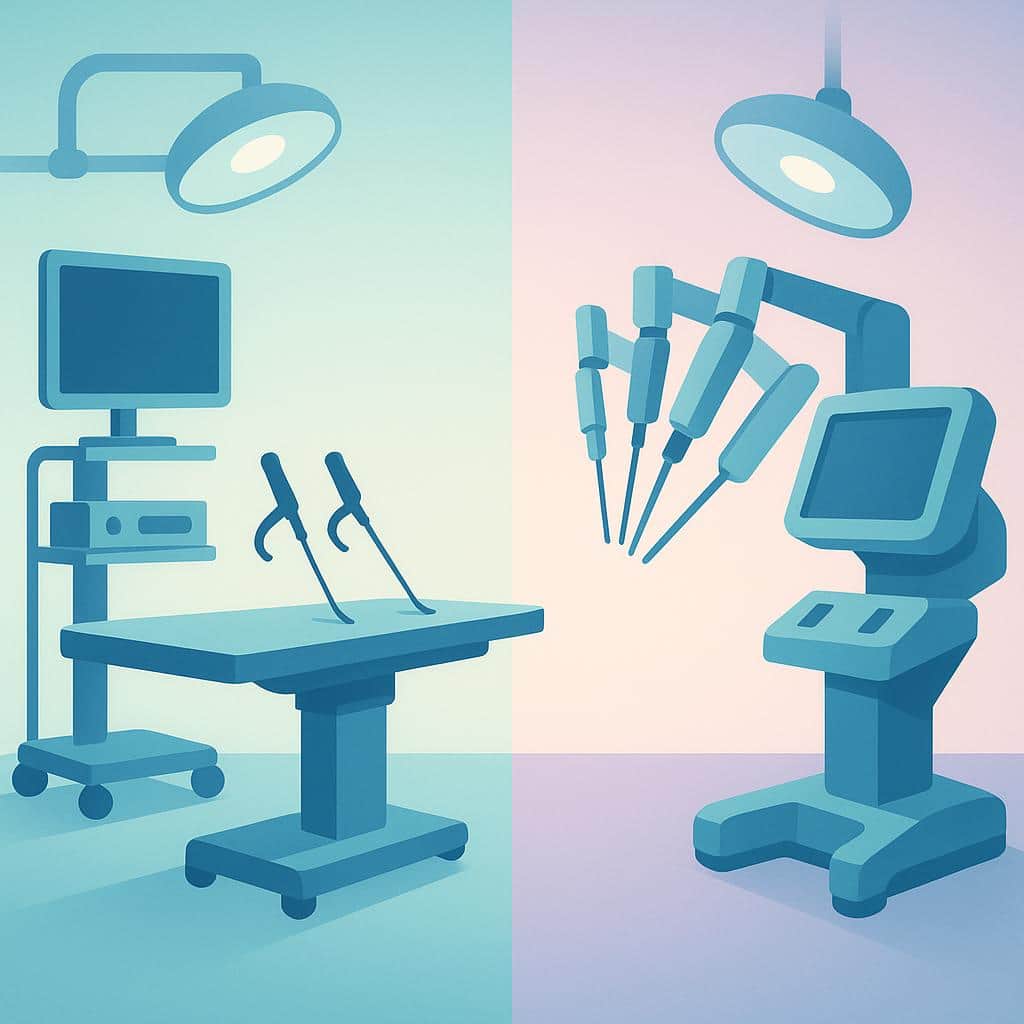
Robotic surgery can be a good fit when complex, deep endometriosis is anticipated or disease may involve the bowel, bladder, or ureters. Candidacy is individualized, based on disease mapping, surgical goals, and which approach allows thorough, safe removal.
Will endometriosis excision surgery need bowel resection or a stoma?
Most endometriosis excision surgeries do not require a bowel resection, and a stoma is uncommon. These possibilities come up mainly when endometriosis grows deep into the bowel wall or scar tissue has significantly distorted the anatomy.
How do I get endometriosis surgery?
Getting endometriosis surgery usually starts with choosing a surgeon who can do complete excision. At our institute, a record-based telehealth consultation helps us determine whether surgery may be appropriate and what information is needed to plan safely.
Further reading
Deep Infiltrating Endometriosis: Current and Future Treatments
Deep infiltrating endometriosis: symptoms, causes, diagnosis and treatment. Medical therapy, ICG-guided surgery, stenting, pathology, and future outlook.
Excision vs Ablation: Understanding Endometriosis Surgery Options
Explore excision vs ablation for endometriosis. Learn about surgery options, pain relief, and making informed choices based on your fertility goals.
Conventional Laparoscopy vs Robotic Surgery for Endometriosis and Adenomyosis: What Patients Need to Know
Comparing safety, effectiveness, and recovery — a patient-friendly overview of different surgery approaches and what they can mean for your treatment.