
Deep Disease
Will endometriosis excision surgery need bowel resection or a stoma?
The short answer
Most endometriosis excision surgeries do not require a bowel resection, and a stoma is uncommon. These possibilities come up mainly when endometriosis grows deep into the bowel wall or scar tissue has significantly distorted the anatomy.
Most endometriosis excision surgeries do not require a bowel resection, and a stoma is uncommon. Those possibilities arise mainly when endometriosis is deeply infiltrating the bowel wall (most often the rectum or sigmoid) or when scar tissue has significantly distorted the anatomy. Many patients with bowel symptoms actually have inflammation and irritation around the bowel without true full-thickness bowel disease, which can often be treated without removing a segment of bowel.
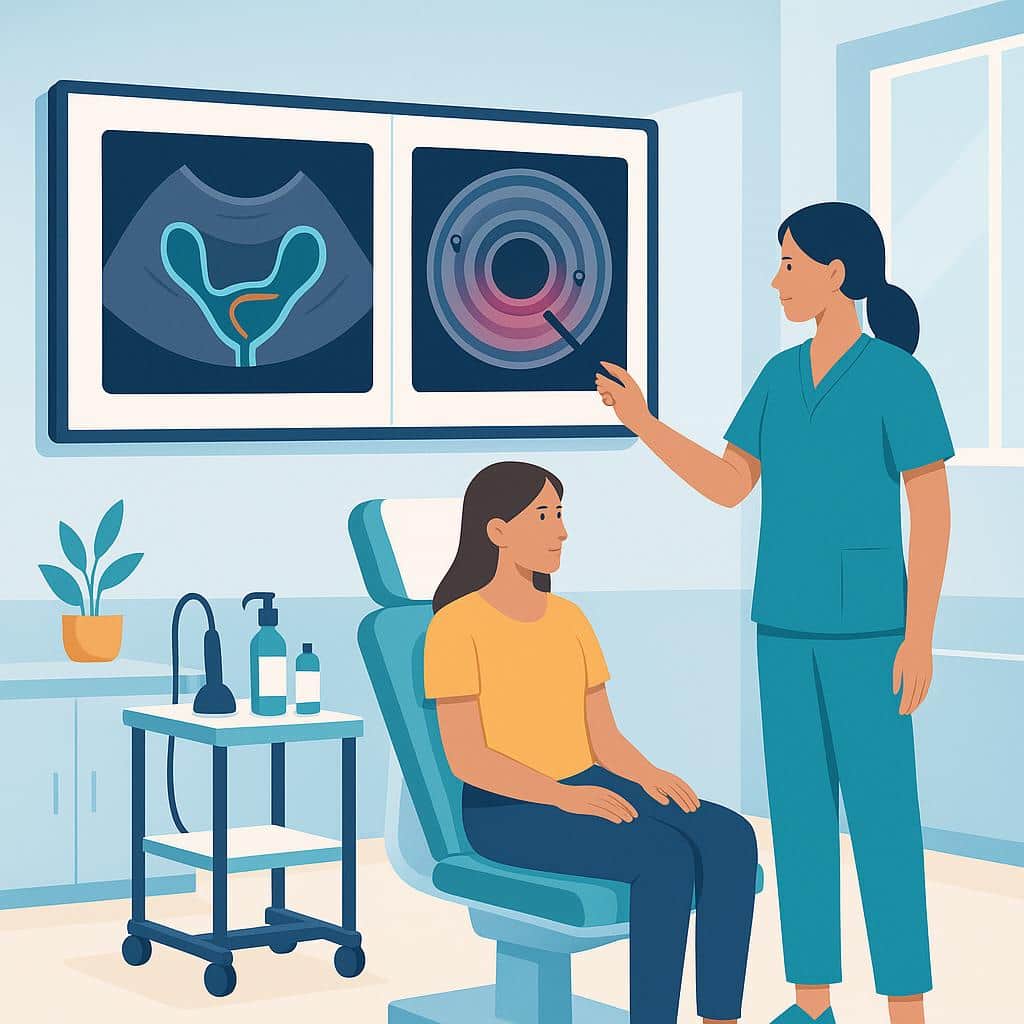
When bowel endometriosis is present, surgical options range from carefully peeling disease off the bowel surface to a full-thickness disc excision or a segmental resection when the lesion is deep, extensive, or narrows the bowel. Our team plans ahead as much as possible, using your symptoms, exam, and imaging to map the disease and decide whether a colorectal surgeon should be involved on the day of surgery.
If you’re worried about waking up with a stoma, that’s exactly the kind of risk we discuss clearly before surgery, based on what we see on imaging and what we suspect we’ll find. In a consult, we’ll walk you through the likely bowel scenarios for your specific case and how robotic excision helps us be precise and tissue-sparing while still prioritizing safety.
Where to go from here
Understand it, compare it with what you're feeling, then talk it through with us.
Step 1 · Understand
Understand the condition
Step 2 · Compare
Symptoms it can relate to
Step 3 · Speak with Us
Worried About Bowel Surgery?
Our specialists understand the concerns about deep endometriosis and its impact on the bowel. We offer personalized treatment plans that may avoid bowel resection or stoma whenever possible.
Questions people ask next
All deep disease questionsHow is bowel endometriosis treated without a colostomy?
In many cases, bowel endometriosis can be treated surgically without a colostomy by removing disease from the bowel surface or removing deeper disease and repairing or reconnecting the bowel. A temporary stoma may be recommended in select higher-risk situations.
Shaving vs disc vs bowel resection for endometriosis: what’s the difference?
Shaving removes disease from the bowel surface, disc excision removes a full-thickness piece of bowel wall, and segmental resection removes a bowel segment and reconnects the ends. The choice depends on lesion depth, size and location, bowel narrowing, symptoms and your goals.
Do I need a colorectal surgeon for bowel endometriosis surgery?
Sometimes, especially if imaging or an exam suggests deeper bowel involvement that may require opening, repairing or removing part of the bowel. A general surgeon or gynecologic oncologist credentialed in bowel surgery may also provide the needed expertise.
Can excision surgery improve endometriosis bloating and GI symptoms?
For many patients, excision surgery can improve bloating and GI symptoms, especially when endometriosis near the bowel or adhesions are driving them. Results vary depending on disease location and other issues, such as IBS, food sensitivities or pelvic floor dysfunction.
Further reading
Do You Need Two Ultrasounds Before Bowel Endometriosis Surgery?
How TVS (transvaginal) and ERUS (endorectal) map rectal endometriosis, guide bowel surgery planning, flag stenosis and risks, and who benefits.
Bowel Endometriosis: Causes, Symptoms, and Treatment
Bowel endometriosis explained: locations, symptoms, causes, diagnosis and misdiagnosis, plus treatments from minimally invasive surgery to lifestyle changes.
What to Expect Before, During, and After Endometriosis Surgery
Discover what to expect before, during, and after endometriosis surgery. Insights on pain relief, preparation, recovery from reliable recent research.