
Deep Disease
How is deep infiltrating endometriosis diagnosed without surgery?
The short answer
Deep infiltrating endometriosis is evaluated without surgery using specialized imaging, mainly an expert-performed transvaginal ultrasound. Pelvic MRI can add detail about the depth and extent of suspected lesions and their relationship to nearby organs.
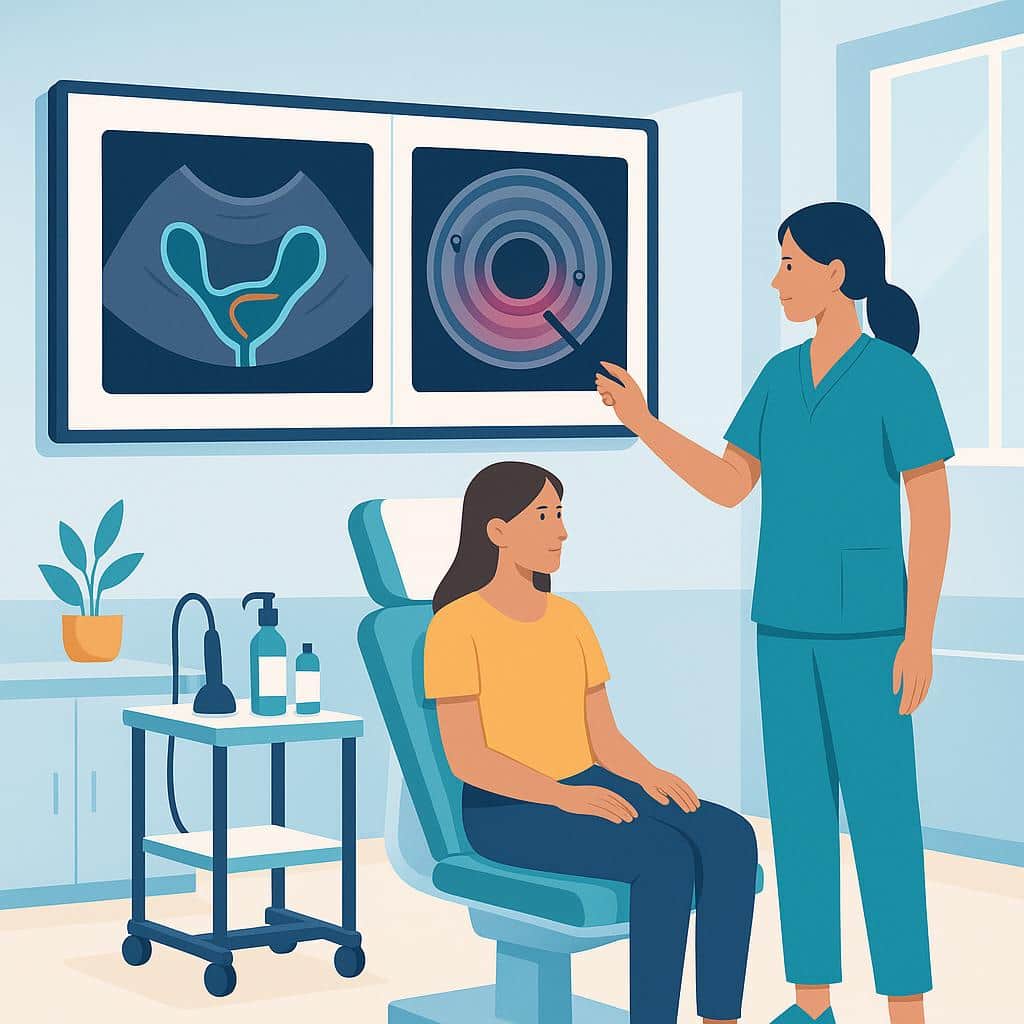
Specialized imaging is the main way we evaluate deep infiltrating endometriosis without surgery. A transvaginal ultrasound performed by an expert (and sometimes transrectal ultrasound, depending on symptoms and anatomy) can identify and map deep disease by assessing how tissues move, which areas are fixed, and whether nearby structures appear tethered or involved.
Pelvic MRI can add detail about the depth and extent of suspected lesions and their relationship to organs like the bowel, bladder, and uterosacral ligaments. When an experienced team performs and interprets the imaging, it helps us plan the most appropriate next steps and reduces surprises if surgery becomes part of your treatment plan. If you’d like, our team can review your symptoms and prior imaging to help determine which study is most likely to answer your specific questions.
Where to go from here
Understand it, compare it with what you're feeling, then talk it through with us.
Step 1 · Understand
Understand the condition
Step 2 · Compare
Symptoms it can relate to
Step 3 · Speak with Us
Get a Clear Diagnosis Without Surgery
Our specialists use expert ultrasounds and MRIs to precisely identify deep infiltrating endometriosis. Let us help you understand your condition with compassionate, expert care.
Questions people ask next
All deep disease questionsWhat is an endometriosis ultrasound mapping exam?
An endometriosis ultrasound mapping exam is a specialized pelvic ultrasound to identify where endometriosis is suspected. In experienced hands, it looks for signs of deep disease and possible bowel involvement to help plan surgery, but imaging can miss disease.
How accurate is MRI vs expert transvaginal ultrasound for endometriosis?
MRI and expert transvaginal ultrasound tend to have similarly high accuracy for deep infiltrating endometriosis and ovarian endometriomas. Both can miss superficial peritoneal endometriosis, so normal imaging does not necessarily rule out endometriosis.
Can MRI reliably detect deep infiltrating endometriosis?
MRI can be very helpful for suspecting deep infiltrating endometriosis, especially when read by a radiologist experienced in endometriosis, but it is not a guaranteed yes/no test. A normal MRI does not reliably rule it out, and even deep disease can be missed.
What surgery treats deep infiltrating endometriosis (DIE)?
The primary surgery for deep infiltrating endometriosis (DIE) is laparoscopic excision, sometimes with robotic assistance, to remove deep nodules. The goal is thorough removal while protecting nearby organs and pelvic nerves whenever possible.
Further reading
Do You Need Two Ultrasounds Before Bowel Endometriosis Surgery?
How TVS (transvaginal) and ERUS (endorectal) map rectal endometriosis, guide bowel surgery planning, flag stenosis and risks, and who benefits.
Can Scans and Tests Find Endometriosis? Know the Limits
Discover why ultrasounds may miss endometriosis. Learn about imaging limits and recent research in our latest blog. Find clarity in your diagnosis.
Deep Infiltrating Endometriosis: Current and Future Treatments
Deep infiltrating endometriosis: symptoms, causes, diagnosis and treatment. Medical therapy, ICG-guided surgery, stenting, pathology, and future outlook.