


Dienogest vs. Combined Oral Contraceptives for Endometriosis Pain: What a 2025 Meta-Analysis Found
Which is better depends on your pain type: how dienogest and OCPs compare, plus quality-of-life and side-effect trade-offs.
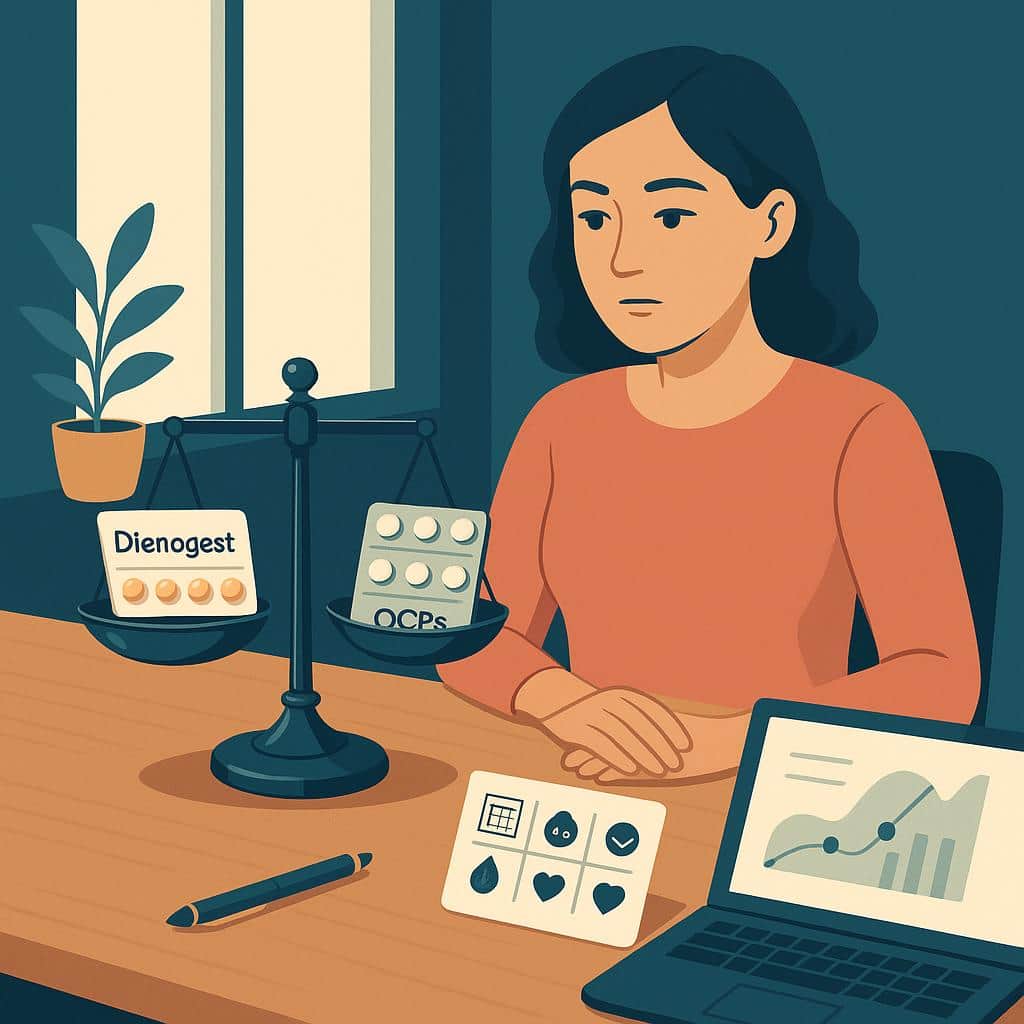
Living with endometriosis can mean living with pain that affects your body, your energy, your relationships, and your daily plans. Two commonly used hormonal medication options are dienogest (a progestin) and combined oral contraceptive pills (OCPs). A 2025 systematic review and meta-analysis in BMC Women’s Health compared the short-term effects of these treatments on pain, quality of life, and side effects in women with endometriosis.
Below is a patient-friendly breakdown of what the researchers found—and how you can use this information in a conversation with your clinician.
Why compare dienogest and OCPs?
Both dienogest and oral contraceptive pills (OCPs) are commonly used to help manage endometriosis symptoms, and patients often want to understand how they compare in practical terms. Key questions typically focus on which option is more effective for reducing pain, which leads to greater improvements in overall quality of life, and whether the side-effect profiles differ in meaningful ways that might influence treatment choice. This study aimed to compare them head-to-head using results from randomized controlled trials (RCTs).
What type of study is this—and why that matters
This paper is a systematic review and meta-analysis of randomized controlled trials(RCTs), conducted using PRISMA guidelines. That means the authors:
- Systematically searched for relevant RCTs
- Combined results across trials to estimate overall effects
Important note: the findings apply to short-term outcomes. The authors specifically note that long-term data (like recurrence rates or bone-related outcomes) were limited.
Key results: pain relief depends on the type of pain you have
Endometriosis pain isn’t one single experience. The review suggests the “best” option may depend on which pain symptom is most disruptive for you.
Dienogest may help more with “generalized pain” (overall pain on a VAS scale)
Across studies, dienogest showed greater improvement in overall/general pain, measured with a VAS (Visual Analog Scale), compared with OCPs. The meta-analysis reported a statistically significant improvement favoring dienogest (P = 0.001; SMD = −1.46; 95% CI −2.33 to −0.59).
What this could mean for you: If your biggest issue is broad, general endometriosis pain (for example, pain that isn’t only limited to deep pelvic pain or intercourse), dienogest may be a strong option to discuss.
OCPs may help more with pelvic pain and pain during sex (dyspareunia)
The review found dienogest was less effective than OCPs for:
- Pelvic pain (P = 0.009; SMD = 0.42)
- Dyspareunia (pain during intercourse) (P = 0.006; SMD = 0.70)
What this could mean for you: If your main symptoms are pelvic painor pain with intercourse, OCPs may offer more relief—based on these short-term RCT findings.
Quality of life: physical and daily-life areas may improve more with dienogest
Quality of life was measured using tools such as EHP-5, EHP-30, and SF-12.
Where dienogest may have an advantage
Compared with OCPs, dienogest significantly improved:
- EHP-5
- EHP-30
- SF-12 Physical Component Summary (PCS)
These measures can reflect how symptoms affect daily functioning (like activity and physical well-being), depending on the questionnaire domain.
Struggling with Endometriosis Pain?
Our specialists are here to help you understand your condition and explore your treatment options.
Schedule Your ConsultWhere there was no clear difference
There was no significant difference between dienogest and OCPs for:
- SF-12 Mental Component Summary (MCS)
- WHO-QoL scores
What this could mean for you: Dienogest may improve some physical and endometriosis-specific quality-of-life measures more than OCPs, but this meta-analysis did not show a clear short-term difference in overall mental health domains between treatments.
Side effects: mostly similar, but two differences stood out
The review reported no significant difference between dienogest and OCPs in the risk of:
- Vaginal bleeding
- Headache
- Hot flashes
- Back pain
- Skin dryness
- Nausea
However, OCPs were associated with higher risk of:
- Weight gain
- Hand numbness
What this could mean for you: If weight change is a major concern for you, or if you have experienced tingling/numbness symptoms before, it may be worth raising these points when discussing OCPs.
Practical takeaways: how to use this evidence in your treatment decision
Because the study suggests benefits differ by symptom type, a “one-size-fits-all” answer isn’t realistic. Consider bringing these questions to your next appointment:
1) “Which pain symptom are we targeting most?”
- More generalized/overall pain → ask about dienogest
- More pelvic pain or dyspareunia → ask about OCPs
2) “How will we track if the medication is working?”
Ask what you’ll monitor over the next weeks/months—pain scores, bleeding patterns, daily functioning, or specific quality-of-life measures.
3) “What side effects should make me contact you?”
Since most side effects were similar, it’s still important to have a plan for what to do if you experience bleeding changes, headaches, or other symptoms. Also ask specifically about:
- Weight changes
- Numbness/tingling in the hands
What this study cannot tell us (important limitations)
This paper focuses on short-term outcomes. The authors note key gaps, including:
- Limited evidence on long-term effectiveness
- Lack of long-term data on outcomes such as recurrence and bone-related changes
- Differences among the types of OCPs used across trials (meaning not all “OCPs” are identical)
If you’re making a long-term plan, you and your clinician may need additional evidence and ongoing follow-up to decide what fits best.
Bottom line
- Surgery diagnosis and treatment in these studies: All significant studies reviewed in this analysis noted that endometriosis was biopsy proven but surgery was remote in many (>5 years) and thus synergies with surgical excision were not addressed in this comparison.
- Dienogest may be better for overall/general endometriosis pain and may improve some physical/endometriosis-specific quality-of-life measures more than OCPs in the short term.
- OCPs may work better for pelvic pain and pain during intercourse (dyspareunia).
- Side effects were mostly similar, but OCPs showed higher risk of weight gain and hand numbness in this analysis.
- The best choice often depends on your main pain pattern, quality-of-life priorities, and side effect concerns—and should be revisited over time.
References
Xie J, Ni X, Huang Q, Guo Y. Relugolix’s impact on endometriosis-associated pain and quality of life: a meta-analysis of EHP-30 outcomes. Frontiers in Endocrinology. 2025. (Systematic review and meta-analysis of RCTs; PRISMA-guided.) DOI: 10.3389/fendo.2025.1650579
Quick Answers
Why does sex hurt more around my period?
Pain with sex that flares around your period often points to a hormonally driven source of pelvic pain. This means tissue and nerves in the pelvis become more inflamed and reactive in the days leading up to bleeding and during menstruation. Endometriosis is a common reason: lesions can irritate nearby nerves and organs, and the inflammatory chemicals they produce can amplify pain signals. Adenomyosis (endometrial-like tissue within the uterine muscle) can also make the uterus unusually tender and crampy, so penetration, orgasm-related uterine contractions, or even pelvic pressure can feel painful around that time.
Where and when you feel pain matter. Deep pain with penetration can be related to endometriosis near the uterosacral ligaments, cervix/vaginal fornix, rectovaginal space, bowel, or bladder, especially if scarring or adhesions have changed how those structures move. Pain after sex or after orgasm can happen when pelvic floor muscles spasm or when uterine contractions tug on sensitized areas. If this pattern keeps recurring, our team can help map your symptom timing and triggers and evaluate for endometriosis, adenomyosis, pelvic floor dysfunction, and overlapping bladder/bowel involvement so treatment targets the source of your pain rather than just masking it.
Why is my period pain so severe it disrupts my daily life?
Severe, life-disrupting period pain isn’t normal cramps, and it often points to an underlying cause that deserves a real explanation, rather than symptom masking. One common cause is endometriosis, where tissue similar to the uterine lining grows outside the uterus and can irritate pelvic structures, trigger inflammatory chemicals, and sometimes involve organs like the bowel or bladder. Pain severity doesn’t reliably match stage, so someone can have intense pain even if imaging looks normal or disease appears limited.
When period pain is severe, worsens over time, starts years after your first period, or comes with heavy bleeding, painful sex, bowel pain with periods, urinary pain, or fatigue, we look for patterns because endometriosis and related conditions can overlap with pelvic floor dysfunction, nerve pain/central sensitization, GI dysbiosis, vascular issues, or adenomyosis. We take your full timeline and flare pattern seriously, then tailor the evaluation with a careful exam and expertly interpreted imaging when helpful. If your pain is disrupting school, work, relationships, or daily functioning, reach out to schedule a consultation. Our team can help you identify what’s driving it and map out a plan aimed at lasting relief.
Can endometriosis cause arthritis-like joint pain?
Yes, endometriosis can be associated with arthritis-like joint pain in some people, even though joint pain isn’t considered a classic core symptom. Endometriosis can drive chronic inflammation and immune dysregulation, and this whole-body inflammatory state may show up as aching, stiffness, or flares that feel similar to inflammatory arthritis. Some patients also notice joint symptoms that cycle with their period or worsen during broader endometriosis flares.
At the same time, endometriosis doesn’t equal autoimmune arthritis, and an association doesn’t prove that one causes the other. Research suggests higher rates of certain autoimmune conditions in people with endometriosis, including inflammatory diseases that can affect joints. Persistent joint pain therefore deserves a comprehensive evaluation rather than being automatically attributed to pelvic disease alone. If you’re dealing with pelvic pain and joint symptoms, our team can help you sort out what fits endometriosis, what may be a related immune condition, and how that affects your treatment plan, including whether excision surgery and coordinated integrative support make sense for you.
How long do endometriosis flare-ups last?
Endometriosis flare-ups don’t have one usual length: some people feel a spike in symptoms for a few hours to a couple of days, while others have flares that last through an entire cycle window or blend into more constant pain. Many flares track with hormonal shifts (often before and during a period), but bowel, bladder, pelvic floor, or nerve-related pain can flare at different times and may not follow a predictable calendar pattern.
When flares start lasting longer or happening more often, it can be a sign that multiple sources of pain are adding up: ongoing inflammation from lesions, adhesions/fibrosis that can tether organs, and sometimes central sensitization, where the nervous system becomes more reactive over time. That’s why symptom management alone can feel like a band-aid if active disease is still present. If you’re noticing prolonged, unpredictable, or escalating flares, our team can help you map your pattern, identify what’s likely driving it, and discuss a plan that addresses both symptom control and the underlying endometriosis.
Can I fly with a large endometrioma?
Yes, many people can fly with an endometrioma, even a large one, but safe depends on your individual risk profile and symptoms. The main in-flight concern with a larger ovarian cyst is an acute complication such as torsion (the ovary twisting) or, less commonly, rupture. These events can happen on any day but feel especially stressful when you’re far from care. Cabin pressure changes aren’t known to make endometriomas expand, but dehydration, constipation, prolonged sitting, and limited access to pain control can make a pelvic pain flare much harder to manage mid-flight.
If you’re having escalating one-sided pelvic pain, significant nausea/vomiting, fevers, dizziness/faintness, or pain that suddenly becomes severe, we generally want you to be evaluated before you travel. Those can be warning signs that change the plan. If you do fly, think through logistics that reduce strain: choose an aisle seat if possible, plan for gentle movement and hydration, and have a clear pain plan for the travel day so you’re not improvising at 30,000 feet. If the endometrioma is growing, very symptomatic, or affecting fertility planning, our team can help you map out next steps, whether that’s careful monitoring, symptom control while you travel, or discussing targeted treatment options designed to treat the disease rather than just chasing flares.