

Does Endometriosis Cause Cancer? What Research Actually Shows
Explore the link between endometriosis and cancer risk. Get reliable insights based on recent research for informed health decisions.
10 minute read
Read moreDiscover how Lotus can guide you toward lasting relief.
Explore why patients choose Lotus
Search expert-written answers, browse by topic, or find information based on where you are in your journey.
Explore All KnowledgeReach out and start your healing journey.
Schedule an AppointmentExplores links between endometriosis and cancer risk, what current research does and doesn’t show, and symptoms that warrant evaluation. Helps you interpret screening guidance and discuss personal risk factors with your clinician.
Endometriosis and adenomyosis are benign conditions, but certain patterns have been associated with a small increase in risk for specific gynecologic cancers. Research is most consistent for a modestly higher relative risk of some ovarian cancer subtypes (especially clear cell and endometrioid) in people with a history of endometriosis, while the absolute risk for any individual remains low. For adenomyosis, evidence is still evolving; most people will never develop cancer, but persistent or changing symptoms deserve appropriate evaluation.
Practical decision-making matters most: how to interpret “increased risk” language, what symptoms should prompt timely assessment, and how individual factors (age, family history, genetic risk, prior surgeries, and imaging findings) shape next steps. Topics include warning signs that warrant urgent review, how clinicians approach evaluation of new pelvic pain, bleeding changes, or adnexal masses, and how to discuss screening limitations and personalized surveillance. For diagnostic workups and imaging terminology, see Diagnostics & Imaging and Imaging & Diagnosis (MRI, Ultrasound)
Endometriosis is not typically life-threatening, but it can become medically serious—especially when it involves organs like the bowel, bladder, ureters (the tubes that drain the kidneys), or even areas higher in the abdomen. In advanced cases, deep disease and scarring can distort anatomy and, rarely, lead to complications such as bowel obstruction or silent kidney damage from ureteral blockage. Endometriosis can also occur outside the pelvis, including in the chest; for a small subset of patients, thoracic involvement can be associated with events like a recurrent collapsed lung around the menstrual cycle.
Another reason this question comes up is cancer fear. Endometriosis itself is not cancer, and malignant transformation is uncommon, but certain lesions—especially ovarian endometriomas and deep disease—are associated with a higher risk of specific ovarian cancer subtypes in a small minority of patients. The key is not to panic, but to take persistent symptoms, growing masses, organ-related symptoms (urinary or bowel changes), or new patterns seriously. If you’re concerned about severity or “could this be dangerous,” our team can help evaluate where disease may be present and whether strategic excision surgery is appropriate to protect organs and improve long-term health.
Yes—endometriosis can rarely undergo malignant transformation, but for the vast majority of people it does not “turn into cancer.” Endometriosis itself is not cancer, even though it can behave in cancer-like ways (invading tissues, scarring, and spreading beyond the pelvis). The best-supported association in research is with certain ovarian cancer subtypes, especially clear cell and endometrioid ovarian cancers, and the risk appears highest when the ovaries are involved (such as with endometriomas).
What matters most is context: your age, family history/genetics, imaging findings, and whether a cyst or mass is changing over time. If you’re worried about an endometrioma, deep disease, or persistent symptoms that don’t fit your usual pattern, our team can evaluate your full picture and help you understand what’s reassuring versus what deserves closer workup. If surgery is appropriate, strategic minimally invasive excision can both treat disease and allow tissue diagnosis when needed—so you’re not left guessing. Reach out to schedule a consultation if you’d like a personalized risk discussion and a clear plan.
Adenomyosis itself is not cancer. It’s a benign condition where endometrial-like tissue grows into the muscular wall of the uterus, and it can cause heavy bleeding, painful periods, and an enlarged, tender uterus—but it doesn’t “turn into” cancer in the way many patients fear.
That said, adenomyosis can sometimes be seen alongside uterine (endometrial) cancer on hysterectomy pathology, which understandably raises questions about whether the two are connected. Current evidence doesn’t show that adenomyosis protects you from cancer or that it clearly causes cancer, and research on risk relationships is still evolving and can be mixed depending on the cancer type studied.
If you’re worried because of symptoms like heavier bleeding than usual, bleeding between periods, or new/worsening pelvic pain—especially if your symptoms are changing—our team can help you sort out what’s most likely going on, what testing is appropriate, and what treatment options (including surgical options when needed) make sense for your goals.
Leaving an endometrioma in place can carry risks such as gradual growth with increasing pelvic pain and inflammation, and in rare cases acute complications like rupture or ovarian torsion. There is also a small increased lifetime risk of certain ovarian cancers compared with the general population, but the absolute risk remains low—especially when imaging shows features typical of an endometrioma.
Monitoring is usually done with repeat imaging, most often pelvic ultrasound at intervals (commonly every 6–12 months), along with symptom check-ins. We pay close attention to changes like rapid growth, new solid components, or internal blood flow, as these can prompt a different workup or a discussion about treatment. If symptoms escalate or the cyst begins to interfere with ovarian function or fertility planning, our team can review your options and help you decide whether continued observation or surgery makes the most sense for you.
Benign uterine fibroids almost never “turn into” cancer. A true uterine leiomyosarcoma is rare and typically arises independently rather than from a pre-existing fibroid, which is why the overall risk remains low.
The red flags we take most seriously include a new or rapidly enlarging uterine mass after menopause, unusual or concerning findings on ultrasound or MRI, and bleeding patterns that don’t fit your prior history (especially new bleeding after menopause). When there are concerning features, our team focuses on a careful history review and expert imaging interpretation—often with MRI—to better assess risk and guide next steps. The only definitive way to diagnose leiomyosarcoma is through pathology after tissue is removed, so if you’re worried about your symptoms or imaging report, you can reach out to schedule a consultation with us for a personalized assessment.
Endometriosis is associated with a slightly higher lifetime risk of certain ovarian cancers, but the overall (absolute) risk for most people remains low. When it comes to menopause hormone therapy, the research in people with prior endometriosis is limited, so decisions are usually individualized based on your symptoms, history, and whether you still have a uterus.
In general, if hormone therapy is used and the uterus is present, combined therapy (estrogen with a progestogen) is often preferred over estrogen-only approaches to help balance benefits and risk. We also take any new or changing symptoms seriously—especially postmenopausal bleeding, persistent bloating, or progressively worsening pelvic pain—and use them as cues to evaluate promptly rather than “wait and see.” If you have a strong family history of cancer or a known genetic mutation, we recommend scheduling a consultation with our team so we can tailor a plan that prioritizes both symptom relief and long-term safety.
There is not a universal cancer-screening program recommended solely for endometriosis or adenomyosis, but that does not mean cancer risk should be ignored. Endometriosis is not cancer, and most people with it will never develop cancer, yet research does suggest an increased risk of certain ovarian cancers, which is why individual risk assessment matters.
Tests such as CA-125 or CA19-9 are not reliable routine screening tools by themselves, because they can be elevated for many non-cancer reasons, including endometriosis itself. Instead, the right next step depends on your personal risk profile—especially if you have a strong family history of ovarian, breast, uterine, or colon cancer, a known or suspected genetic predisposition, an endometrioma, deep infiltrating disease, or new concerning symptoms.
In those situations, closer evaluation, imaging, follow-up, and sometimes genetic counseling or testing may be appropriate. Our team can help you understand your individual risk and decide whether additional evaluation makes sense.
Removing an endometrioma or excising endometriosis can remove tissue where atypical changes could rarely develop, but these surgeries are not typically done primarily as a cancer-prevention strategy. Overall, the link between endometriosis (including endometriomas) and cancer is complex, and the absolute risk for most patients remains low.
When we discuss surgery, the decision is usually driven by your symptoms, your fertility goals, your family history and whether imaging shows features that are concerning or changing over time. If you have an endometrioma, our team can review your history and imaging and help you understand what surgery can and can’t change—including what we look for when we’re assessing cancer risk and planning the safest next steps.
Explore the link between endometriosis and cancer risk. Get reliable insights based on recent research for informed health decisions.
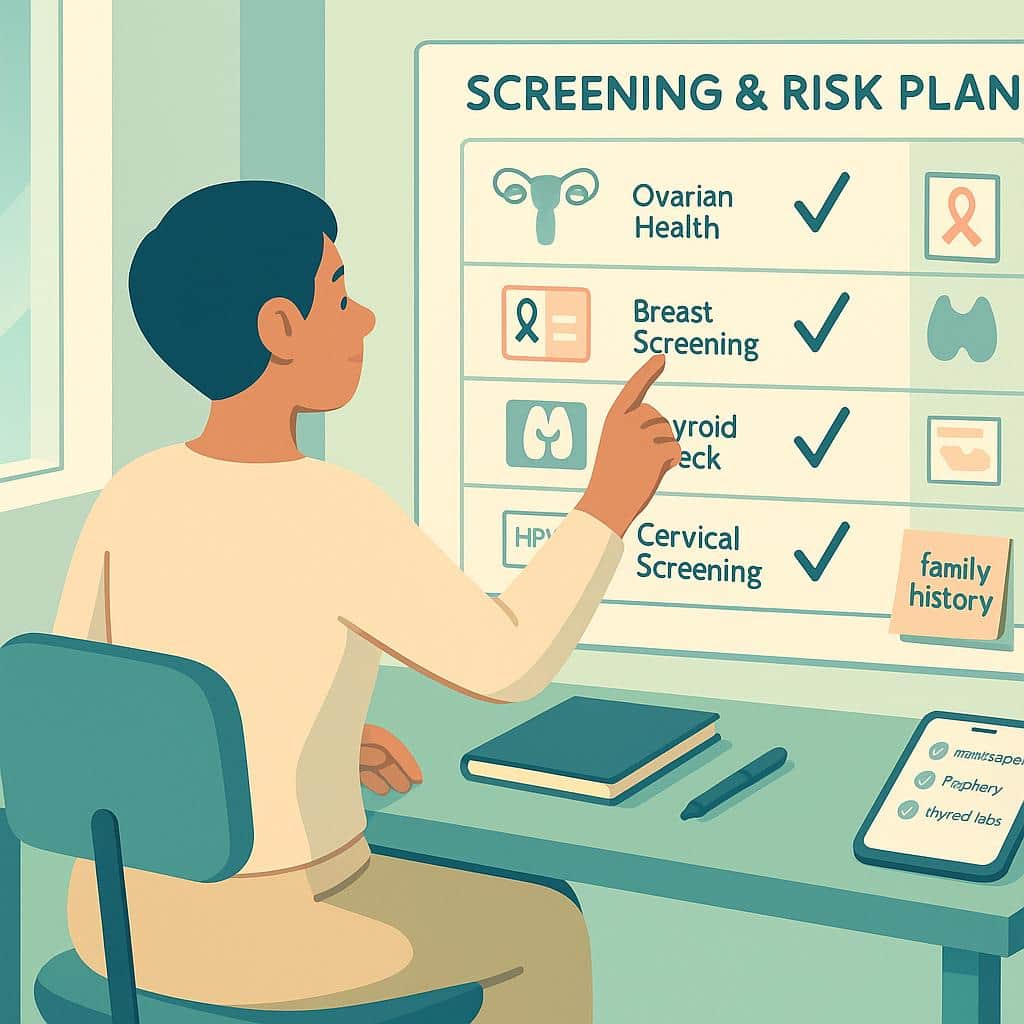
Understand how endometriosis affects ovarian, breast, thyroid, and cervical cancer risk, plus symptoms to watch, screening guidance, and ways to lower risk.

Compare endometriosis vs. ovarian cancer symptoms: pain patterns, bleeding, GI signs, and red flags. Know when to see a gynecologist or gynecologic oncologist.
Lotus Endometriosis Institute provides California-based surgical evaluation and advanced excision care for patients with suspected endometriosis, adenomyosis, complex pelvic pain, and related conditions.
Many patients contact us from outside California to learn whether traveling for in-person evaluation and possible surgery may be appropriate.
2121 Santa Monica Blvd, Santa Monica, CA 90404
8am - 5pm
Monday - Friday
154 Traffic Way, Arroyo Grande, CA 93420