
Surgery
What is pelvic dissection in endometriosis surgery?
The short answer
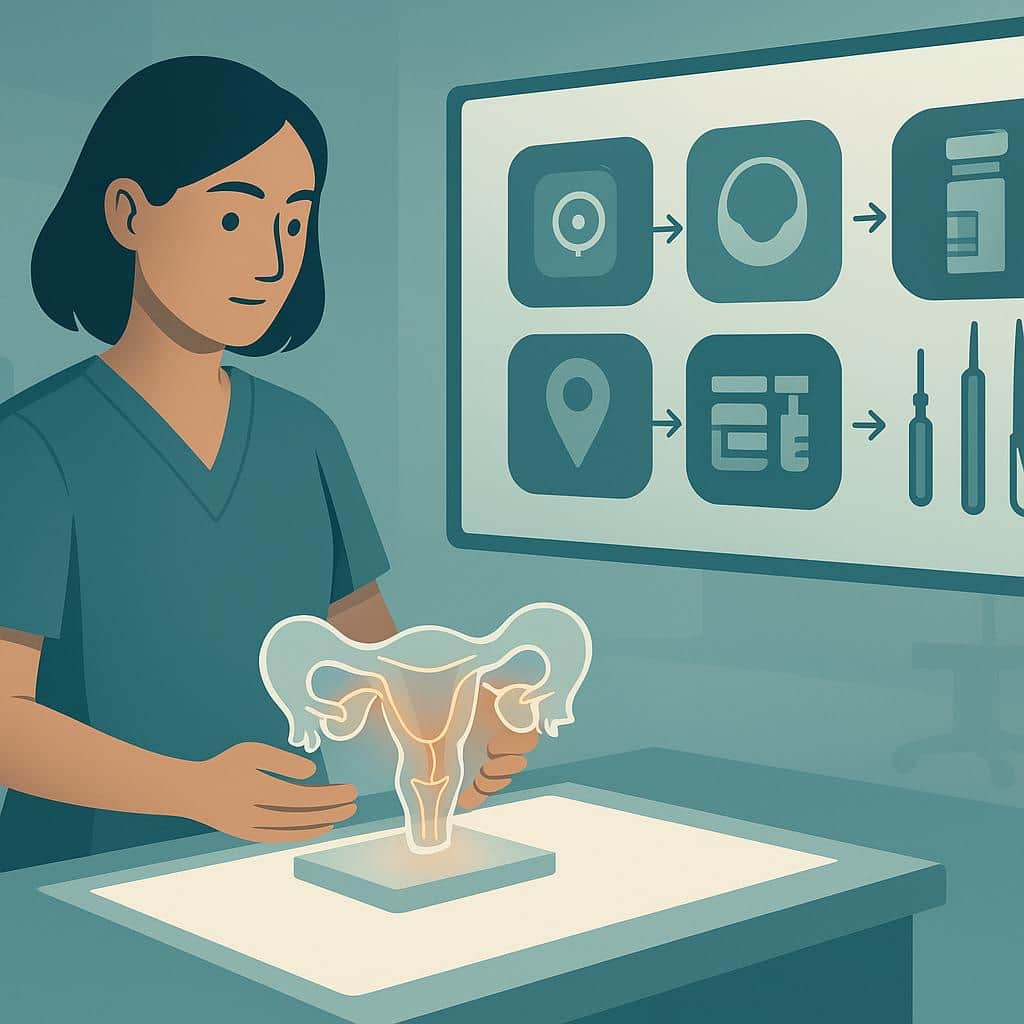
Pelvic dissection means carefully separating tissue planes in the pelvis to see normal anatomy and remove endometriosis safely. It may include freeing organs joined by scarring and identifying and protecting the ureters, bowel, bladder and pelvic nerves.
Pelvic dissection in endometriosis surgery means carefully separating and opening tissue planes in the pelvis so we can see normal anatomy clearly and remove disease safely. Endometriosis can cause inflammation and scarring that glues organs together (sometimes called a frozen pelvis), so dissection is often the step where we free adhesions and restore normal relationships between the uterus, ovaries, bowel, bladder, and pelvic sidewalls.
In practical terms, pelvic dissection may include identifying and protecting critical structures such as the ureters, bladder, bowel, blood vessels, and pelvic nerves before excising endometriosis at its roots. Surgical precision matters here: the goal is to fully address disease while minimizing injury to healthy tissue, especially in complex or re-operative cases. If you see this term in an operative note or surgical plan, it usually reflects the complexity of the anatomy and the deliberate work needed to make excision both complete and safe. Our team can walk you through exactly what was dissected and why in your specific case.
Where to go from here
Understand it, compare it with what you're feeling, then talk it through with us.
Step 1 · Understand
Understand the condition
Step 2 · Compare
Symptoms it can relate to
Step 3 · Speak with Us
Get clarity before your surgery
If endometriosis has caused scarring or a “frozen pelvis,” pelvic dissection is how we safely free adhesions and restore anatomy. Our specialists can explain what that means for your case and how we protect structures like the ureters, bladder, and bowel.
Questions people ask next
All surgery questionsWhat does a frozen pelvis mean with endometriosis?
A frozen pelvis means the uterus is essentially stuck in place by dense scarring caused by endometriosis-related inflammation. It may be tethered to the bowel, bladder, ovaries or pelvic sidewall, and this finding often suggests more advanced disease.
Can endometriosis surgery injure the ureter or bladder?
Yes, ureter or bladder injury is a known but uncommon risk of endometriosis surgery, especially when disease is deep, scarred in, or involves the urinary tract. Careful planning and surgical technique help identify and protect these structures during surgery.
What is endometriosis excision surgery?
Endometriosis excision surgery removes lesions by cutting them out at their roots, rather than burning or cauterizing the surface. The goal is to fully remove visible disease while preserving healthy tissue and restoring normal anatomy as much as possible.
Why would a cancer surgeon perform endometriosis excision?
A gynecologic cancer surgeon has skills that often translate directly to challenging endometriosis excision, including operating safely around critical organs. Their experience recognizing atypical tissue can add an extra layer of safety during surgery.
Further reading
Deep Infiltrating Endometriosis: Current and Future Treatments
Deep infiltrating endometriosis: symptoms, causes, diagnosis and treatment. Medical therapy, ICG-guided surgery, stenting, pathology, and future outlook.
Why Multidisciplinary Care is Essential for Complex Endometriosis
Discover why multidisciplinary care is vital for managing complex endometriosis and enhancing quality of life. Learn more in our latest research overview.
What to Expect Before, During, and After Endometriosis Surgery
Discover what to expect before, during, and after endometriosis surgery. Insights on pain relief, preparation, recovery from reliable recent research.