
Surgery
Can endometriosis surgery injure the ureter or bladder?
The short answer
Yes, ureter or bladder injury is a known but uncommon risk of endometriosis surgery, especially when disease is deep, scarred in, or involves the urinary tract. Careful planning and surgical technique help identify and protect these structures during surgery.
Yes, ureter or bladder injury is a known but uncommon risk in endometriosis surgery, especially when disease is deep, scarred in, or directly involves the urinary tract. Endometriosis can pull the ureter and bladder out of their usual anatomic planes, and dense fibrosis can make these structures harder to identify and separate safely.
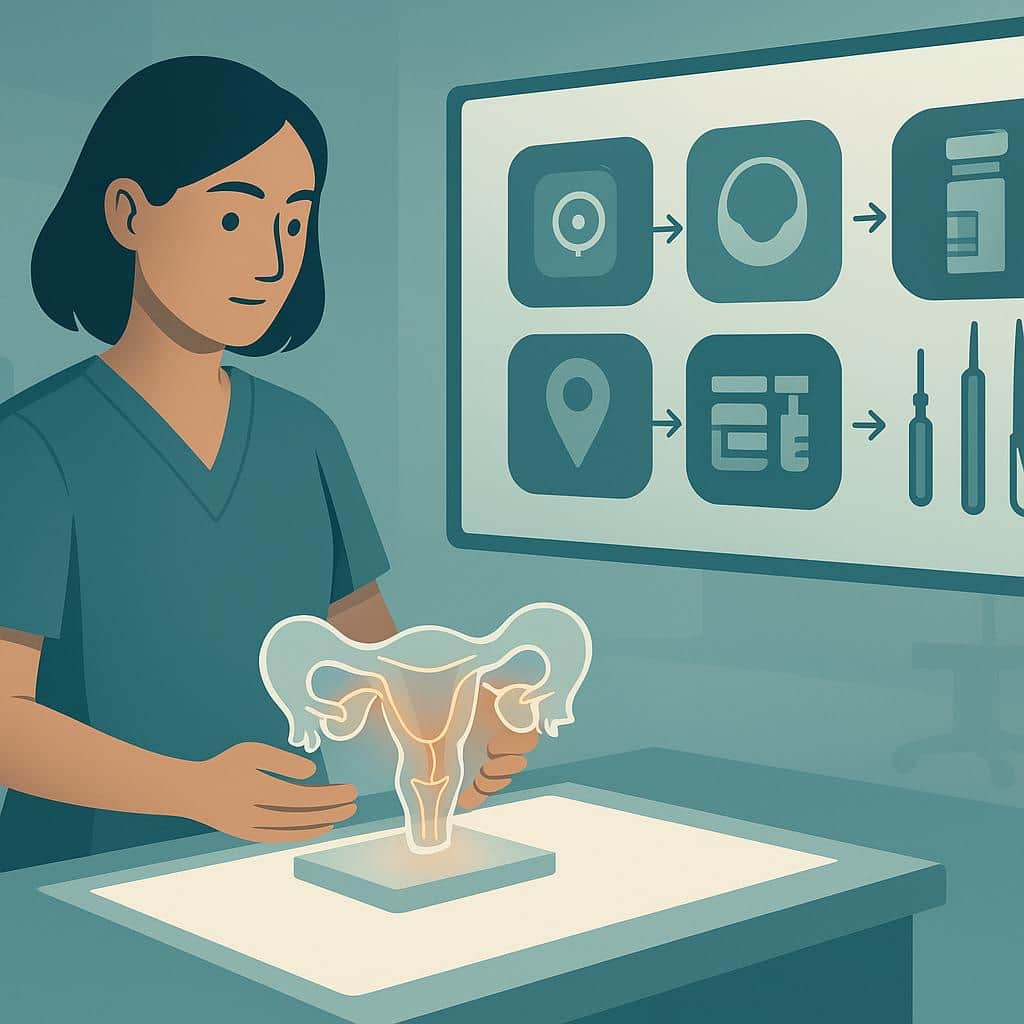
In advanced cases, the ureter may need to be carefully dissected free (ureterolysis) to restore normal anatomy and protect kidney drainage. Bladder endometriosis sometimes requires precise excision from the bladder wall. That’s why surgical planning matters: mapping disease on imaging when possible, anticipating urinary-tract involvement, and using meticulous technique to identify and protect the ureters and bladder throughout the operation.
In our practice, we use robotic excision for its magnified 3‑D optics and wristed instruments, which can improve visualization and precision around delicate structures like the ureters and bladder. If you’re worried about urinary-tract risks in your case (especially if you have urinary symptoms, prior surgery, or suspected deep disease), reach out to our team for an individualized surgical plan and risk review.
Where to go from here
Understand it, compare it with what you're feeling, then talk it through with us.
Step 1 · Understand
Understand the condition
Step 2 · Compare
Symptoms it can relate to
Step 3 · Speak with Us
Worried About Surgery Risks?
We understand the concerns about ureter and bladder injury during endometriosis surgery. Our specialists use expert techniques to minimize risks and protect your urinary tract.
Questions people ask next
All surgery questionsWhat are the main risks of endometriosis excision, and how are they minimized?
The main risks of endometriosis excision are bleeding, infection, scar tissue (adhesions), and injury to the bowel, bladder or ureters. We minimize these risks with careful surgical planning, meticulous technique to protect organs and nerves, and the right expertise and tools.
Why would a cancer surgeon perform endometriosis excision?
A gynecologic cancer surgeon has skills that often translate directly to challenging endometriosis excision, including operating safely around critical organs. Their experience recognizing atypical tissue can add an extra layer of safety during surgery.
When should I see an excision specialist for endometriosis?
You may benefit from an excision specialist if symptoms are severe, persistent, or complex, or if deeper disease is a concern. This also applies if you’re trying to conceive, imaging suggests an endometrioma or significant adhesions, or symptoms never fully improved after surgery.
When is surgery considered for endometriosis-related urinary urgency?
Surgery may be considered when your history, pelvic exam and imaging suggest endometriosis involving the bladder, ureters or nearby pelvic structures, or when urinary urgency persists despite appropriate medical and supportive care.
Further reading
Gynecologic Oncologists - Safest Choice for Complex Endometriosis Surgery?
For deep or advanced endometriosis, oncology-trained surgeons often provide safer, more complete excision. Learn what this means for you at the Lotus Endometriosis Institute.
Deep Infiltrating Endometriosis: Current and Future Treatments
Deep infiltrating endometriosis: symptoms, causes, diagnosis and treatment. Medical therapy, ICG-guided surgery, stenting, pathology, and future outlook.
Bladder Endometriosis: Symptoms, Diagnosis, and Treatment Options
Learn about bladder endometriosis, its symptoms, diagnosis, and treatment options. Understand the complexities to find effective pain management solutions.