
Deep Disease
Does adenomyosis get worse during perimenopause?
The short answer
Adenomyosis can feel worse during perimenopause for some patients, as hormone fluctuations and changing cycles can amplify bleeding, cramping or pelvic pressure. Worsening is not guaranteed, and some people notice symptoms stabilize or improve as they transition fully into menopause.
Adenomyosis can feel worse during perimenopause for some patients, not because it always progresses rapidly, but because hormone fluctuations and changing cycles can amplify adenomyosis symptoms, especially heavier or more erratic bleeding and worsening cramping or pelvic pressure. As periods become irregular, the pattern of pain may also change, which can be confusing when you’re used to clearly cyclical symptoms.
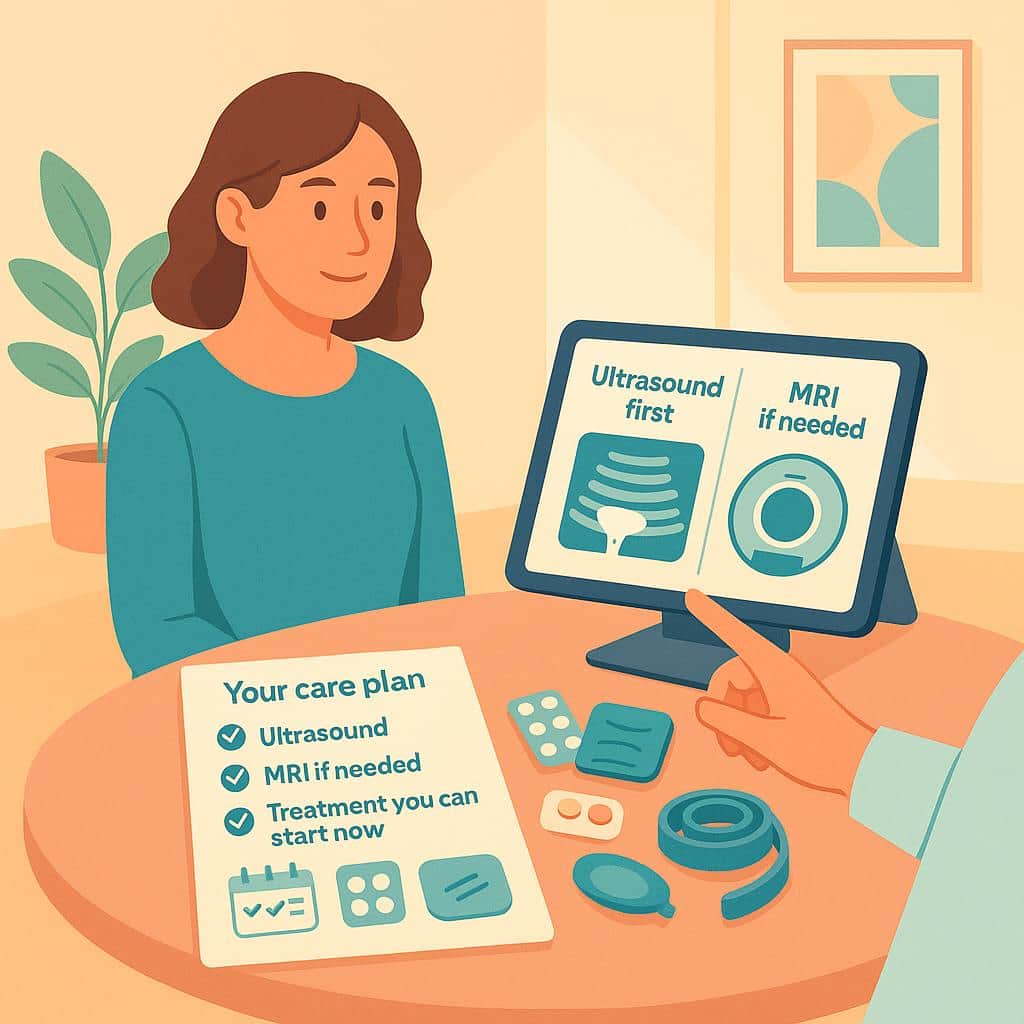
At the same time, perimenopause doesn’t guarantee worsening. Some people notice their symptoms stabilize or improve as they transition fully into menopause, while others continue to have significant pain or bleeding, especially if adenomyosis overlaps with conditions like endometriosis or fibroids. If your symptoms are escalating, we can help clarify what’s driving them (often with targeted ultrasound and, when it matters, MRI) and talk through treatment approaches that match your goals, including uterus-preserving options when appropriate and definitive options when they’re not.
Where to go from here
Understand it, compare it with what you're feeling, then talk it through with us.
Step 1 · Understand
Understand the condition
Step 2 · Compare
Symptoms it can relate to
Step 3 · Speak with Us
Worried About Adenomyosis Symptoms?
Hormone changes in perimenopause can worsen adenomyosis pain and bleeding, but symptoms vary by person. Our specialists can help manage your symptoms and guide you through this transition.
Questions people ask next
All deep disease questionsDo adenomyosis symptoms improve after menopause or return after treatment?
Adenomyosis symptoms often improve after natural menopause as estrogen declines, and adenomyosis does not come back after hysterectomy because the uterus is removed. Persistent or returning pelvic pain may reflect other conditions or muscular pain patterns.
Can adenomyosis cause irregular periods?
Yes, adenomyosis can contribute to irregular periods, including heavier flow, prolonged periods, spotting between periods, or less predictable cycles. Irregular bleeding is not specific to adenomyosis, and fibroids or endometriosis can overlap.
Why can adenomyosis cause heavy menstrual bleeding?
Adenomyosis can cause heavy bleeding because tissue within the uterine muscle responds to monthly hormones, triggering swelling, bleeding and inflammation. The uterus may also enlarge, and muscle contractions can be disrupted, contributing to heavier or longer periods.
Why are my menstrual cramps getting worse over time?
Menstrual cramps that worsen over time can be a sign that an underlying condition is progressing. Inflammation and scarring from endometriosis can intensify pain, while adenomyosis can lead to heavier, more painful periods.
Further reading
Diffuse Adenomyosis: Diagnosis and Treatment You Can Act On
A clear guide to diffuse adenomyosis: what it means, how TVUS and MRI diagnose it, and practical treatments, from hormonal IUDs to uterus-sparing options.
Do My Symptoms Mean Adenomyosis or Endometriosis?
Discover the truth about endometriosis and adenomyosis symptoms. Understand how common they really are, and gain insights for effective advocacy.
Can the Hormonal IUD Tame Your Adenomyosis Pain and Bleeding?
Discover how the hormonal IUD may alleviate adenomyosis pain and heavy bleeding for better quality of life. Learn about this treatment option now!