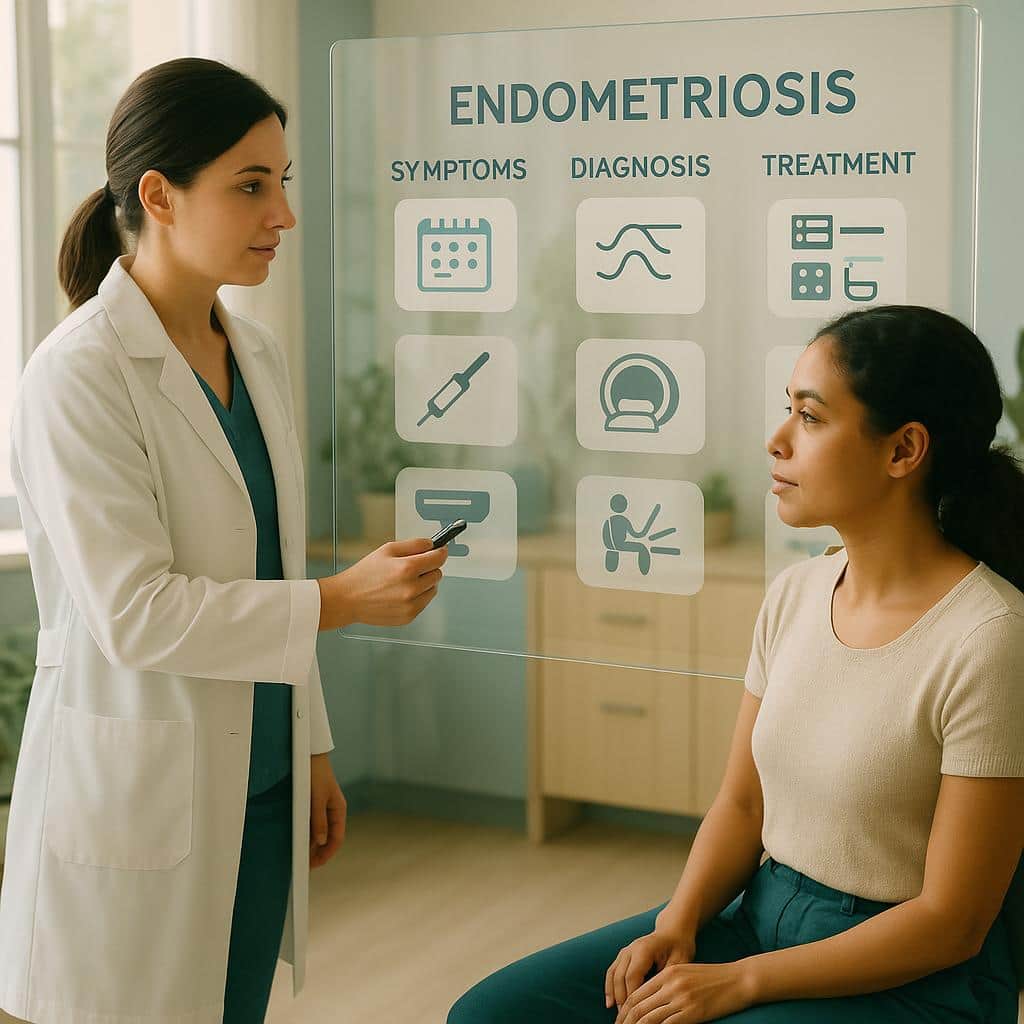

Symptoms
How can I tell if my period cramps are abnormal?
The short answer
Period cramps may be abnormal if they start before bleeding, worsen over time, or don’t meaningfully improve with NSAIDs and heat. Cramps that regularly disrupt school, work, sleep, or daily activities are a key red flag; heavy or prolonged bleeding with clots also matters.
Period cramps may be abnormal when pain starts before bleeding, progressively worsens over months or years, or doesn’t meaningfully improve with common measures like NSAIDs and heat. A key red flag is the impact on your life: if cramps regularly disrupt school, work, sleep, or daily activities, they’re worth a deeper look rather than something you should have to power through.
We also pay attention to the pattern of bleeding and what the pain feels like. Heavy or prolonged bleeding with clots, along with a heavy, pressure-like uterine ache (sometimes described as a “boggy” or enlarged-feeling uterus), can be consistent with adenomyosis, especially when it occurs alongside ongoing pelvic pain. If these signs fit your experience, our team can help evaluate possible causes and discuss next steps, including whether imaging, medical options, or surgery may be appropriate.
Where to go from here
Understand it, compare it with what you're feeling, then talk it through with us.
Step 3 · Speak with Us
Worried About Your Cramps?
If your period pain starts early, worsens, or disrupts daily life, it’s time to get help. Our specialists can diagnose and treat cramps caused by endometriosis and adenomyosis for relief and better days.
Questions people ask next
All symptoms questionsWhy is my period pain so severe it disrupts my daily life?
Severe period pain that disrupts daily life often points to an underlying cause, such as endometriosis or adenomyosis. Pain severity doesn’t reliably match the stage of endometriosis, so pain can be intense even when imaging looks normal.
Why are my menstrual cramps getting worse over time?
Menstrual cramps that worsen over time can be a sign that an underlying condition is progressing. Inflammation and scarring from endometriosis can intensify pain, while adenomyosis can lead to heavier, more painful periods.
Are painful periods normal or a sign of endometriosis?
Mild period cramping can be common, but endometriosis and adenomyosis are two common causes of intense period pain. Severe, worsening, or disabling pain, especially when it keeps you home from school or work, is a signal to look deeper.
What are the key symptoms of adenomyosis?
Adenomyosis more commonly causes heavy or prolonged periods and significant cramping that can feel deep, sore, or achy. Many patients describe pelvic pressure, uterine tenderness, and heaviness, sometimes with bloating or low back discomfort that tracks with the cycle.
Further reading
How to Recognize Endometriosis Symptoms
Recognize endometriosis: painful periods, GI and urinary symptoms, dyspareunia, infertility. Understand causes, complications, diagnosis, and medical/surgical treatment options.
Do My Symptoms Mean Adenomyosis or Endometriosis?
Discover the truth about endometriosis and adenomyosis symptoms. Understand how common they really are, and gain insights for effective advocacy.
Different Types of Endometriosis Pain Explained
Explore types of endometriosis pain, evaluation, and evidence-based treatments, including triggers, pelvic floor therapy, CNS sensitization, and adenomyosis.