
Deep Disease
How is sciatic nerve endometriosis diagnosed?
The short answer
Sciatic nerve endometriosis is diagnosed using your symptom pattern, exam findings and expert interpretation of imaging, with confirmation when indicated. MRI may show a lesion along the nerve, but results can be subtle and other causes of sciatica are considered.
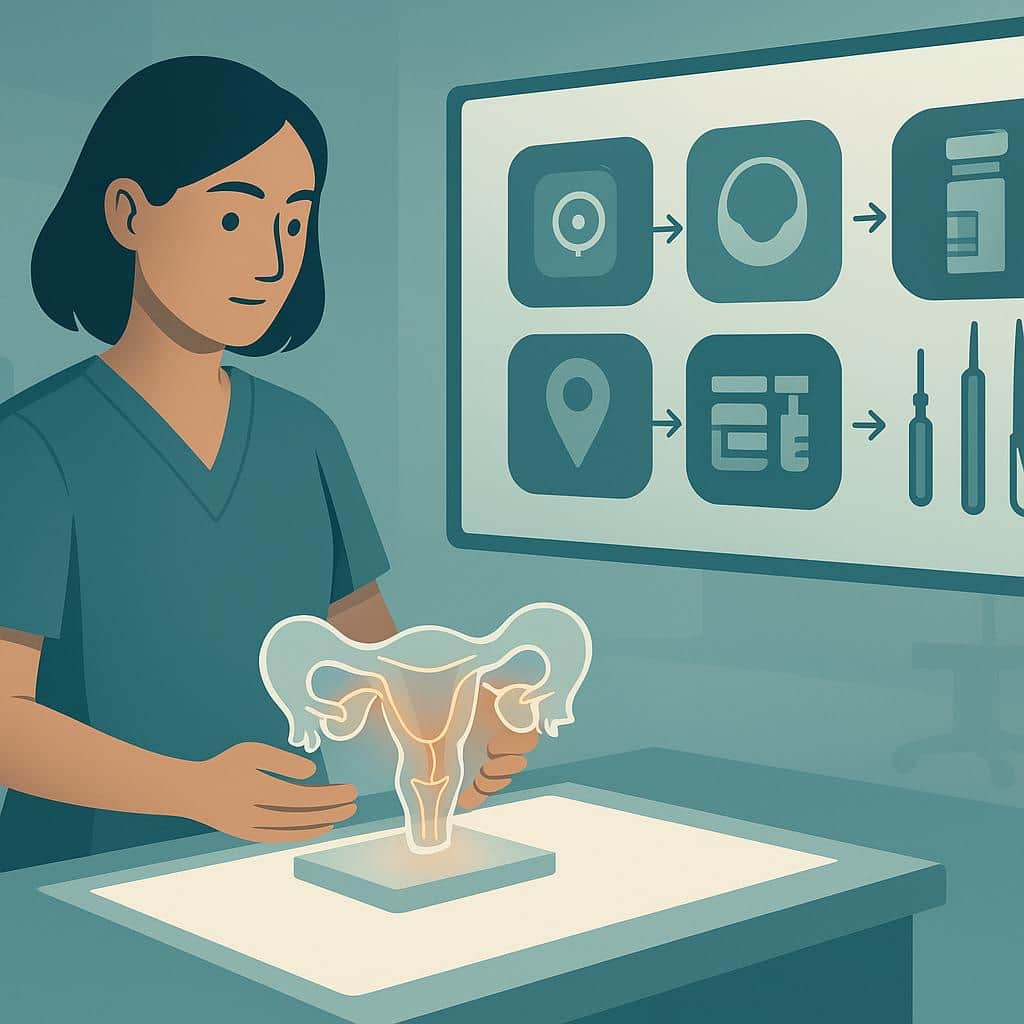
Sciatic endometriosis is diagnosed by bringing together the symptom pattern, exam findings, and expert interpretation of imaging, then confirming the diagnosis when indicated. We start by listening closely to your full story, including whether buttock, back, or leg pain flares around your cycle, how far it radiates, and whether you’ve had numbness or tingling, weakness, gait changes, or foot drop. On exam, we look for findings that map to the sciatic nerve distribution. The exam can include maneuvers such as a straight-leg raise (Lasègue’s test) and assessment for deep tenderness near the sciatic notch.
Lab tests generally don’t diagnose sciatic endometriosis; inflammatory markers and sometimes CA-125 can be elevated but aren’t specific and don’t prove nerve involvement. MRI is often the most useful imaging tool for suspected endometriosis-related extraspinal sciatica because it may show a lesion along the nerve (commonly near the sciatic notch) or patterns of indirect compression or inflammation that can mimic piriformis syndrome. Even with good imaging, findings can be subtle, so symptoms outside the uterus or pelvis shouldn’t be dismissed. The diagnosis often depends on a careful, whole-body differential that also considers look-alike or coexisting causes of sciatica.
If your history and imaging raise concern for sciatic involvement, our team can guide a stepwise evaluation and discuss what confirmation and treatment would involve in your specific case, including when minimally invasive excision is appropriate and how we assess other contributors to persistent pain. If you’re experiencing progressive weakness, walking difficulty, or foot drop, we consider that a more serious presentation and prioritize timely assessment to reduce the risk of long-term nerve injury.
Where to go from here
Understand it, compare it with what you're feeling, then talk it through with us.
Step 2 · Compare
Symptoms it can relate to
Step 3 · Speak with Us
Struggling with Sciatic Pain?
Our specialists carefully evaluate your symptoms and imaging to diagnose sciatic nerve endometriosis accurately. Let us help pinpoint what's causing your pain and guide your next steps.
Questions people ask next
All deep disease questionsCan pelvic MRI detect nerve endometriosis?
Sometimes, a pelvic MRI can detect nerve endometriosis, but a normal MRI does not rule it out. It may show a lesion in or around a nerve, scarring, or compression, but nearby inflammation or scarring can irritate a nerve without a visible mass.
Is my leg pain from endometriosis or a back/disc problem?
There is no perfect at-home test, but endometriosis-related leg pain often tracks with your cycle, while back or disc pain is more likely to change with spine movements. These conditions can overlap, and a pelvic and musculoskeletal evaluation can help sort them out.
What kind of doctor evaluates suspected nerve endometriosis?
A fellowship-level endometriosis excision surgeon is typically the right starting point for suspected nerve endometriosis. The key is a clinician who routinely evaluates deep endometriosis and understands how it can affect pelvic nerves.
Can endometriosis irritate or entrap pelvic nerves?
Yes, endometriosis can irritate, inflame, or tether pelvic nerves, especially when it grows deeply into tissues. When lesions are near nerves, symptoms can include cyclical sciatica-like leg pain, genital burning, or sharp shooting pain in the rectum or vagina.
Further reading
Sciatic Nerve Endometriosis: Diagnosis and Treatment
Sciatic nerve endometriosis explained: key symptoms, how it's diagnosed (exam, MRI), and effective treatments including medication, PT, and surgical excision.
Beyond the Abdomen: Endometriosis in the Diaphragm and Nerves
Discover rare symptoms of endometriosis involving the diaphragm and nerves. Understand the importance of accurate diagnosis and emerging research.
Deep Infiltrating Endometriosis: Current and Future Treatments
Deep infiltrating endometriosis: symptoms, causes, diagnosis and treatment. Medical therapy, ICG-guided surgery, stenting, pathology, and future outlook.