
Fertility
What does low AMH mean with endometriosis?
The short answer
Low AMH with endometriosis means your ovarian reserve looks lower than expected for your age. The disease, an ovarian endometrioma or prior ovarian surgery can contribute, but AMH does not measure egg quality directly or predict whether you can conceive on your own.
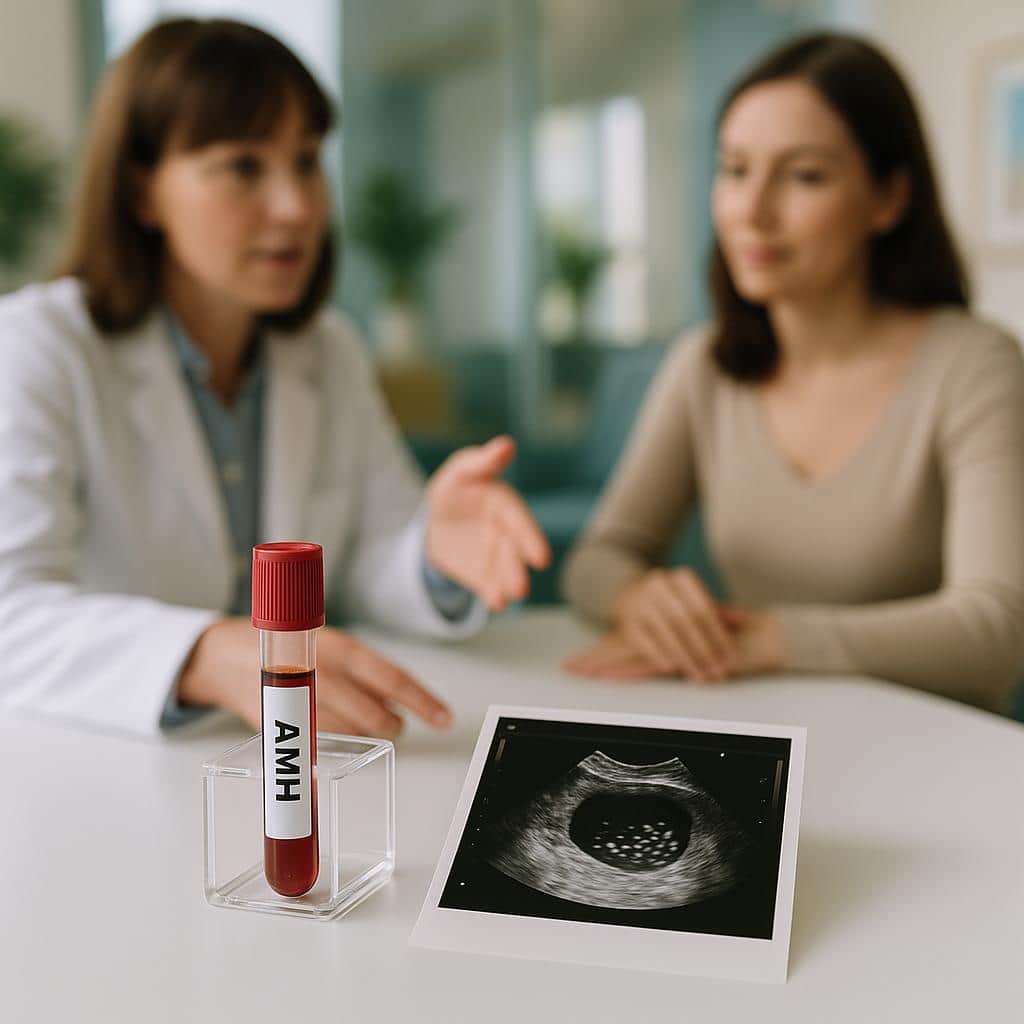
Low AMH (anti‑Müllerian hormone) means your ovarian reserve, your remaining pool of recruitable follicles, looks lower than expected for your age. In people with endometriosis, low AMH can happen for more than one reason: the inflammatory impact of the disease itself, the presence of an ovarian endometrioma, and/or prior ovarian surgery. It’s also important to know what AMH can’t tell you: it doesn’t diagnose endometriosis, it doesn’t measure egg quality directly, and it doesn’t predict whether you can or can’t conceive on your own.
With endometriomas in particular, one AMH number can miss what’s happening ovary-by-ovary. We often look at AMH alongside an antral follicle count (AFC) on ultrasound, because AFC can show the local effect of a cyst, such as fewer follicles on the side with the endometrioma even if the other ovary is compensating. If fertility planning is part of your goals, our team can help interpret AMH in the full context of your imaging, symptoms, prior treatments, and timeline so you’re not making big decisions based on a single lab value.
Where to go from here
Understand it, compare it with what you're feeling, then talk it through with us.
Step 1 · Understand
Understand the condition
Step 2 · Compare
Symptoms it can relate to
Step 3 · Speak with Us
Worried About Low AMH Levels?
Low AMH can affect your fertility journey, especially with endometriosis. Our specialists understand these challenges and can guide you through personalized options to preserve or enhance your fertility.
Questions people ask next
All fertility questionsCan endometriosis lower AMH without surgery?
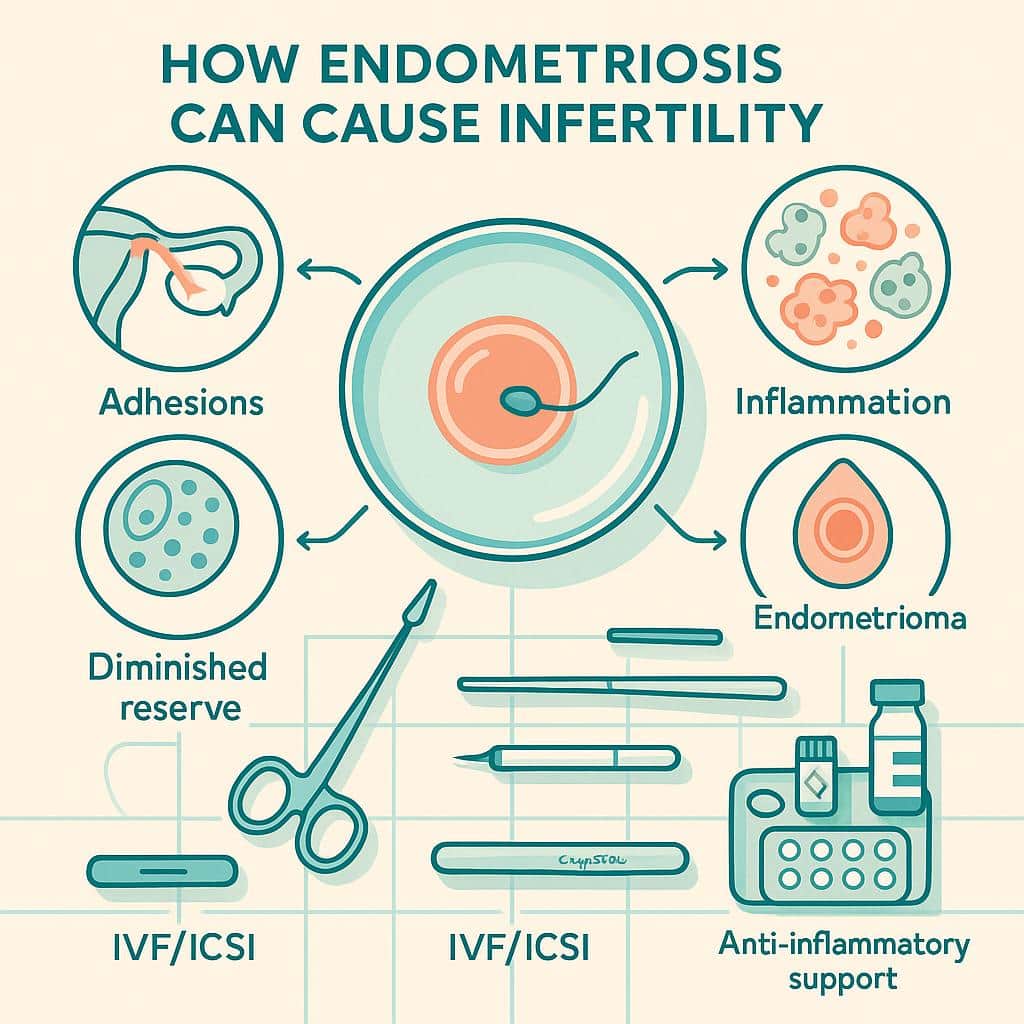
Yes, endometriosis can lower AMH without surgery, especially when it involves the ovaries. An ovarian endometrioma can affect ovarian tissue through chronic inflammation and scarring, which may reduce ovarian function over time.
Does endometrioma surgery reduce AMH or ovarian reserve?
Yes, endometrioma surgery can lower AMH and ovarian reserve by unintentionally removing or damaging healthy ovarian tissue, especially with cystectomy. Surgical technique and energy use matter when treating the disease while protecting ovarian tissue.
Which infertility tests matter most with endometriosis?
The most useful infertility tests for endometriosis typically include ovarian reserve labs, a pelvic ultrasound, a test to check whether the fallopian tubes are open, and a semen analysis. Your symptom pattern and surgical history help put results in context.
Do endometriomas affect fertility or ovarian reserve?
Yes, endometriomas can affect fertility and may be associated with lower ovarian reserve in some patients. Surgery, especially repeat cyst surgery, can also affect ovarian reserve because healthy ovarian tissue can be removed or its blood supply altered.
Further reading
AMH Or Follicle Count Which Matters More For Endometriomas
How AMH and antral follicle count behave with unilateral or bilateral endometriomas, the impact of cyst size, and practical guidance for your next appointment.
How Endometriosis Contributes to Infertility
How endometriosis leads to infertility: pathogenesis; effects on gametes, tubes, and endometrium; and treatments—expectant care, surgery, and ART.
Is Ethanol Sclerotherapy the Fertility-Friendly Answer for Endometriomas?
Discover how ethanol sclerotherapy could be a fertility-sparing solution for endometriomas. Learn about its benefits, success rates, and more!