Symptoms
Why does cyclical leg pain switch sides?
The short answer
Cyclical leg pain can switch sides because hormonally driven pelvic inflammation, swelling, and pelvic floor muscle tension can irritate the right or left nerve pathways at different times in the month. This pattern does not rule endometriosis in or out.
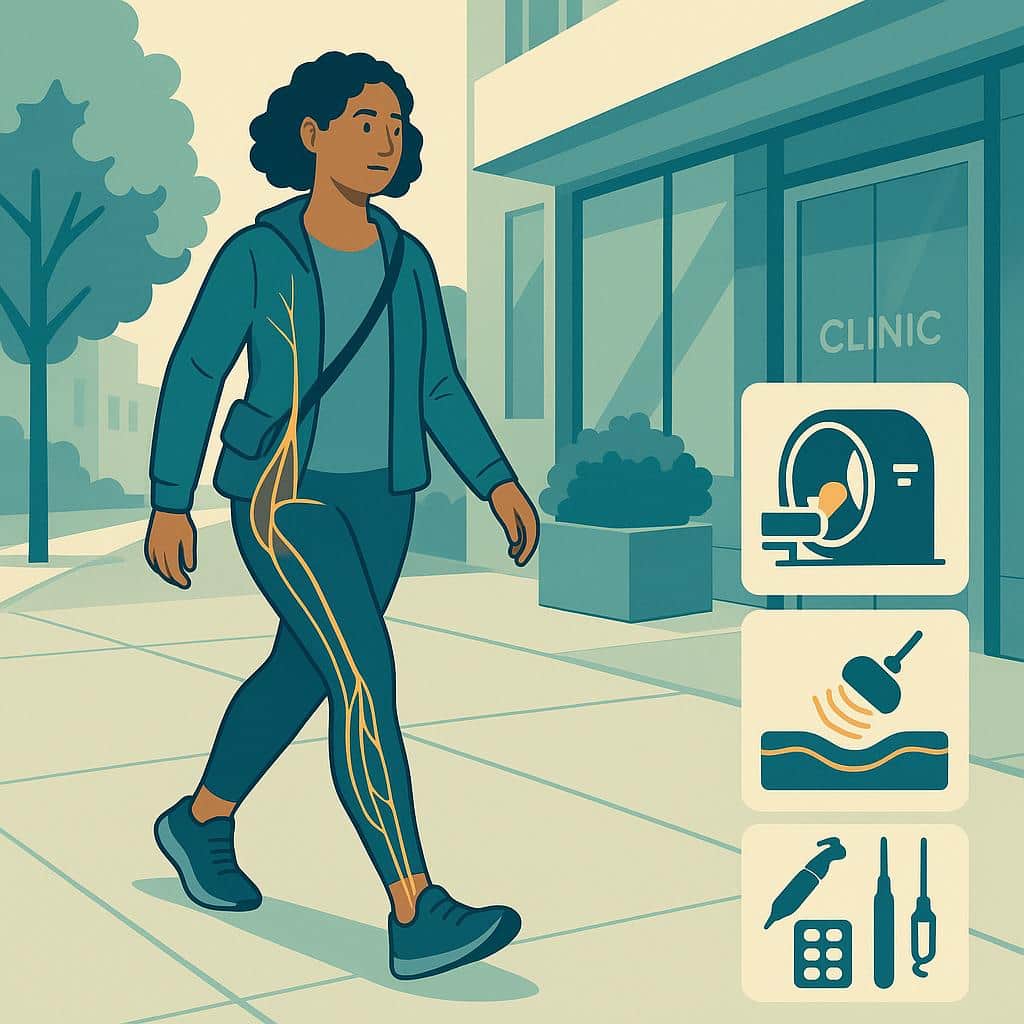
Leg pain that predictably flares with your cycle can happen when hormonally driven pelvic inflammation irritates nerves that refer pain into the buttock, hip, and leg, most commonly along the sciatic distribution. The side can change because irritation doesn’t always come from a single fixed spot. Swelling, muscle guarding in the pelvic floor (including the piriformis), and shifting tension patterns can alternately load the right or left nerve pathways at different times in the month. Some people also have endometriosis or scarring in deeper pelvic spaces where major nerves run, and symptoms can mimic orthopedic sciatica even when the spine is normal.
A side-switching pattern doesn’t rule endometriosis in or out, but it’s a meaningful clue, especially if leg pain clusters before bleeding, during a period, or in a repeatable monthly rhythm. During our evaluation, we map your flare timing, neurologic features such as tingling, numbness, weakness, and gait changes, and associated pelvic symptoms. We then decide whether targeted imaging (often MRI interpreted with endometriosis in mind) or a broader whole-body workup is most appropriate. If your leg pain is cyclical or escalating, reach out to schedule a consultation so we can help identify whether this is nerve-related endometriosis, pelvic floor involvement, or another condition that’s been missed.
Where to go from here
Understand it, compare it with what you're feeling, then talk it through with us.
Step 1 · Understand
Understand the condition
Step 2 · Compare
Symptoms it can relate to
Step 3 · Speak with Us
Cyclical leg pain changing sides?
If leg pain flares with your cycle and switches sides, pelvic inflammation or muscle guarding can irritate different nerve pathways month to month. Our endometriosis and adenomyosis specialists can evaluate for sciatic-type endometriosis, pelvic floor involvement, and other deep pelvic causes—and go
Questions people ask next
All symptoms questionsIs my leg pain from endometriosis or a back/disc problem?
There is no perfect at-home test, but endometriosis-related leg pain often tracks with your cycle, while back or disc pain is more likely to change with spine movements. These conditions can overlap, and a pelvic and musculoskeletal evaluation can help sort them out.
Can endometriosis irritate or entrap pelvic nerves?
Yes, endometriosis can irritate, inflame, or tether pelvic nerves, especially when it grows deeply into tissues. When lesions are near nerves, symptoms can include cyclical sciatica-like leg pain, genital burning, or sharp shooting pain in the rectum or vagina.
Can endometriosis cause sciatica or leg pain?
Yes, endometriosis can cause sciatica-like symptoms and leg pain in some patients by growing in or near the sciatic nerve or causing inflammation and scarring that create nerve pressure. Pain may worsen before or during a period, but it doesn’t have to be cyclical.
When should I see an endometriosis specialist for leg pain?
It’s worth considering an endometriosis specialist if leg pain keeps coming back, is disabling, follows a monthly pattern, or flares with pelvic symptoms. Concern is also higher if sciatica treatments haven’t found a clear cause or brought meaningful improvement.
Further reading
Sciatic Nerve Endometriosis: Diagnosis and Treatment
Sciatic nerve endometriosis explained: key symptoms, how it's diagnosed (exam, MRI), and effective treatments including medication, PT, and surgical excision.
Different Types of Endometriosis Pain Explained
Explore types of endometriosis pain, evaluation, and evidence-based treatments, including triggers, pelvic floor therapy, CNS sensitization, and adenomyosis.
What Else Could It Be? Ruling Out Other Causes
Explore essential insights on endometriosis and other causes of pelvic pain. Learn about differential diagnoses and effective treatment options.