
Fertility
Are ICSI or PGT-A recommended for endometriosis?
The short answer
ICSI isn’t routinely recommended for endometriosis alone, while PGT-A can help in specific situations. ICSI decisions usually depend on semen results and past fertilization; PGT-A may help older patients or those with recurrent pregnancy loss or repeated implantation failure.
ICSI isn’t routinely recommended just because someone has endometriosis. If there’s no male-factor infertility, many patients can achieve good fertilization rates with standard insemination, even though severe disease may slightly reduce fertilization in some cases. The decision usually depends on semen parameters and prior fertilization history rather than the presence of endometriosis alone.
PGT-A can be helpful in specific situations (most commonly for older patients, recurrent pregnancy loss, or repeated implantation failure) because it may shorten the path to a chromosomally normal, or euploid, embryo transfer. However, PGT-A is not a treatment for endometriosis and doesn’t increase live birth rates for every age group. If you’re weighing IVF options in the context of endometriosis, our team can review your history and goals to help you decide whether these add-ons are likely to provide meaningful value in your case.
Where to go from here
Understand it, compare it with what you're feeling, then talk it through with us.
Step 1 · Understand
Understand the condition
Step 3 · Speak with Us
Fertility Options with Endometriosis
Your fertility journey is unique, and our specialists tailor treatments to your specific needs. We can help determine if ICSI or PGT-A is right for you based on your individual circumstances.
Questions people ask next
All fertility questionsWhich infertility tests matter most with endometriosis?
The most useful infertility tests for endometriosis typically include ovarian reserve labs, a pelvic ultrasound, a test to check whether the fallopian tubes are open, and a semen analysis. Your symptom pattern and surgical history help put results in context.
When is IVF recommended for endometriosis?
IVF is often recommended for endometriosis when older age or reduced ovarian reserve makes time a key factor, or when fallopian tubes are blocked or damaged. It may also be the next step after unsuccessful less invasive fertility treatment or when male-factor infertility is present.
Does endometriosis treatment reduce miscarriage risk or mainly aid conception?
Endometriosis treatment, especially complete excision, has the strongest evidence for improving the chances of conceiving; whether it lowers miscarriage risk is less clear. When adenomyosis is also present, optimizing the uterus before pregnancy may be more relevant to miscarriage risk.
Which ovarian stimulation protocols are best for endometriosis?
Many fertility teams favor an antagonist stimulation protocol for endometriosis, but the best choice depends on ovarian reserve, prior response, symptoms and any endometriomas. It offers timing control and can support a GnRH-agonist trigger, which may lower ovarian hyperstimulation risk.
Further reading
Making a Fertility Plan: Working with Your Endometriosis Care Team
Learn how to create a patient-centered fertility plan with your endometriosis care team, addressing symptoms, treatment, and desired timelines.
Surgery and IVF: When Are They Right for Endometriosis?
Explore when surgery or IVF is best for endometriosis. Understand the decision-making process and what to consider for fertility and health.
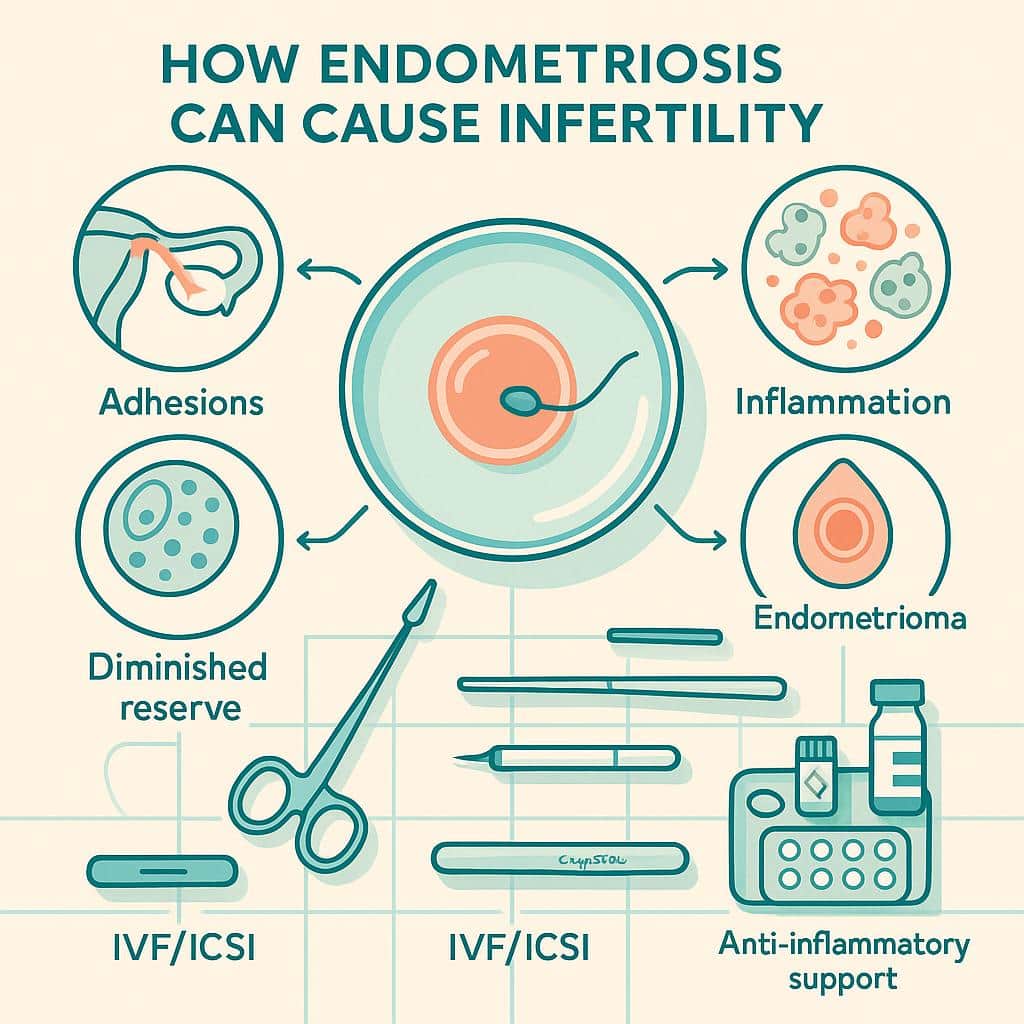
How Endometriosis Contributes to Infertility
How endometriosis leads to infertility: pathogenesis; effects on gametes, tubes, and endometrium; and treatments—expectant care, surgery, and ART.