
Deep Disease
Can a CT scan detect bowel endometriosis?
The short answer
Sometimes, but a CT scan is not reliable for diagnosing or ruling out bowel endometriosis. Many lesions won’t be visible, so evaluation typically relies more on symptoms, a targeted pelvic exam, and expertly interpreted ultrasound and/or MRI.
Sometimes, but a CT scan is not a reliable test for diagnosing or ruling out bowel endometriosis. CT is better at spotting broader issues like a mass, significant inflammation, obstruction, or other causes of abdominal pain. Many endometriosis lesions (especially superficial or smaller deep lesions) won’t be visible.
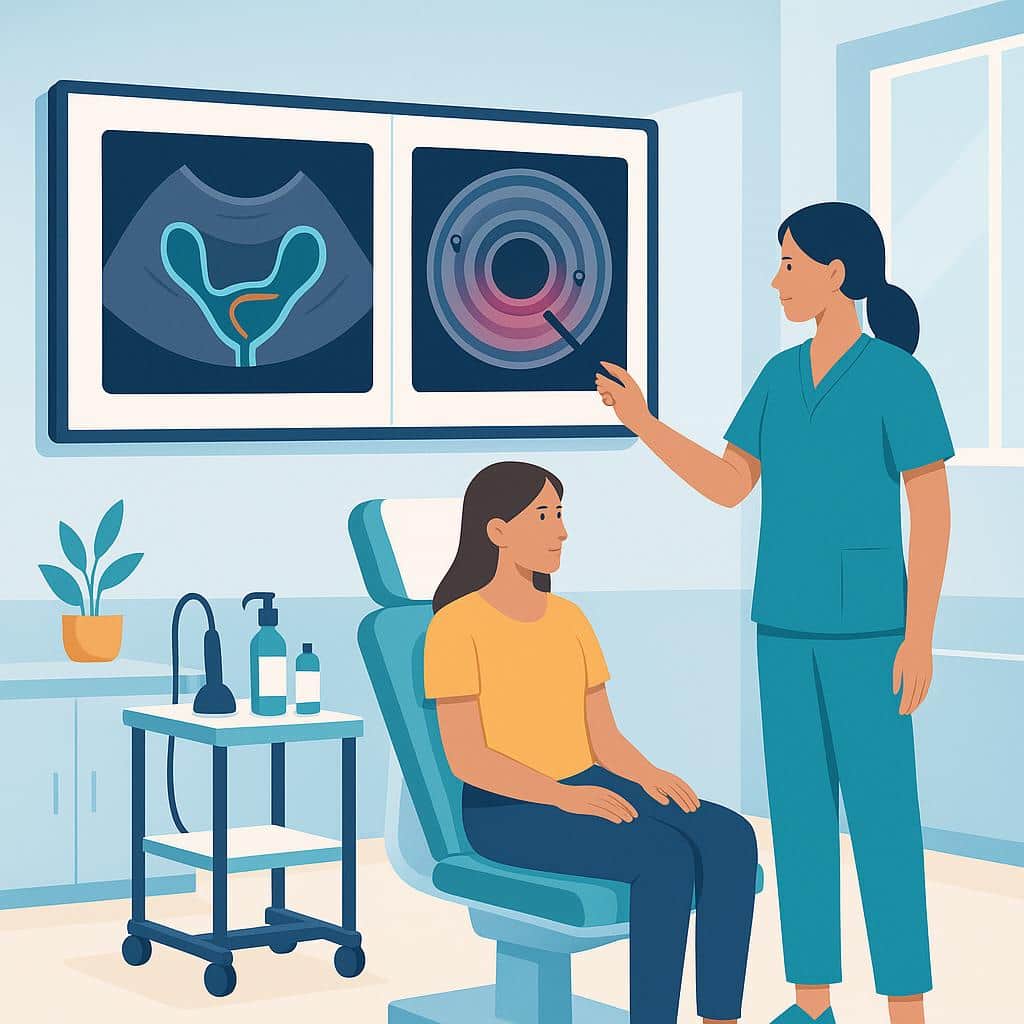
When we suspect bowel involvement, we typically rely more on your symptom pattern, a targeted pelvic exam, and expertly interpreted imaging (most often ultrasound and/or MRI). These help us look for signs of deep infiltrating disease and map what may be involved for surgical planning. Even then, imaging can help identify suspected disease, but it can’t reliably exclude endometriosis.
If you’re having bowel symptoms that flare with your cycle (pain with bowel movements, swings between constipation and diarrhea, bloating, or rectal pressure), our team can help you sort out endometriosis versus common look-alike or overlapping conditions and build a clear plan. That may mean next-step imaging, broader evaluation, or discussion of minimally invasive excision surgery when appropriate.
Where to go from here
Understand it, compare it with what you're feeling, then talk it through with us.
Step 2 · Compare
Symptoms it can relate to
Step 3 · Speak with Us
Worried About Bowel Endometriosis?
CT scans often miss small or deep endometriosis lesions. Our specialists use advanced imaging and exams to diagnose and tailor treatment precisely for you.
Questions people ask next
All deep disease questionsWill endometriosis show up on MRI?
Sometimes, but a normal MRI does not rule out endometriosis. MRI is best at picking up endometriosis-related ovarian cysts and deep disease, but superficial endometriosis and small implants often don’t show up, even when symptoms are significant.
Do I need imaging or a colonoscopy for GI symptoms?
Imaging can be helpful for GI symptoms that are severe, persist despite treatment, or suggest deeper endometriosis near the bowel. Colonoscopy may be appropriate for signs of other GI conditions, such as rectal bleeding, unexplained anemia, or significant changes in bowel habits.
What is an endometriosis ultrasound mapping exam?
An endometriosis ultrasound mapping exam is a specialized pelvic ultrasound to identify where endometriosis is suspected. In experienced hands, it looks for signs of deep disease and possible bowel involvement to help plan surgery, but imaging can miss disease.
How do we evaluate painful bowel movements in endometriosis?
We evaluate painful bowel movements by mapping your symptoms, with a pelvic exam when appropriate, and may recommend ultrasound or MRI. Normal imaging does not rule out endometriosis, and we may coordinate a GI evaluation if symptoms suggest overlapping conditions.
Further reading
Can Scans and Tests Find Endometriosis? Know the Limits
Discover why ultrasounds may miss endometriosis. Learn about imaging limits and recent research in our latest blog. Find clarity in your diagnosis.
Bowel Endometriosis: Causes, Symptoms, and Treatment
Bowel endometriosis explained: locations, symptoms, causes, diagnosis and misdiagnosis, plus treatments from minimally invasive surgery to lifestyle changes.
Do You Need Two Ultrasounds Before Bowel Endometriosis Surgery?
How TVS (transvaginal) and ERUS (endorectal) map rectal endometriosis, guide bowel surgery planning, flag stenosis and risks, and who benefits.