
General
GnRH agonists vs antagonists: differences and add-back therapy?
The short answer
GnRH antagonists typically work quickly and are taken orally, while agonists are usually injected and can cause a short initial symptom flare. Add-back therapy uses a small hormone dose to reduce low-estrogen side effects and help protect bone density.
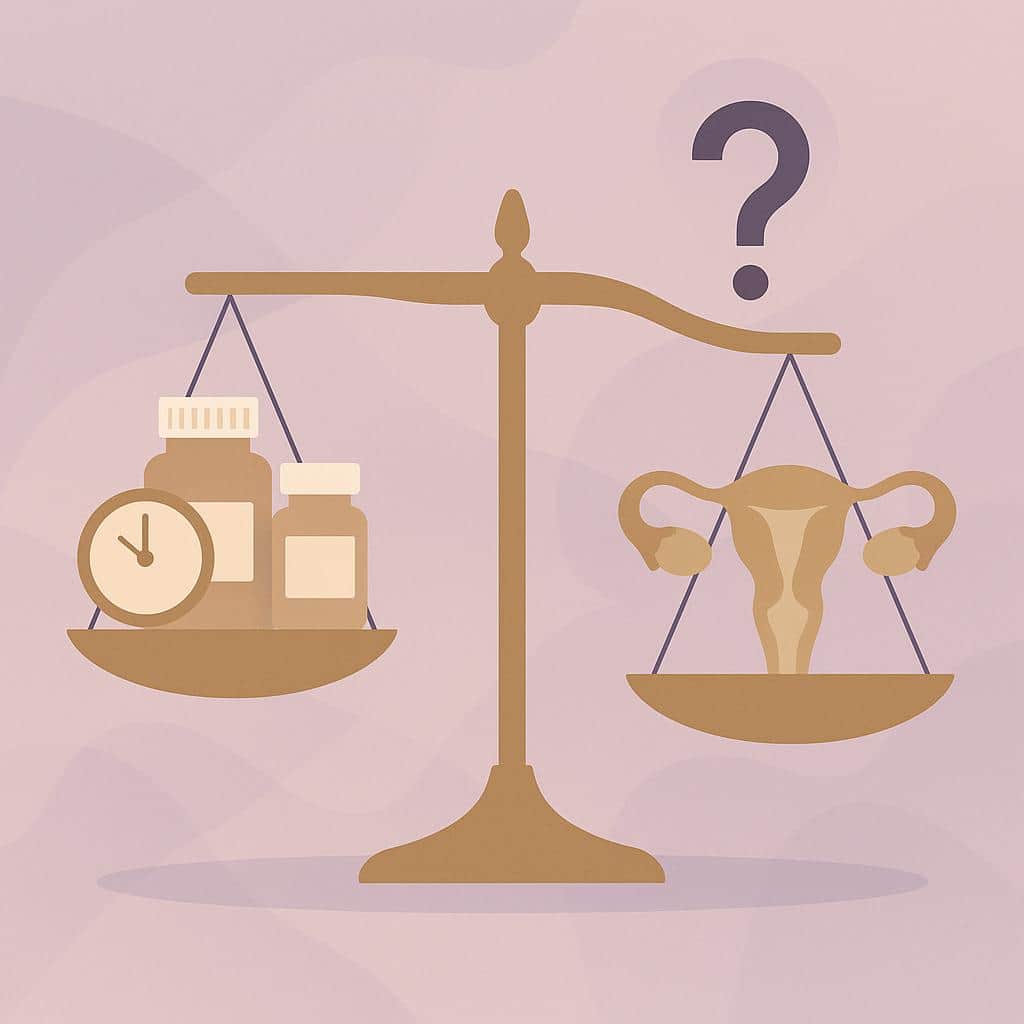
GnRH agonists and antagonists both suppress estrogen to reduce endometriosis-driven inflammation and pain, but they do it differently. Antagonists typically work quickly and are taken orally, while agonists are usually given by injection and can cause a short initial flare in symptoms before full suppression occurs. The choice often depends on how quickly suppression is needed, how the medication is taken, and your past response to hormonal therapies.
Add-back therapy is a small dose of hormone (often a progestin alone or combined low-dose estrogen/progestin) used alongside GnRH medications to reduce low-estrogen side effects. It’s primarily intended to help protect bone density and improve symptoms like hot flashes and sleep disruption, without significantly undermining pain control for many patients. Because these medications can carry meaningful side effects and aren’t a long-term solution for everyone, our team focuses on a careful, individualized discussion of risks, benefits, and where this treatment fits in a broader plan. Reach out if you’d like to review options with us.
Where to go from here
Understand it, compare it with what you're feeling, then talk it through with us.
Step 2 · Compare
Symptoms it can relate to
Step 3 · Speak with Us
Understand Your Hormone Treatment Options
Our specialists can explain how GnRH agonists and antagonists work and guide you through add-back therapy to ease side effects. Get personalized support to manage your symptoms effectively.
Questions people ask next
All general questionsWhat are the benefits and side effects of GnRH agonists/antagonists?
GnRH agonists and antagonists can lower estrogen and, for some patients, provide short-term relief of endometriosis pain. Side effects can include hot flashes, mood and sleep changes, vaginal dryness, decreased libido, and bone density loss, so treatment is typically time-limited.
Side effects, monitoring, and duration of endometriosis medications?
Side effects can include spotting, mood changes, acne or effects on bone density, depending on the medication. Monitoring depends on your health history; many patients can use progestogens or a hormonal IUD long term if effective and well-tolerated, while GnRH regimens are typically time-limited.
Why didn’t Lupron or Orilissa relieve my endometriosis symptoms?
Lupron and Orilissa lower estrogen, but this alone may not relieve pain from deep disease, adhesions or an overly sensitive pain system. They don’t remove endometriosis lesions or reverse the underlying inflammatory and nerve-related drivers of pain.
What is tried first for endometriosis pain, and how is it chosen?
Many patients start with hormonal suppression, such as continuous combined hormonal contraception, a progestin-only medication, or a levonorgestrel IUD. The choice depends on pain, bleeding goals, migraine history, clot risk, prior hormone side effects, and fertility timing.
Further reading
Relugolix for Endometriosis Pain: What a 2025 Meta-Analysis Says About Relief, Quality of Life, and Side Effects
2025 meta-analysis of relugolix for endometriosis: pain relief, QoL gains, side effects and add-back therapy, plus comparison with leuprorelin.
Should You Try Hormone Therapy Before Endometriosis Surgery?
Explore the benefits of hormone therapy before endometriosis surgery. Learn about GnRH agonists and their impact on pain and recovery.
Hormonal Therapy Risks Without Surgical Diagnosis: What Patients Should Know
Explore the risks of hormonal therapy without surgical diagnosis for endometriosis. Learn what patients need to know about treatment options and potential side