



Hormonal Therapy Risks Without Surgical Diagnosis: What Patients Should Know
Evidence-based tradeoffs when treating suspected endometriosis (and adenomyosis) with hormones
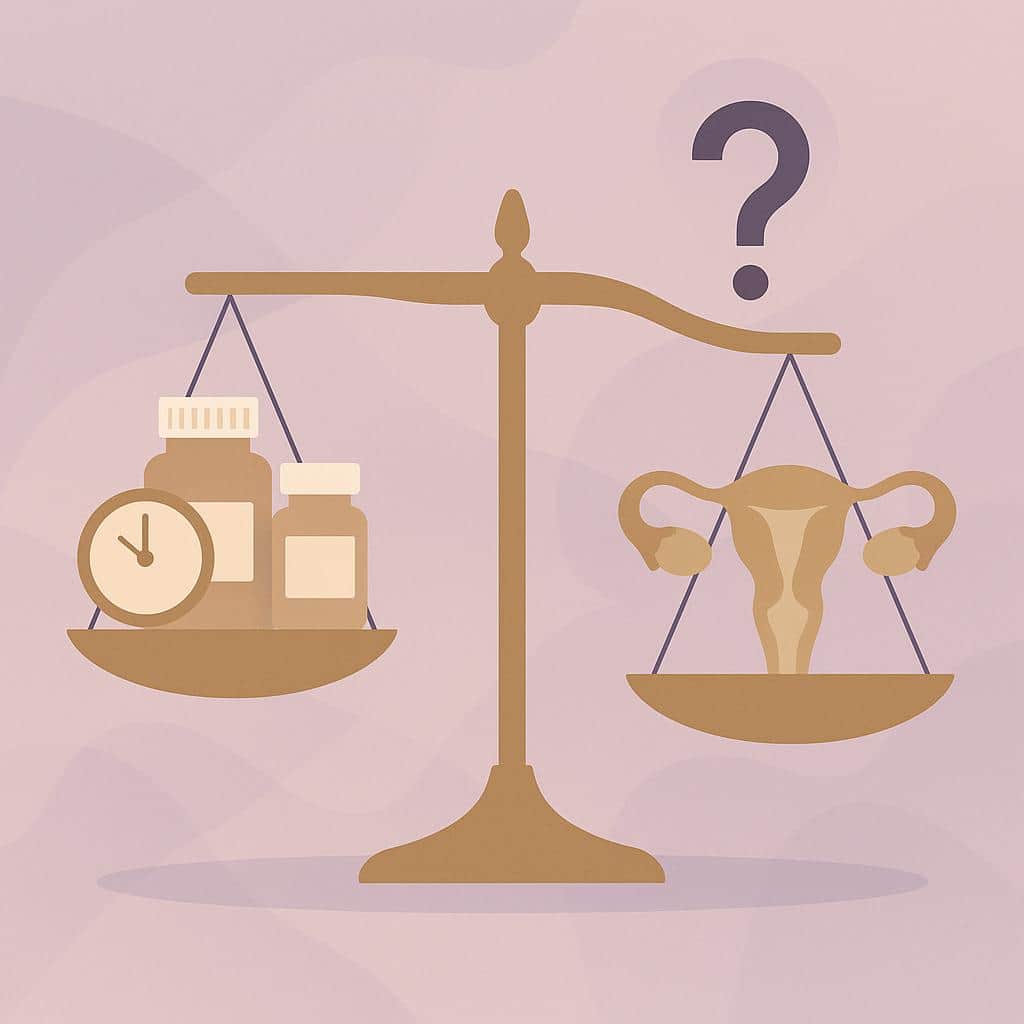
Why this question comes up so often
If you have symptoms that sound like endometriosis—severe period pain, pelvic pain between periods, pain with sex, bowel/bladder pain—your doctor may offer hormonal therapy without doing surgery to “prove” it first. For many people, that’s a relief: fewer delays, fewer procedures, and a real chance at symptom control.
But it can also feel unsettling: What if it isn’t endometriosis? What if I’m masking something? What are the risks of taking hormones long-term without a histologic diagnosis?
Pulling together findings from multiple recent reviews and clinical trial data, the short version is this: treating suspected endometriosis with hormonal therapy is common and often effective, as far as symptom control goes, but the main risks are (1) missed or delayed identification of other causes of pain, (2) side effects and longer-term safety tradeoffs that vary by medication class, and (3) “false reassurance” when pain persists—because persistent pain doesn’t always mean the hormones “failed” or that surgery is the next step (4) if pain is alleviated, this is not equivalent to this treatment "working" to eliminate disease because of molecular defects in endometriosis cells that limit hormone effectiveness to a variable degree.
Is it “reasonable” to start hormonal therapy without histology?
In modern endometriosis care, hormonal therapy is widely positioned as first-line when there isn’t a clear reason surgery must happen now (for example, surgery may be required urgently for suspected bowel/ureter obstruction, or certain infertility scenarios). A 2025 narrative review of hormonal treatment emphasizes that approach: start with medication for symptom control, reserve surgery for selected indications, and use postoperative suppression after surgery is performed.
That approach can make sense for patients because:
- Endometriosis is common and symptoms can be severe.
- Surgery is invasive and not always curative, which means multiple surgeries are possible down the line
- Many hormonal options have evidence for pain reduction, particularly for dysmenorrhea (period pain).
The key issue isn’t that empiric treatment is “wrong”—it’s that empiric treatment changes the diagnostic pathway, and may just "kick the can down the road." So the risks become about what you might miss, what harms you might accept, and how closely you’re followed.
The biggest clinical risk: treating the right symptoms for the wrong reason
One reason clinicians worry about starting hormones without histology is that pelvic pain has multiple possible drivers, and some can coexist with (or mimic) endometriosis.
A 2023 review focusing on “non-response” to first-line hormones makes a critical point: when pain persists on combined oral contraceptives (COCs) or progestins, it may not be because lesions are “hormone-resistant.” Instead, persistent pain can reflect additional pain contributors such as:
- Central sensitization (the nervous system becomes more reactive to pain signals)
- Chronic overlapping pain conditions (like IBS, bladder pain syndrome, migraine, fibromyalgia)
- Pelvic floor myofascial pain (tight, painful pelvic floor muscles/trigger points)
- Psychological factors that can amplify pain experience (without implying pain is “all in your head”)
- Fibrosis that is part of the "repair" process your body uses if it actually eliminates active endo in some areas, can cause pain as well
Why does this matter for empiric hormonal therapy? Because hormones can reduce cycle-driven inflammation and bleeding-related pain, but they may do less for sensitization-driven pain or pelvic floor pain. If everyone assumes “hormones didn’t work, therefore the diagnosis must be wrong or surgery is next,” people can get pushed into escalations that don’t actually target the main pain generator.
Practical takeaway
If you start hormonal therapy without histology, the “safety net” is a broad reassessment plan—not just switching pills repeatedly or jumping to surgery solely because pain persists.
Risk #1: Side effects and long-term tradeoffs differ a lot by medication
When you treat suspected endometriosis, you’re not only choosing “hormonal therapy”—you’re choosing a specific risk profile.
Combined oral contraceptives (COCs): not risk-free, and not equally helpful for all symptoms
Evidence summaries commonly note that COCs (especially continuous/extended regimens) tend to help dysmenorrhea most reliably, while other symptoms (like dyspareunia) may respond less consistently. That matters because if your main symptom is non-cyclic pain or pain with sex, you might be exposed to COC risks without getting the benefit you need.
COC risks also include the usual considerations your clinician should screen for (for example, clot risk in certain patients), even though those specifics weren’t the focus of the included papers.
One recent hormonal-treatment review also cites observational findings that raise a provocative possibility: early COC use for severe dysmenorrhea has been associated in some studies with later deep infiltrating endometriosis. This does not prove COCs cause deep disease—confounding is very plausible (people with more severe symptoms are more likely to start early)—but it highlights an important counseling point: symptom suppression doesn’t necessarily equal disease prevention, and you still deserve follow-up if symptoms evolve in either direction.
Progestins (including dienogest and norethindrone): strong pain evidence, but bleeding changes are common
A 2025 systematic review of randomized trials found that progestins reduced endometriosis pain scores in most endometriosis RCTs. Across studies, the most frequent side effect was spotting/irregular bleeding—often a major reason people discontinue even when pain improves.
Bone health is more nuanced. In a subset of trials that tracked bone mineral density (BMD), some progestin regimens were associated with BMD decreases, though changes were generally smaller than with some comparator treatments and sometimes not statistically significant at 12 months. Translation for patients: progestins are often appropriate long-term options, but “low risk” doesn’t mean “no monitoring ever,” especially if you have other bone-loss risk factors.
Dienogest in particular is frequently highlighted as a well-studied progestin for long-term management. Another 2025 review emphasizing shared decision-making notes head-to-head data where dienogest provided pain relief similar to a GnRH analogue over about 24 weeks, with a key tolerability advantage of BMD stability—but with common irregular bleeding and possible mood effects that matter in real life.
A newer 2025 trial protocol is exploring whether lower-dose dienogest (1 mg) might be non-inferior to 2 mg over 48 weeks while tracking low-estrogen symptoms and bone density. The fact that this study is being done underscores a real-world risk question: we still don’t fully know the minimum effective dose for every patient, and some people may be overtreated (more side effects than necessary) while others undertreated.
LNG-IUD (52 mg levonorgestrel): especially relevant if adenomyosis is in the picture
For patients with suspected or confirmed adenomyosis, a 2025 hormonal-treatment review describes the 52 mg levonorgestrel IUD (LNG-IUS) as particularly suitable, with evidence supporting pain reduction and a generally favorable systemic side effect profile. It’s also positioned as useful after surgery for some severe endometriosis patterns.
If you’re being treated empirically without histology, this matters because adenomyosis is commonly missed and can coexist with endometriosis—so an option that targets heavy bleeding and uterine-source pain may be especially valuable when the exact diagnosis is uncertain. That option is a progestin secreting IUD.
Unsure About Hormonal Therapy?
Our specialists are here to help you understand your condition and explore your treatment options.
Schedule Your ConsultationGnRH agonists/antagonists (including elagolix): effective, but the “risk conversation” is largely about hypoestrogenism and bone loss
If first-line options don’t control symptoms—or aren’t tolerable—GnRH medicines can be effective. But multiple papers converge on the same central risk: low-estrogen side effects and bone mineral density loss, among other risks, which are usually but not always dose- and duration-dependent.
Elagolix (an oral GnRH antagonist) provides a clear illustration of how empiric therapy can carry meaningful risks even without surgery:
- Clinical guidance summarizing phase 3 trials reports improvements in dysmenorrhea and non-menstrual pelvic pain, sometimes within about a month, with dose-dependent hot flushes and BMD changes.
- Modeling work of phase 3 data shows a dose-response relationship for BMD: at 6 months, average lumbar spine BMD change was small on the lower dose and larger on the higher dose; simulations supported limits on duration (with smaller average losses predicted over longer use at the lower dose).
- Pharmacology reviews emphasize practical safety issues that can become more relevant when treating empirically: hepatic impairment restrictions and drug interactions that can greatly increase exposure.
For patients, the real risk-management principle is consistent across these sources: use the lowest effective dose for the shortest necessary time, consider add-back strategies where appropriate (for some GnRH regimens), and don’t skip bone-health conversations.
Risk #2: “Non-response” can lead to unnecessary escalation—or unnecessary doubt
A 2023 synthesis on non-response estimates that roughly one-fourth to one-third of women on first-line COCs or progestins don’t get adequate pain resolution (based on cited data). When that happens without a histologic diagnosis, it can trigger two unhelpful narratives:
- “You must not have endometriosis.”
- “You need stronger suppression or surgery right away.”
The review argues a more patient-protective interpretation is often: your pain may be multifactorial. Central sensitization and pelvic floor dysfunction can make pain persist even if hormonal therapy is doing what it can for lesion- and cycle-related inflammation. In other words, according to the cited sources, persistent pain is not proof that hormones were pointless or that surgery is the only “real” next step.
This is especially important for empiric treatment pathways because hormones can become a “diagnostic test” in people’s minds (“if hormones help, it’s endo”). But response is imperfect: some people with endometriosis won’t respond well, and some people without endometriosis can still feel better on hormones (because hormones can reduce bleeding, ovulation pain, or other cycle-driven symptoms).
Dr. Steven Vasilev offers the following perspective: “In many areas of medicine, we have noninvasive tests so that surgery is not required to make a diagnosis. Generally, other than in situations where alleviation of symptoms is the sole objective, we do not treat without a diagnosis, because the risks can outweigh the benefits.
There is no doubt that surgery carries its own risk–benefit discussion. However, all things being equal, establishing a solid diagnosis before treatment with various drugs and hormones is better than ‘throwing spaghetti at the wall’ to see what sticks.
Until we have a reliable noninvasive test, a very individualized, evidence-supported assessment and treatment plan is prudent and should be the way all patients are approached. Sadly, rote adherence to guidelines — and the blind application of them — appears to be more the norm today.”
Risk #3: Masking symptoms and delaying evaluation—how to reduce this risk
The concern about “masking” is real: if pain improves, you might postpone further workup. But the answer usually isn’t “never try hormones." Hormone therapy is a range from minor lifestyle and estrobolome function improvement at baseline to natural progestational agents to synthetics. So it is a continuum of options. but it’s critical to build in checkpoints and watch for red flags.
A practical way to think about it: starting hormonal therapy without histology is safest when it’s paired with (1) a working differential diagnosis, (2) a follow-up timeline, and (3) a plan for what you’ll do if you don’t improve.
How long should you wait before deciding it’s not the right fit?
Evidence and expert syntheses suggest different timelines depending on the therapy and side effects:
- With progestational agents, irregular bleeding is common early and may improve after a few months; many clinicians reassess around the 3-month mark for both symptom benefit and tolerability.
- With elagolix, trial summaries show that some pain improvements can appear within about 1 month, with continued gains over subsequent months—useful when you need faster feedback, but balanced by hypoestrogenic side effects, including BMD or more serious potential side effects. There is also a tighter window of how long you can use this, if at all, due to these side effects.
The key is to decide in advance what “success” means for you (pain score, missed workdays, intercourse comfort, bowel/bladder symptoms), not just “any improvement.”
Practical takeaways: how to protect yourself if you’re treating empirically
- Ask for a symptom-targeted plan, not just a prescription. Which symptom are we aiming to improve first—dysmenorrhea, non-menstrual pelvic pain, dyspareunia, bleeding?
- Plan a reassessment window. If you’re not meaningfully better by an agreed time (often 6–12 weeks for initial signal; ~3 months for fuller assessment for many regimens), what’s next?
- Screen for coexisting pain drivers early. The non-response literature highlights central sensitization symptoms and pelvic floor/myofascial pain as commonly overlooked—ask whether pelvic floor exam/physical therapy or broader pain evaluation fits your picture.
- Make the risk conversation medication-specific. Progestins or natural progesterone often mean bleeding changes; GnRH therapies often mean hot flushes, mood changes, and bone-density considerations; oral antagonists like elagolix add interaction/liver screening.
- Don’t let “no surgery yet” mean “no diagnosis workup.” Imaging for adenomyosis, ovarian endometriomas, fibroids, and other pelvic pathology can be useful even if laparoscopy isn’t planned now.
Questions to ask your doctor
- If we’re treating suspected endometriosis, what other diagnoses are we still considering, and what symptoms would change that?
- Which hormonal therapy best matches my symptom pattern (period pain vs daily pain vs pain with sex), and what side effects should I expect first?
- If I choose a GnRH option, how will we protect bone health, and do I need baseline BMD testing?
- If I don’t improve, how will we evaluate for central sensitization, pelvic floor dysfunction, bladder pain syndrome/IBS, or other contributors?
What we still don’t know (and why experiences vary)
Even with multiple reviews and trials, important gaps remain:
- Who won’t respond to first-line hormones and why. “Progesterone resistance” is biologically plausible, but evidence is inconsistent across molecular studies, and it may be only one piece of a broader pain puzzle. Again, inactive disease and fibrosis can also cause pain.
- Best long-term dosing strategies. Ongoing research (like long-term dienogest dose comparisons) reflects that we still don’t have perfect individualized dosing guidance.
- Long-term outcomes beyond pain scores. For some therapies, we have strong short-term pain data, but fewer definitive answers about long-term quality-of-life outcomes, recurrence patterns, or hard endpoints like fracture risk.
Bottom line
Treating clinically suspected endometriosis with hormonal therapy without a histologic diagnosis may be a reasonable, evidence-supported path—especially when your goal is symptom control and there’s no urgent surgical indication. The “risk” isn’t just that the diagnosis might be unproven; it’s that pain can be multifactorial, side effects can be very significant and medication-specific, and symptom improvement (or lack of it) is an imperfect diagnostic signal.
The safest version of empiric therapy is shared decision-making plus structured follow-up: clear goals, a timeline for reassessment, screening for overlapping pain contributors, and a plan to adjust course before months or years pass on autopilot.
It is prudent to get the highest level of endometriosis expertise consultation available to you. This is no longer geo-limited in this era of telehealth.
References
Cetera, Merli, Facchin et al.. Non-response to first-line hormonal treatment for symptomatic endometriosis: overcoming tunnel vision. A narrative review. BMC Women's Health. 2023. PMID: 37391793. PMCID: PMC10311799.
Piriyev, Schiermeier, Römer. Hormonal Treatment of Endometriosis: A Narrative Review. Pharmaceuticals. 2025. PMID: 40284023. PMCID: PMC12030075.
Allen, Banerjee, Karoshi et al.. The efficacy of progestins in managing pain associated with endometriosis, fibroids and pre-menstrual syndrome: a systematic review. Archives of Gynecology and Obstetrics. 2025. PMID: 40067480. PMCID: PMC12055938.
Evaluating the Efficacy and Safety of 48-Week Low-Dose Dienogest Administration in Patients With Dysmenorrhea Caused by Endometriosis: Protocol for a Randomized, Open-Label, Parallel-Group Trial. JMIR Research Protocols. 2025. PMID: 40358998. PMCID: PMC12117269.
Pinto da Costa Viana, Jacobsen, Padovesi et al.. Tolerability and Shared Decision-Making in the Hormonal Management of Endometriosis-Associated Pain. Biomedicines. 2025. PMID: 41007854. PMCID: PMC12467333.
Shebley, Polepally, Nader et al.. Clinical Pharmacology of Elagolix: An Oral Gonadotropin-Releasing Hormone Receptor Antagonist for Endometriosis. Clinical Pharmacokinetics. 2019. PMID: 31749075. PMCID: PMC7051932.
Exposure‐Safety Analyses Identify Predictors of Change in Bone Mineral Density and Support Elagolix Labeling for Endometriosis‐Associated Pain. CPT: Pharmacometrics & Systems Pharmacology. 2020. PMID: 32945631. PMCID: PMC7679073.
Leyland, Estes, Lessey et al.. A Clinician's Guide to the Treatment of Endometriosis with Elagolix. Journal of Women's Health. 2021. PMID: 32975461. PMCID: PMC8064963.
Hadizadeh F, Koteci A, Karlsson T, Ek WE, Johansson Å. Hormonal contraceptive formulations and breast cancer risk in adolescents and premenopausal women. JAMA Oncol. 2025;11(12):1497-1506. doi:10.1001/jamaoncol.2025.4480
Sayón-Orea C, Romanos-Nanclares A, Bullón-Vela V, et al. Effect of duration of hormonal contraceptive use on breast cancer risk: a systematic review and meta-analysis of cohort studies. Maturitas. 2025;202:108750. doi:10.1016/j.maturitas.2025.108750
Quick Answers
Why does ovarian cyst pain keep coming back?
Ovarian cyst pain can feel recurrent for a few different reasons. Some cysts are functional: they form with ovulation and then resolve, so the pain returns in a similar spot month after month even though it’s not the exact same cyst. In other cases, the cyst itself can come back or persist, especially if it’s an endometrioma (an ovarian cyst caused by endometriosis), which can behave differently than a simple cyst and may be associated with deeper pelvic disease.
Another common reason is that the cyst isn’t the whole story: endometriosis on the pelvic sidewall, uterosacral ligaments, bowel, bladder, or around the ovary can irritate the same nerves and tissues. This can make it feel like the cyst is back when the pain is actually driven by inflammatory disease nearby. Adhesions (scar-like bands) can also tether the ovary and cause recurring pulling or sharp pain, even when imaging doesn’t show a large cyst. If your pain cycles, escalates, returns quickly after a normal ultrasound, or keeps recurring despite prior treatment, our team can help you map the pattern, interpret imaging with an endometriosis lens, and decide whether targeted evaluation and, when appropriate, excision surgery is the next best step.
Why do I have chronic fatigue and pelvic pain?
Chronic fatigue and pelvic pain often feel unexplainable because they’re rarely caused by just one issue, and many of the most common drivers don’t show up on routine labs or a quick ultrasound. Endometriosis and adenomyosis can cause persistent pelvic pain, painful periods, bowel and bladder symptoms, and deep fatigue through inflammation, disrupted sleep, heavy bleeding (and possible iron deficiency), and the sheer energy cost of living with ongoing pain. It’s also common for more than one gynecologic condition to coexist, including fibroids, polyps, or benign cysts, so a single label may not fully capture what you’re experiencing.
Another reason symptoms can persist is that the nervous system can become more pain-sensitive over time, often called central sensitization. This means pain can spread, linger outside your cycle, or feel disproportionate to what imaging shows. In those cases, symptom relief alone can miss the bigger picture: we think in terms of both treating disease (for example, addressing endometriosis lesions or uterine drivers like adenomyosis or fibroids) and building a personalized pain-management plan so your body can turn down the volume on pain signals.
If your fatigue and pelvic pain have been brushed off or left without a clear plan, our team can help you sort through the likely contributors, including endometriosis, adenomyosis, and common coexisting conditions, and map out next steps that fit your goals. You can explore our educational resources on fatigue, chronic pelvic pain, and comprehensive treatment approaches, and reach out to schedule a consultation when you’re ready.
Why is my period pain so severe it disrupts my daily life?
Severe, life-disrupting period pain isn’t normal cramps, and it often points to an underlying cause that deserves a real explanation, rather than symptom masking. One common cause is endometriosis, where tissue similar to the uterine lining grows outside the uterus and can irritate pelvic structures, trigger inflammatory chemicals, and sometimes involve organs like the bowel or bladder. Pain severity doesn’t reliably match stage, so someone can have intense pain even if imaging looks normal or disease appears limited.
When period pain is severe, worsens over time, starts years after your first period, or comes with heavy bleeding, painful sex, bowel pain with periods, urinary pain, or fatigue, we look for patterns because endometriosis and related conditions can overlap with pelvic floor dysfunction, nerve pain/central sensitization, GI dysbiosis, vascular issues, or adenomyosis. We take your full timeline and flare pattern seriously, then tailor the evaluation with a careful exam and expertly interpreted imaging when helpful. If your pain is disrupting school, work, relationships, or daily functioning, reach out to schedule a consultation. Our team can help you identify what’s driving it and map out a plan aimed at lasting relief.
Is uterine artery embolization (UAE) right for adenomyosis?
Uterine artery embolization (UAE), sometimes called adenomyosis embolization, can be a good fit when your main goal is symptom relief while preserving the uterus, especially if heavy bleeding and uterine bulk symptoms are a big part of your day-to-day life. It’s a radiology procedure that reduces blood flow to targeted uterine tissue to shrink or calm adenomyosis-related changes. Many patients report meaningful improvement in quality of life after UAE, and recovery is typically shorter than with major surgery.
Whether it’s right for you depends on what you’re trying to address (bleeding, pain, fertility, or all three) and whether adenomyosis is the primary cause of your symptoms or endometriosis is also part of the picture. In head-to-head research involving people with MRI-confirmed, therapy-resistant adenomyosis who were eligible for hysterectomy and not trying to conceive, both UAE and hysterectomy improved quality of life at 1 year, but hysterectomy tended to have an advantage for pain relief and satisfaction. If you want the most definitive option for uterus-driven symptoms, hysterectomy is the clearest treatment for removing the source, while UAE is better viewed as a uterus-preserving option that may help substantially but isn’t guaranteed to be as durable.
If you’re weighing UAE, our team can help you clarify your diagnosis (including whether endometriosis may be contributing), review your imaging and goals, and work out a plan that matches the level of relief you need, now and long-term. Explore our adenomyosis care resources, and reach out to schedule a consultation if you want personalized guidance for your decision.
How rare is endosalpingiosis?
Endosalpingiosis is generally considered uncommon, but how rare it is depends heavily on who’s being studied and how it’s found. Many cases are discovered incidentally on pathology, meaning tissue is identified under the microscope after surgery done for other reasons, so it’s likely underrecognized in the general population. In other settings, such as surgical cohorts, it may appear more often simply because more tissue is sampled and examined carefully.
What matters most for patients is that endosalpingiosis can be confused with endometriosis on imaging or even at surgery, but it doesn’t always behave the same way clinically. If you’ve been told you have endosalpingiosis and also have pelvic pain, bowel/bladder symptoms, or fertility concerns, our team can help interpret what that finding means in the context of your symptoms and operative/pathology reports. You’re welcome to explore our educational content on related endometriosis and uterine conditions, and reach out to schedule a consultation if you want a personalized plan.