
Symptoms
How can I tell an endometriosis flare from med side effects?
The short answer
A flare tends to follow a familiar symptom pattern, while medication side effects more often start after a new drug or dose change. Tracking medication changes, cycle days, and whether symptoms are new or familiar can help separate the two.
A flare tends to follow a pattern, often cycling with your period or ovulation or showing up with the same triggers. It usually feels like your usual symptoms (pelvic pain, cramps, bowel/bladder irritation, pain with sex, fatigue) ramping up and down. Medication side effects more often begin soon after starting a new drug, changing the dose, or adding another medication. They can feel different from your baseline: for example, new nausea, dizziness, headaches, sleep changes, mood shifts, hot flashes, or brain fog. With estrogen-suppressing medications in particular, side effects can resemble menopausal symptoms, while a flare is more likely to feel like inflammation or irritation in the pelvis that you recognize from past cycles.
The most practical way to separate the two is to track patterns: write down the day you started or changed a medication, your cycle day, and what symptoms changed (new vs. familiar, constant vs. cyclical, improving vs. escalating). Because endometriosis pain can also involve nervous-system sensitization over time, you can have real pain even when bleeding is suppressed, so having no period doesn’t always mean having no flare. If you’re unsure, our team can review your symptom timeline and medication history with you and help you work out whether what you’re feeling fits a medication effect, a pain flare pattern, or both, and what that means for a next-step plan.
Where to go from here
Understand it, compare it with what you're feeling, then talk it through with us.
Step 3 · Speak with Us
Not Sure What's Causing Your Symptoms?
Our specialists can help you distinguish between endometriosis flares and medication side effects. Get clarity on your symptoms to find the best path forward with expert guidance.
Questions people ask next
All symptoms questionsSide effects, monitoring, and duration of endometriosis medications?
Side effects can include spotting, mood changes, acne or effects on bone density, depending on the medication. Monitoring depends on your health history; many patients can use progestogens or a hormonal IUD long term if effective and well-tolerated, while GnRH regimens are typically time-limited.
What does an endometriosis flare feel like?
An endometriosis flare typically feels like a noticeable spike in pain, such as deep pelvic cramping, pressure or sharp, stabbing pains. It may also include bloating, low back or leg pain, painful bowel movements or urination, fatigue and nausea.
What if birth control makes pelvic pain worse?
Birth control can make pelvic pain worse for some people, and that does not rule out endometriosis. A workup can help clarify whether the pain is hormonally driven or whether pelvic floor muscle pain, nerve sensitization or other pelvic conditions are contributing.
What’s safe to do during an endometriosis flare or heavy bleeding?
During an endometriosis flare or heavy bleeding, gentle, supportive mind-body work is usually safest. Keep sessions short and easy with slow breathing, a body scan, or fully supported restorative poses. It’s typically best to avoid strong core work, deep twists, and intense stretching.
Further reading
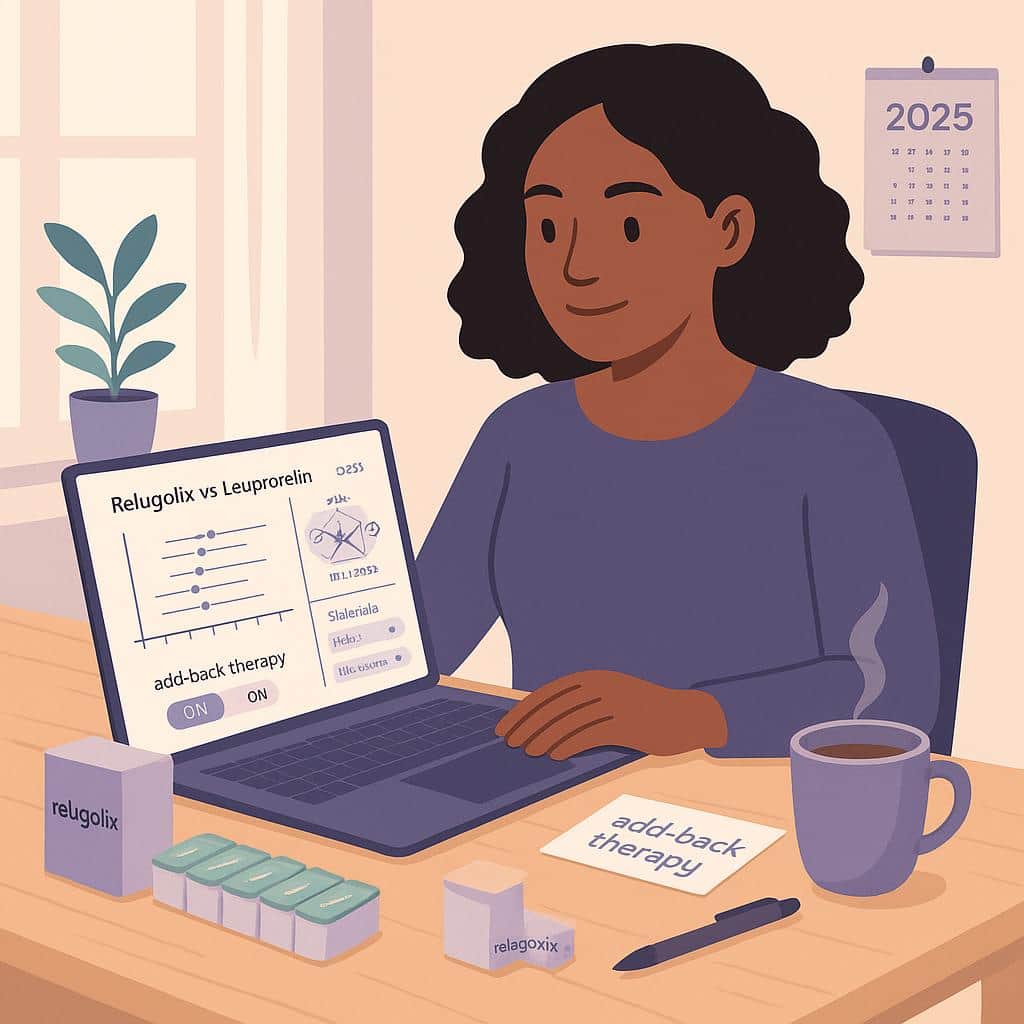
Relugolix for Endometriosis Pain: What a 2025 Meta-Analysis Says About Relief, Quality of Life, and Side Effects
2025 meta-analysis of relugolix for endometriosis: pain relief, QoL gains, side effects and add-back therapy, plus comparison with leuprorelin.
Different Types of Endometriosis Pain Explained
Explore types of endometriosis pain, evaluation, and evidence-based treatments, including triggers, pelvic floor therapy, CNS sensitization, and adenomyosis.
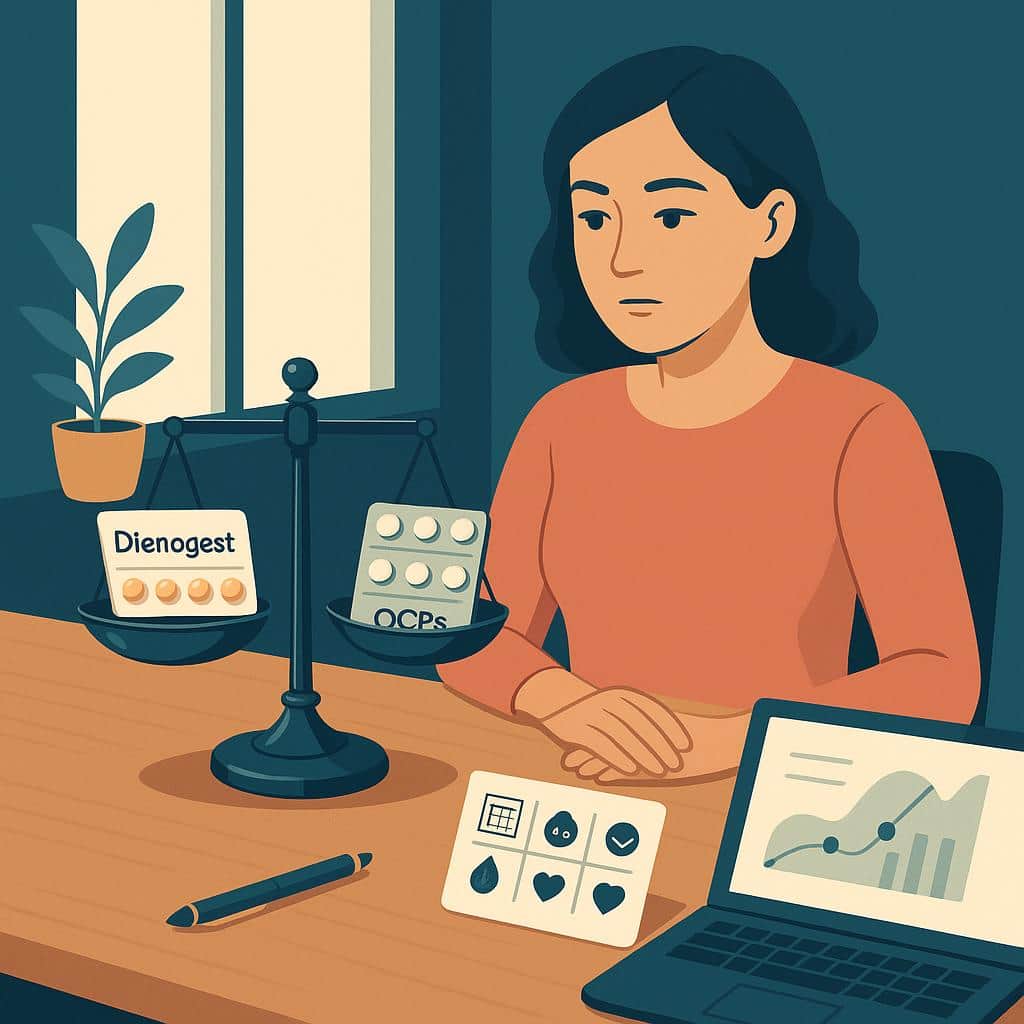
Dienogest vs. Combined Oral Contraceptives for Endometriosis Pain: What a 2025 Meta-Analysis Found
A 2025 meta-analysis of dienogest vs OCPs for endometriosis pain: dienogest helps generalized pain; OCPs help pelvic pain/dyspareunia. Similar side effects.