
Fertility
How do imaging results affect treatment and fertility planning?
The short answer
Imaging helps tailor treatment to your symptoms and fertility goals, including expectations for pain relief and conception. With more limited disease, some patients may be candidates for uterus-preserving options, while more extensive involvement may shift the discussion toward definitive treatment.
Imaging findings, such as how deep adenomyosis extends, how much of the uterine wall is involved, and whether coexisting conditions are present, help us tailor a plan to your symptoms and fertility goals. When imaging suggests more limited disease, some patients may be candidates for uterus-preserving options, while more extensive involvement may shift the discussion toward definitive treatment.
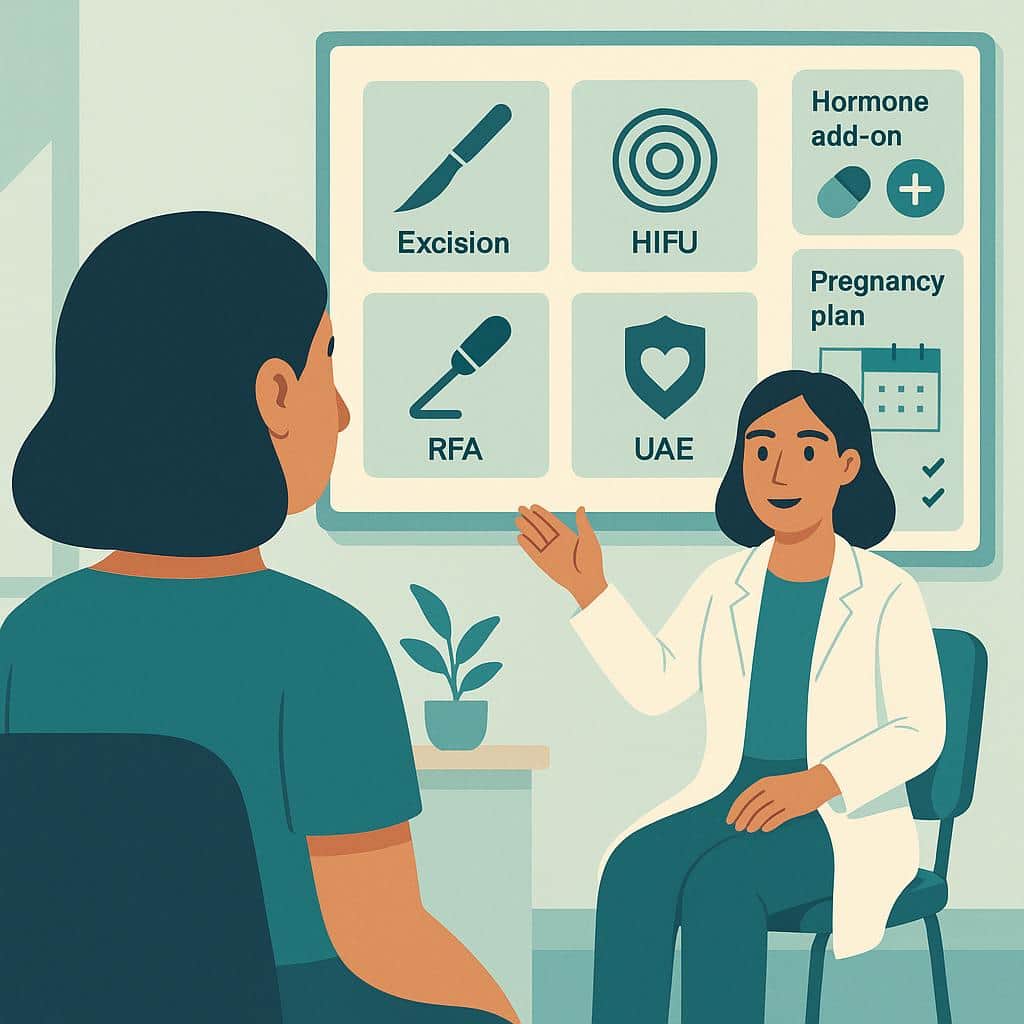
These details also help clarify what to expect from treatment, including the likelihood of meaningful pain relief and how realistic it may be to conceive before or after different approaches. During a consultation, our team reviews your images alongside your history and exam to explain the tradeoffs of hormonal management, an LNG-IUD, conservative surgery, or hysterectomy, and map out a fertility-centered timeline when pregnancy is a goal.
Where to go from here
Understand it, compare it with what you're feeling, then talk it through with us.
Step 2 · Compare
Symptoms it can relate to
Step 3 · Speak with Us
Understand Your Imaging Results
Our specialists use imaging insights to customize your treatment and fertility plan. We’ll help you navigate options that best match your symptoms and family goals.
Questions people ask next
All fertility questionsUterus-sparing surgery vs hysterectomy for adenomyosis: how chosen?
The choice depends on symptom severity, future fertility goals, and the pattern of adenomyosis on imaging. Localized disease may suit uterus-sparing surgery, while hysterectomy may offer the most definitive relief of symptoms from the uterus when symptoms are severe and disease is extensive.
Can adenomyomectomy improve fertility?
In carefully selected patients, especially those with focal adenomyosis, adenomyomectomy may improve fertility. It creates a uterine scar, so we typically recommend healing time before conception, and future pregnancies usually require close monitoring and a planned cesarean delivery.
How does adenomyosis affect an IVF plan?
Adenomyosis can make implantation less predictable and increase the risk of certain pregnancy complications. IVF planning may include medical suppression before transfer and a frozen embryo transfer strategy, tailored to your symptoms, imaging findings, and prior IVF history.
Can imaging predict if I’ll need bowel, bladder, or ureter surgery?
Yes, high-quality pelvic ultrasound and MRI can often help anticipate whether bowel, bladder, or ureter surgery may be needed. Imaging helps plan the safest approach, but the definitive assessment and exact surgical plan are confirmed during surgery.
Further reading
Fertility-Sparing Treatment for Adenomyosis: Pregnancy Chances, Symptom Relief, and Pregnancy Risks
Weigh pregnancy chances, symptom relief, and risks after fertility-sparing adenomyosis treatment. Compare adenomyomectomy vs HIFU, RFA, UAE—when to add hormones
Focal Adenomyosis: What Your Diagnosis Means and Next Steps
Learn what a focal adenomyosis diagnosis means, how TVUS and MRI confirm it, and your options—from medical therapy to uterus‑sparing procedures and hysterectomy.
Diffuse Adenomyosis: Diagnosis and Treatment You Can Act On
A clear guide to diffuse adenomyosis: what it means, how TVUS and MRI diagnose it, and practical treatments, from hormonal IUDs to uterus-sparing options.