
Fertility
What tests are done after two miscarriages with endometriosis?
The short answer
After two miscarriages with endometriosis, we typically review your history and use pelvic imaging, often ultrasound and, when helpful, MRI. We may also evaluate thyroid function and other hormonal factors, and consider autoimmune overlap when symptoms or history point that way.
After two miscarriages, our goal is to look beyond endometriosis as a single explanation and identify all the factors that can affect implantation and early placental development. We start by reviewing your full history in detail, including loss timing, symptoms, prior imaging, surgeries, cycle patterns, and any fertility treatments, because the pattern of your losses often guides what to test first. We typically include expertly interpreted pelvic imaging, often ultrasound and, when helpful, MRI, to look for endometriosis features (like endometriomas), adenomyosis, uterine shape issues, and other pelvic conditions that can coexist with endo.
Because endometriosis can overlap with immune, inflammatory, and hormonal drivers, we may also evaluate thyroid function and other endocrine factors, and consider autoimmune overlap when symptoms or history point that way. If your symptoms suggest contributors outside the uterus and ovaries, we may broaden the workup to related conditions that can worsen inflammation or pelvic dysfunction, rather than stopping at a standard checklist. If you’d like, you can reach out to schedule a consultation so our team can tailor a miscarriage evaluation plan to your history and goals, and help you understand which findings are most actionable for your next steps.
Where to go from here
Understand it, compare it with what you're feeling, then talk it through with us.
Step 3 · Speak with Us
Struggling with Repeat Miscarriages?
Our specialists carefully evaluate all factors affecting your fertility after two miscarriages, including endometriosis and other pelvic conditions. We use detailed history reviews and advanced imaging to create a personalized plan for you.
Questions people ask next
All fertility questionsWhat tests check infertility when endometriosis is suspected?
Testing commonly includes transvaginal ultrasound and, when indicated, MRI. A fertility evaluation may also include hormone and ovarian reserve labs, ovulation checks, assessment of the uterine cavity and fallopian tubes, and a partner’s semen analysis.
Which infertility tests matter most with endometriosis?
The most useful infertility tests for endometriosis typically include ovarian reserve labs, a pelvic ultrasound, a test to check whether the fallopian tubes are open, and a semen analysis. Your symptom pattern and surgical history help put results in context.
Further reading
Endometriosis and Miscarriage: What Research Suggests
Learn how endometriosis may affect miscarriage risk, the roles of inflammation, hormones, and surgery, what current studies show, and ways to manage fertility.
Adenomyosis, Endometriosis, and Pregnancy: What Patients Need to Know
Explore how adenomyosis affects pregnancy and fertility with endometriosis. Get trusted research insights and advice for your care team.
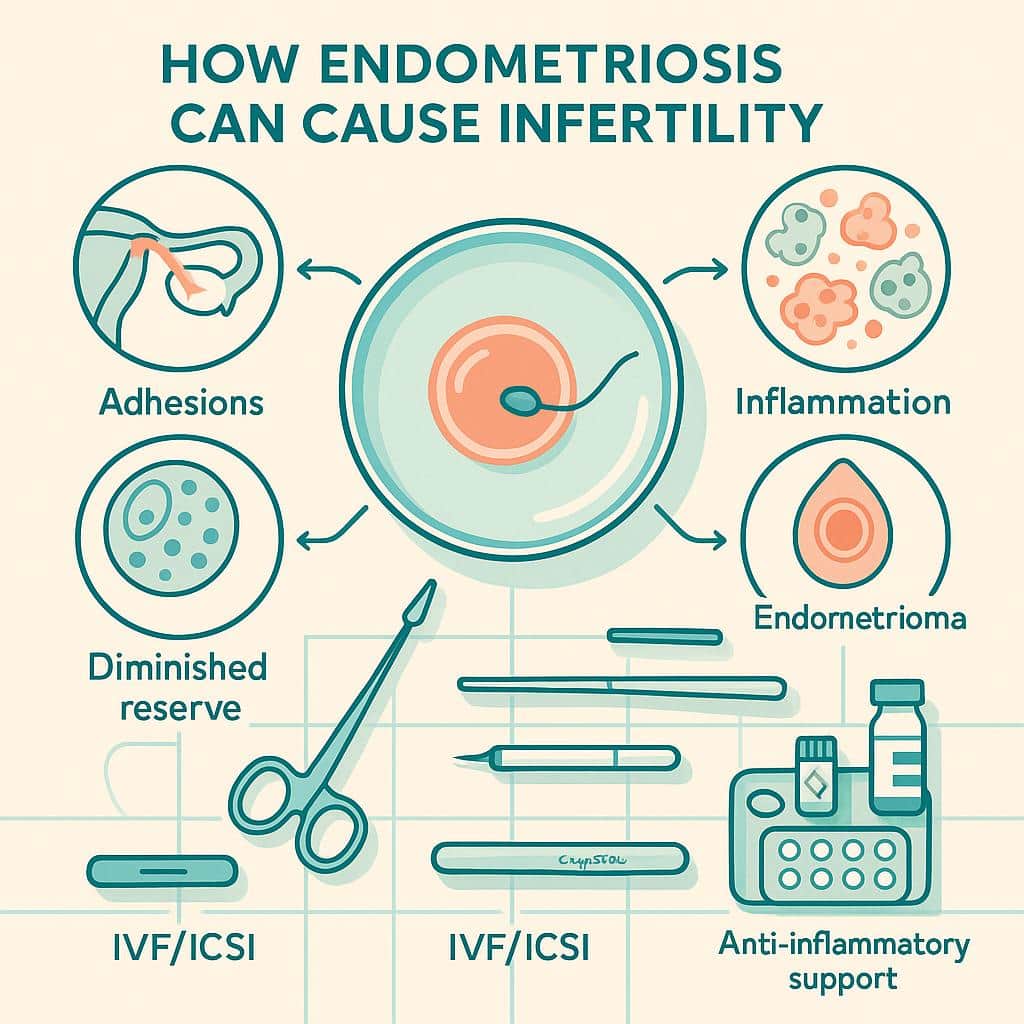
How Endometriosis Contributes to Infertility
How endometriosis leads to infertility: pathogenesis; effects on gametes, tubes, and endometrium; and treatments—expectant care, surgery, and ART.