
Symptoms
When is period-related constipation an emergency?
The short answer
Period-related constipation is an emergency with severe, worsening belly pain and a swollen belly, repeated vomiting, or prolonged inability to pass gas or stool. Significant rectal bleeding, black/tarry stools, fainting, or signs of dehydration are also emergency signs.
Constipation around your period is common, but it becomes urgent when it may signal bowel obstruction, severe inflammation, or another condition that needs immediate care. Go to urgent or emergency care now if you have severe, worsening abdominal pain with a swollen or rigid belly, repeated vomiting or inability to keep fluids down, inability to pass gas or stool for an extended stretch (especially if this is new for you), or fever with significant abdominal tenderness.
It’s also an emergency if you see significant rectal bleeding, black or tarry stools, fainting, chest pain, or signs of dehydration (confusion, dizziness, very low urine output). If your period-related constipation is cyclical but progressively worsening, comes with painful bowel movements, rectal bleeding during periods, or severe bloating and cramping, that pattern can be seen with bowel-involved endometriosis or overlapping GI conditions. It deserves a more thorough evaluation.
Our team can help you sort out whether your symptoms fit endometriosis/adenomyosis patterns, bowel involvement, IBS-like sensitivity, or inflammatory bowel disease, and then build a targeted plan. If this is a recurring pattern for you, reach out to schedule a consultation so we can review your full symptom timeline and any prior imaging or procedures, and decide what testing or treatment makes sense next.
Where to go from here
Understand it, compare it with what you're feeling, then talk it through with us.
Step 3 · Speak with Us
Worried About Period Constipation?
Severe constipation during your period can signal serious issues like bowel obstruction or inflammation. Our specialists can help determine if you need urgent care or specialized treatment.
Questions people ask next
All symptoms questionsWhen should I see a gastroenterologist?
It’s worth seeing a gastroenterologist for rectal bleeding, unintended weight loss, persistent or nighttime diarrhea, or other red-flag bowel symptoms. We also often recommend it if IBS-like symptoms are severe, recurrent, or don’t improve with endometriosis care and nutrition adjustments.
What safely helps constipation or diarrhea during flares?
For constipation flares, hydration and gentle stool softening are the safest starting points; for diarrhea, a short course of loperamide may reduce urgency, and oral rehydration can help. Sudden severe symptoms, blood in stool, black/tarry stools, fever, or ongoing weight loss need prompt evaluation.
Can constipation be a sign of bowel endometriosis?
Yes, constipation can be a sign of bowel endometriosis, especially when it predictably flares before or during your period. It can result from effects on the bowel, adhesions or pelvic floor muscle spasm, but symptoms don’t reliably show how deep endometriosis is.
IBS-C vs endometriosis constipation: how can I tell the difference?
Endometriosis-related constipation often worsens before or during your period and improves afterward, while IBS-C can cause constipation, bloating, and stool changes. Pelvic pain or painful periods can point toward endometriosis, but IBS and endometriosis can coexist.
Further reading
Bowel Endometriosis: Causes, Symptoms, and Treatment
Bowel endometriosis explained: locations, symptoms, causes, diagnosis and misdiagnosis, plus treatments from minimally invasive surgery to lifestyle changes.
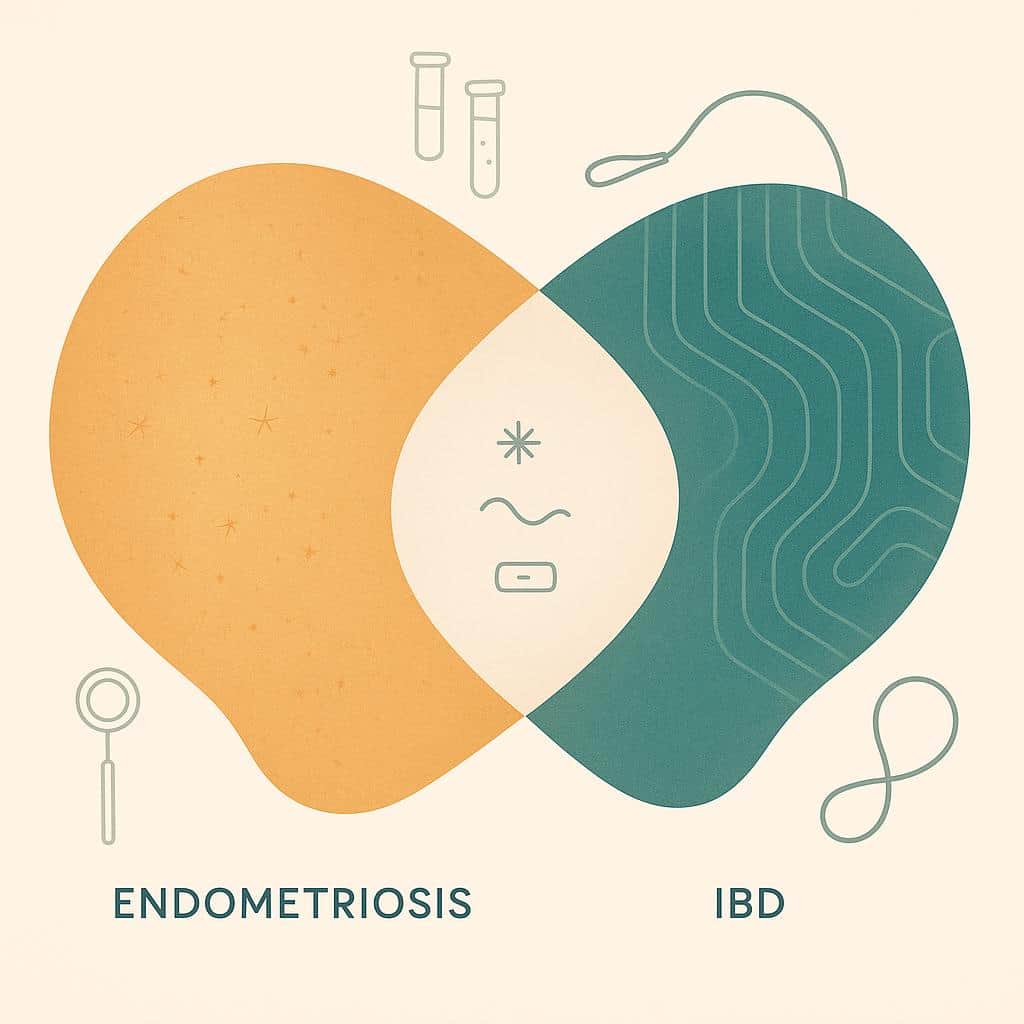
Endometriosis or Inflammatory Bowel Disease? The Key Differences
How endometriosis and inflammatory bowel disease differ and overlap. Symptoms, diagnostic challenges, epidemiology, treatment risks, and research gaps.
What Else Could It Be? Ruling Out Other Causes
Explore essential insights on endometriosis and other causes of pelvic pain. Learn about differential diagnoses and effective treatment options.