
General
Do genes interact with the environment or microbiome in endometriosis?
The short answer
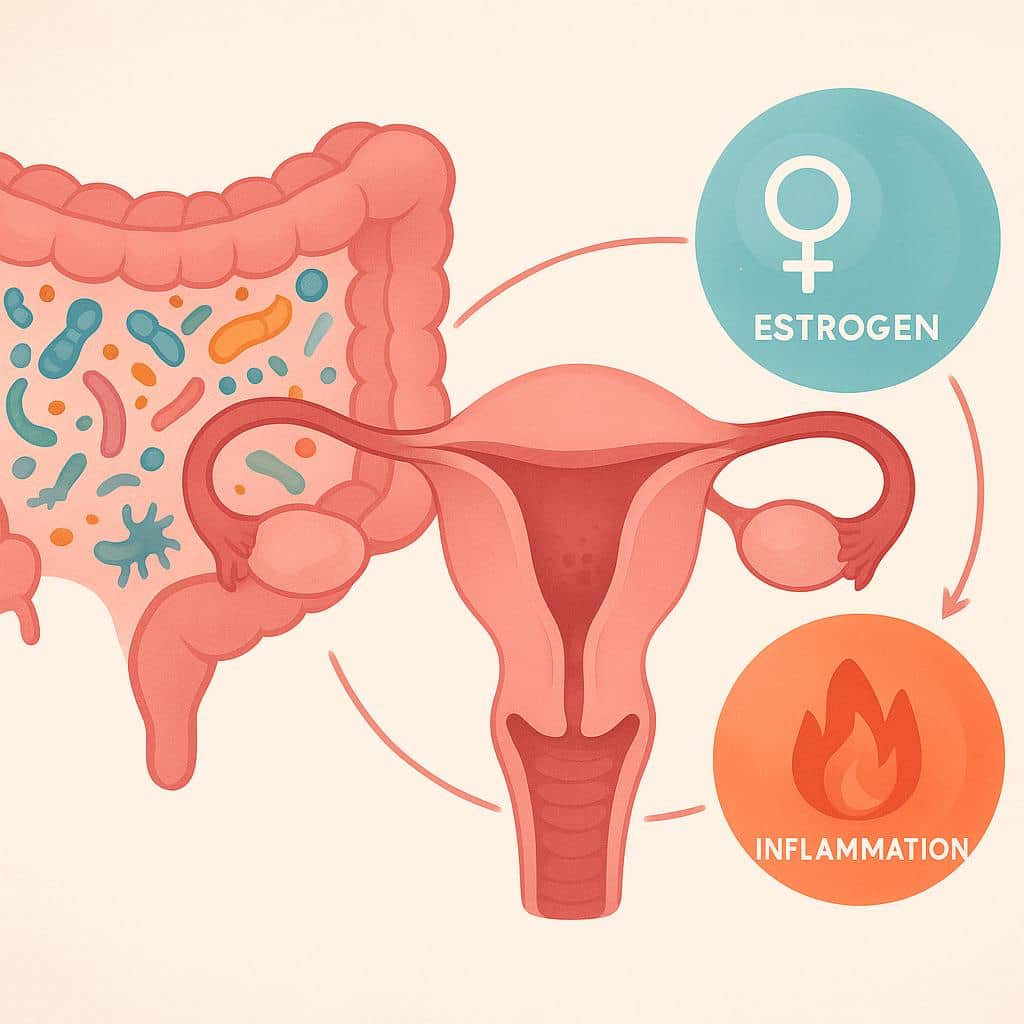
Yes, genes can influence susceptibility to endometriosis, while environmental and biological factors may affect whether and how symptoms appear. The microbiome can interact with inflammation, immune function and estrogen metabolism, which may affect how the disease behaves.
Yes, genes can influence baseline susceptibility, and environmental and biological factors may affect whether and how symptoms develop. In endometriosis, factors such as age at first period, menstrual patterns, immune and inflammatory responses, and hormonal signaling are often discussed as potential triggers or modifiers of an inherited tendency.
The microbiome is part of this picture because it can interact with inflammation, immune function, and estrogen metabolism, which may contribute to how the disease behaves in different people. While we can’t change inherited risk, we can help you look at your full clinical story and symptom pattern to understand what may be worsening your pain or progression and which options, including surgery when appropriate, may best fit your goals. If you’d like, our team can review your history and help you plan next steps based on both genetic risk and modifiable factors.
Where to go from here
Understand it, compare it with what you're feeling, then talk it through with us.
Step 1 · Understand
Understand the condition
Step 3 · Speak with Us
Worried About Your Risk?
Genes and environment both play roles in endometriosis symptoms. Our specialists can help you understand your unique risks and what to watch for.
Questions people ask next
All general questionsHow does the microbiome affect endometriosis and adenomyosis symptoms?
The microbiome can influence inflammation, immune signaling, and pain sensitivity in endometriosis and adenomyosis. For some patients, an imbalance in gut bacteria may contribute to more intense cramping, pelvic pain, bloating, and a lower threshold for flares.
Which genes are linked to endometriosis so far?
Genetic studies have found endometriosis risk signals near WNT4, GREB1, ESR1, FSHB, VEZT, FN1, SYNE1, and IL1A. They suggest risk is influenced by many common genetic variants, each with a small effect, rather than one single endometriosis gene.
Can genetic testing diagnose endometriosis?
No, there is currently no validated clinical genetic test or polygenic risk score that can diagnose endometriosis or reliably rule it out. Diagnosis relies on your symptom history, a focused pelvic exam and targeted imaging when appropriate.
Can diet changes or probiotics treat endometriosis based on microbiome research?
There is not yet strong clinical trial evidence that diet changes or probiotics reliably reduce endometriosis lesions or stop disease progression. They may help symptoms for some people, but are supportive tools, not a substitute for a tailored treatment plan.
Further reading
The Link Between Epigenetics, Diet, and Endometriosis
How epigenetic mechanisms and DNA methylation shape endometriosis, how your diet may modulate them, and the implications on your endometriosis care.
The Microbiome’s Role in Endometriosis
Explore how the microbiome may shape inflammation and estrogen metabolism in endometriosis, and what emerging research means for diagnosis and new therapies.
Genetic Insights Into Endometriosis
Learn how genetics shapes endometriosis—familial clustering, gene mapping, GWAS, and genomics—and what this means for diagnosis, treatment, and monitoring.