General
Do hormonal treatments just mask symptoms, and are they risky long-term?
The short answer
Hormonal treatments can do more than mask symptoms, but long-term safety depends on the medication and your individual risk factors. They do not erase endometriosis lesions; many patients have fewer pain flares, while GnRH-based medications typically require time limits.
Hormonal treatments don’t erase endometriosis lesions, but they can do more than simply mask symptoms. With ovulation suppressed and bleeding and inflammatory signaling reduced, many patients experience fewer pain flares and more predictable day-to-day function while on therapy.
Long-term safety depends on which medication is used and your individual risk factors. Options like progestin-only therapies and combined hormonal contraceptives have well-established safety profiles and are often used for extended periods when appropriate. GnRH-based medications typically require time limits and protective strategies because of bone and other systemic effects. In our practice, we help patients weigh symptom control, side effects, fertility goals, and whether surgery is part of the plan. We’re happy to discuss what a tailored approach could look like for you.
Where to go from here
Understand it, compare it with what you're feeling, then talk it through with us.
Step 2 · Compare
Symptoms it can relate to
Step 3 · Speak with Us
Get Real Relief with Expert Care
Hormonal treatments can reduce pain and improve your daily life without simply masking symptoms. Our specialists tailor safe, long-term options to your unique needs and health profile.
Questions people ask next
All general questionsDo medications shrink or cure endometriosis?
Medications don’t cure endometriosis and typically don’t eliminate lesions. They can quiet hormonal signals that stimulate lesions and reduce inflammation, which often improves pain while you’re on treatment, but symptoms commonly return when medication is stopped.
Do hormones or birth control treat endometriosis?
Hormonal birth control and other hormone therapies can reduce endometriosis symptoms, but they usually don’t treat the disease itself. They don’t remove endometriosis lesions or restore normal anatomy, so pain can return when you stop them.
Why don’t hormones help my endometriosis pain?
Hormones may not help your endometriosis pain because they mainly reduce cycle-driven inflammation and bleeding, not every source of pain. Scarring, nerve growth, a sensitized nervous system or pelvic floor problems may keep pain going even when periods are suppressed.
What is tried first for endometriosis pain, and how is it chosen?
Many patients start with hormonal suppression, such as continuous combined hormonal contraception, a progestin-only medication, or a levonorgestrel IUD. The choice depends on pain, bleeding goals, migraine history, clot risk, prior hormone side effects, and fertility timing.
Further reading
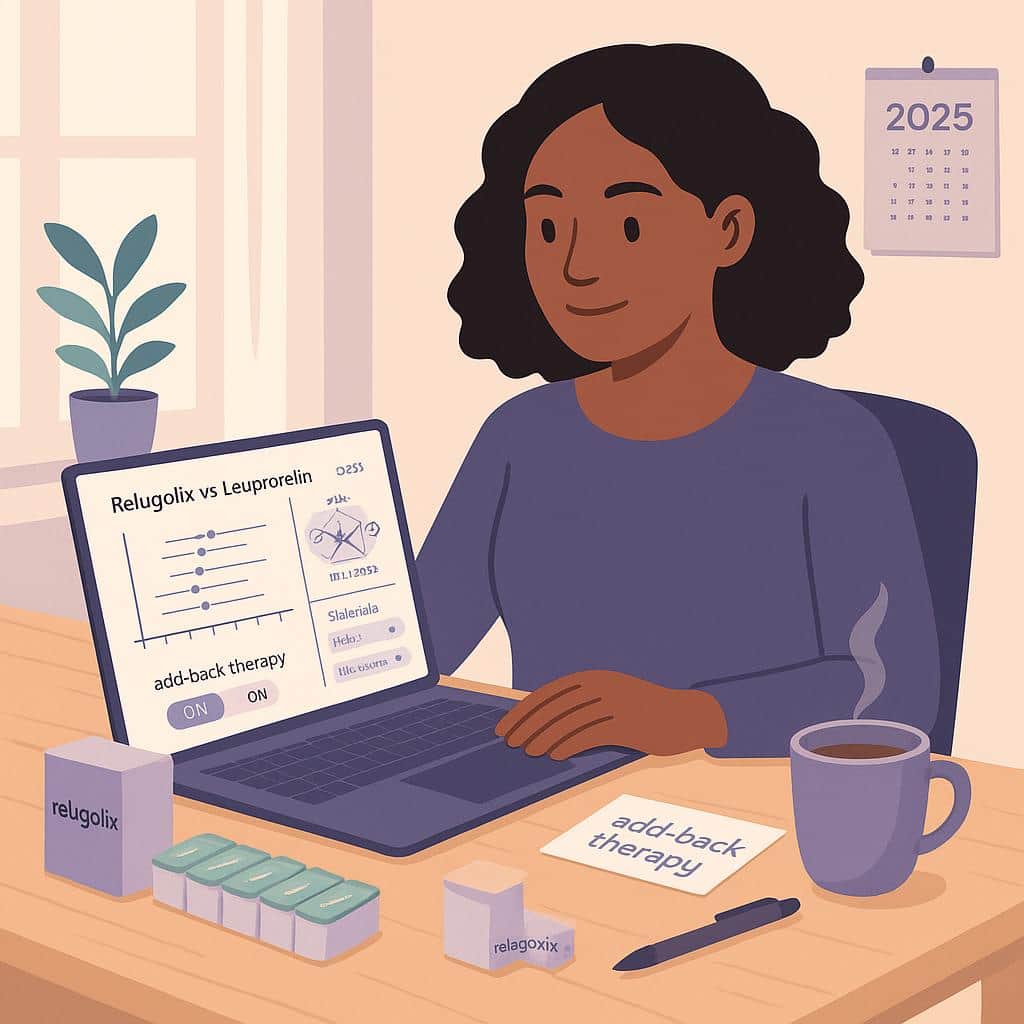
Relugolix for Endometriosis Pain: What a 2025 Meta-Analysis Says About Relief, Quality of Life, and Side Effects
2025 meta-analysis of relugolix for endometriosis: pain relief, QoL gains, side effects and add-back therapy, plus comparison with leuprorelin.
Hormonal Therapy Risks Without Surgical Diagnosis: What Patients Should Know
Explore the risks of hormonal therapy without surgical diagnosis for endometriosis. Learn what patients need to know about treatment options and potential side
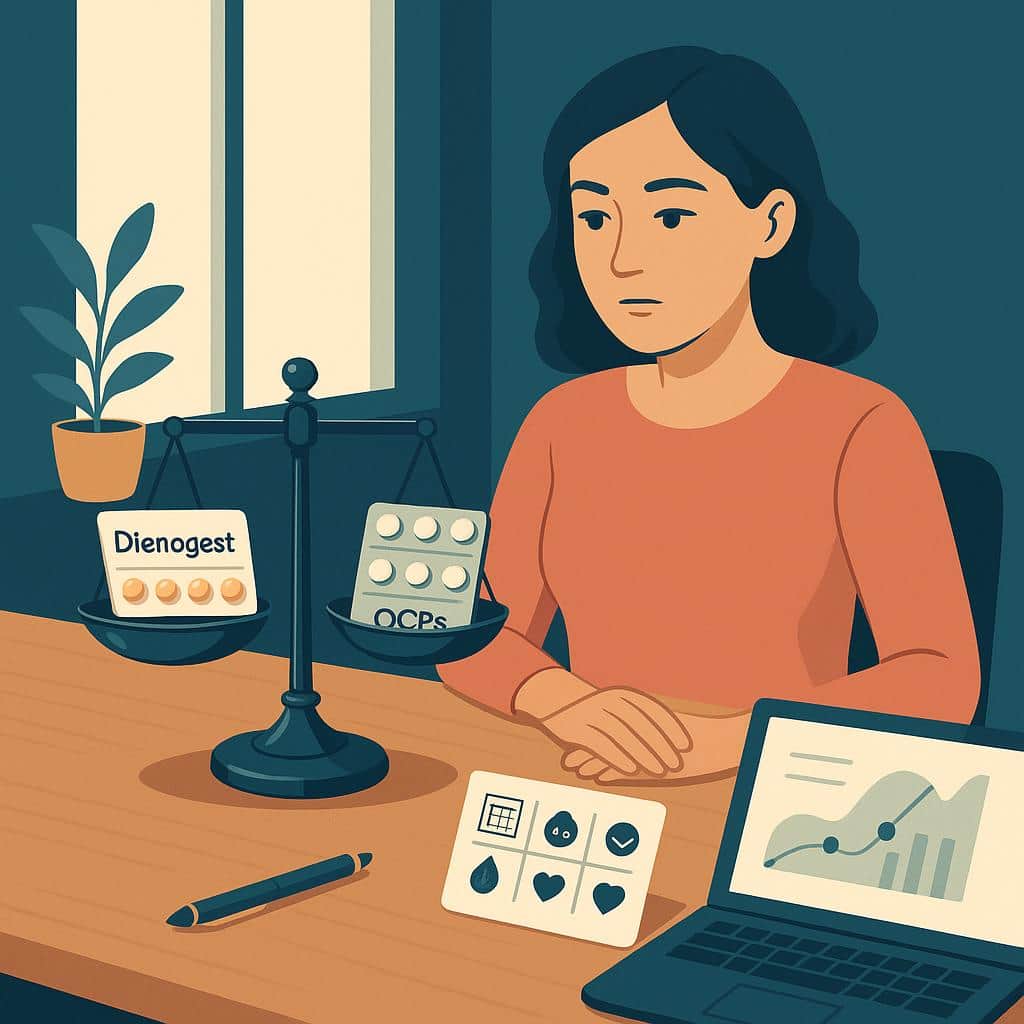
Dienogest vs. Combined Oral Contraceptives for Endometriosis Pain: What a 2025 Meta-Analysis Found
A 2025 meta-analysis of dienogest vs OCPs for endometriosis pain: dienogest helps generalized pain; OCPs help pelvic pain/dyspareunia. Similar side effects.