
Diagnosis
How do I prepare for an endometriosis ultrasound, and will it hurt?
The short answer
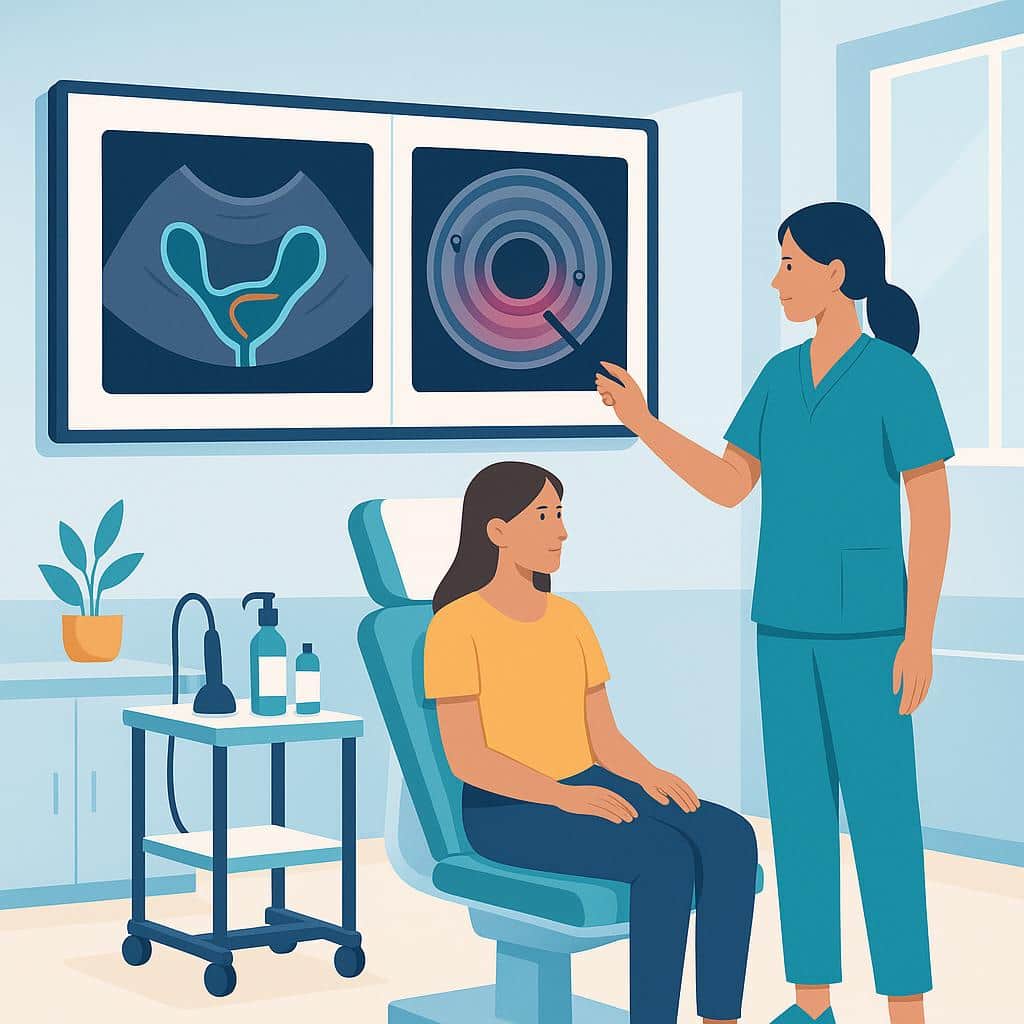
Preparation depends on the ultrasound type; pressure and sometimes mild cramping should be tolerable. Transvaginal scans typically need an empty bladder, while abdominal scans may need a full bladder. A light bowel prep may be recommended if bowel involvement is a concern.
Preparation depends on the type of ultrasound. For a transvaginal ultrasound, you’ll typically arrive with an empty bladder, while a transabdominal view may require you to drink water beforehand so your bladder is full. In some situations, especially if bowel involvement is a concern, your imaging team may recommend a light bowel prep, so it’s worth confirming the instructions when you schedule.
During the exam, it’s common to feel pressure and sometimes mild cramping, particularly with the transvaginal portion, but it should be tolerable. If you have sharp pain or your symptoms flare, let the sonographer know right away so they can pause, change technique, or adjust pressure. If you tend to have significant pelvic pain with exams, our team can help you plan ahead so the imaging is as comfortable and useful as possible.
Where to go from here
Understand it, compare it with what you're feeling, then talk it through with us.
Step 3 · Speak with Us
Get Ready for Your Ultrasound
We understand ultrasounds can be overwhelming. Our specialists guide you through prep and ensure your comfort every step of the way.
Questions people ask next
All diagnosis questionsDo I need bowel prep for an endometriosis ultrasound?
Usually, no bowel prep is needed for a standard transvaginal ultrasound to evaluate suspected endometriosis. Bowel prep is more commonly discussed for specialized imaging of suspected bowel involvement or when the imaging team has a specific protocol.
Standard pelvic ultrasound vs endometriosis-focused scan: what’s different?
A standard pelvic ultrasound surveys the uterus and ovaries, while an endometriosis-focused scan uses targeted imaging and checks how pelvic organs move against each other. A standard scan may miss deep disease or scarring; a focused scan can help with surgical planning.
Will endometriosis show up on ultrasound?
Sometimes, but a normal ultrasound does not rule out endometriosis. Ultrasound is best at detecting endometriosis cysts in the ovaries and, in skilled hands, signs of deep disease or scarring; many superficial lesions are too small or subtle to be seen on standard imaging.
Ultrasound or MRI before endometriosis excision: which is best?
Neither ultrasound nor MRI is universally best before endometriosis excision. Expert ultrasound assesses deep disease and organ mobility; MRI often adds a broader map of disease near the bowel, bladder and ureters, and both may be recommended in complex cases.