Diagnosis
How is endometriosis different from adenomyosis?
The short answer
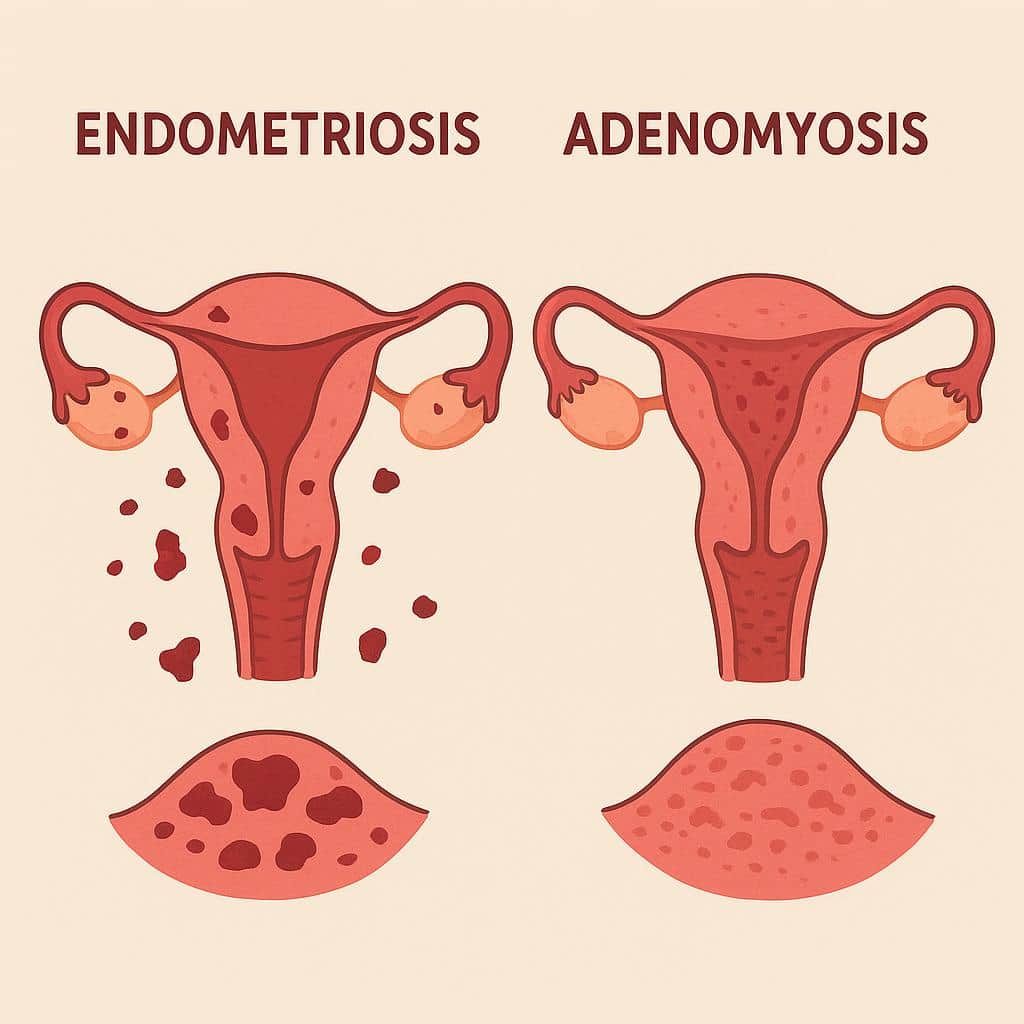
Endometriosis involves tissue similar to the uterine lining growing outside the uterus; adenomyosis involves that tissue growing into the uterus's muscle wall. They can occur together, and when they do, symptoms may feel more severe and fertility can be affected.
Endometriosis is when tissue similar to the uterine lining grows outside the uterus, commonly on pelvic organs and peritoneal surfaces. It often causes pelvic pain, painful periods, pain with sex, and sometimes bowel or bladder symptoms. Adenomyosis is when that tissue grows into the muscle wall of the uterus itself, which more often causes heavy or prolonged bleeding, intense cramping, and a uterus that can feel enlarged and tender.
These conditions can occur together, and when they do, symptoms may feel more severe and fertility can be affected in more than one way. Because adenomyosis is centered in the uterus, it’s often evaluated using characteristic findings on pelvic imaging and managed with treatments focused on the uterus. Endometriosis is confirmed and treated by directly identifying and removing disease, most effectively with excision. If you’re sorting out which one fits your symptoms (or whether you may have both), our team can review your history and imaging and help you make a clear plan.
Where to go from here
Understand it, compare it with what you're feeling, then talk it through with us.
Step 2 · Compare
Symptoms it can relate to
Step 3 · Speak with Us
Confused About Your Symptoms?
Our specialists can help clarify if it's endometriosis, adenomyosis, or both causing your pain and bleeding. Get a precise diagnosis and personalized care plan to start feeling better.
Questions people ask next
All diagnosis questionsCan you have both endometriosis and adenomyosis?
Yes, many patients can have both endometriosis and adenomyosis at the same time. Their symptoms may blend together, and having both can affect treatment planning because endometriosis is outside the uterus while adenomyosis is within the uterine muscle.
Is pelvic pain always caused by endometriosis or adenomyosis?
No, pelvic pain is not always caused by endometriosis or adenomyosis. Other causes can include pelvic floor dysfunction, bladder pain syndrome, bowel disorders, fibroids, ovarian cysts or infections, and more than one issue can be present at the same time.
Further reading
Adenomyosis vs. Endometriosis: Are They Different or Related?
Explore the key differences between adenomyosis and endometriosis, their symptoms, overlap, and treatment options for better fertility outcomes.
Endometriosis and Adenomyosis: How They Drive Pelvic Pain
Compare endometriosis and adenomyosis: similarities, differences in location and prevalence, diagnosis methods, and treatment options for pelvic pain.
Do My Symptoms Mean Adenomyosis or Endometriosis?
Discover the truth about endometriosis and adenomyosis symptoms. Understand how common they really are, and gain insights for effective advocacy.