Surgery
What pain and fertility outcomes are realistic after excision?
The short answer
Many patients experience meaningful pain reduction within the first several months after excision, and fertility can improve. Results vary with disease location and extent, other contributors to pain, age and ovarian reserve. Some people conceive spontaneously after surgery.
Many patients experience meaningful pain reduction within the first several months after excision, especially when deep disease is completely removed and the drivers of inflammation and scarring are addressed. Results vary depending on where endometriosis is located, how extensive it is, and whether other contributors to pain (like adenomyosis or pelvic floor overactivity) are present. Our goal is to set realistic expectations up front and tailor the surgical plan to your symptoms and anatomy.
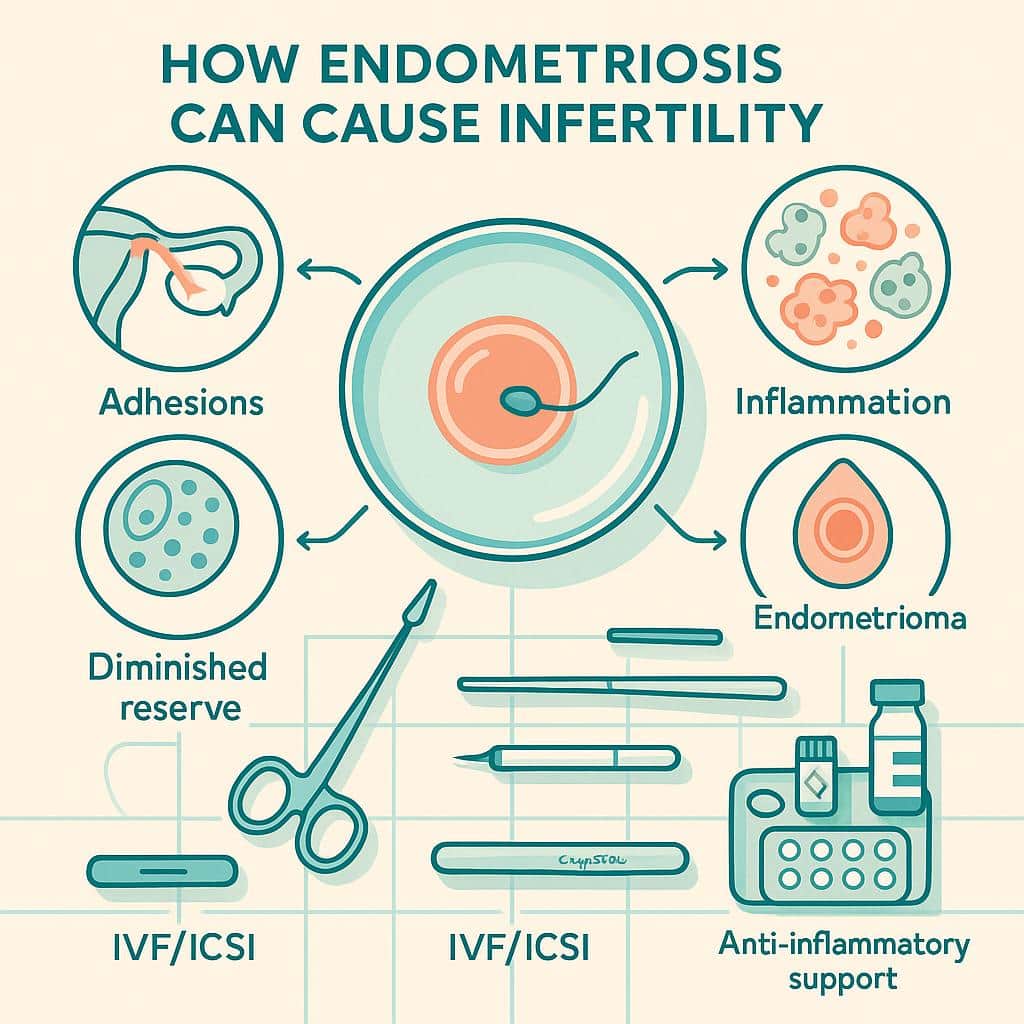
Fertility can improve after excision by restoring pelvic anatomy and reducing distortion from adhesions, which may support ovulation, tubal function, and embryo transport. Some people conceive spontaneously after surgery, while others may combine surgery with timed attempts or assisted reproduction, depending on age, ovarian reserve, and what we find during surgery. Outcomes are especially individualized when extensive deep infiltrating disease involves the bowel or bladder. Our team can help you weigh the likely benefits and next steps based on your priorities.
Where to go from here
Understand it, compare it with what you're feeling, then talk it through with us.
Step 1 · Understand
Understand the condition
Step 2 · Compare
Symptoms it can relate to
Step 3 · Speak with Us
Find Relief and Hope After Surgery
Our specialists tailor excision surgery to reduce pain and address your unique anatomy. We also focus on improving fertility by restoring pelvic health and function.
Questions people ask next
All surgery questionsCan endometriosis surgery improve my chances of conceiving?
Excision surgery can improve the chances of conceiving for some patients with endometriosis, particularly when removing superficial disease helps restore more normal pelvic anatomy. Outcomes vary, and surgery on the ovaries can affect ovarian reserve.
How long is recovery after endometriosis excision surgery?
Most patients can do light, gentle activities within a few days after endometriosis excision surgery. Many people can return to typical day-to-day routines over the next several weeks, depending on the extent and locations of disease treated and their work.
Can endometriosis come back after excision surgery?
Yes, endometriosis can come back after excision surgery, even when it is performed well. Recurrence can mean symptoms returning, new lesions forming, or an endometrioma (ovarian cyst) coming back. Disease left behind is the biggest driver of recurrence risk.
Does excision surgery improve IVF success with endometriosis?
Sometimes, but it depends on why IVF isn’t working and what endometriosis is doing in your pelvis. Excision can improve the IVF environment when disease distorts anatomy or causes tubal problems, but surgery is not a universal prerequisite for IVF.
Further reading
Endometriosis Excision Surgery Worked—So Why Am I Still in Pain?
Discover why persistent pain after successful endometriosis surgery occurs, backed by recent research and insights for effective pain management.
Surgery and IVF: When Are They Right for Endometriosis?
Explore when surgery or IVF is best for endometriosis. Understand the decision-making process and what to consider for fertility and health.
How Endometriosis Contributes to Infertility
How endometriosis leads to infertility: pathogenesis; effects on gametes, tubes, and endometrium; and treatments—expectant care, surgery, and ART.