
Fertility
When is adenomyomectomy recommended, and how does it affect pregnancy?
The short answer
Adenomyomectomy is typically considered when focal adenomyosis causes significant pain or heavy bleeding despite medical treatment, grows, or may affect fertility. Some patients are advised to allow healing before pregnancy and may be counseled toward cesarean delivery because of uterine repair.
Adenomyomectomy is typically considered when focal adenomyosis continues to cause significant pain or heavy bleeding despite medical treatment, when the lesion is growing, or when its size or location may be interfering with fertility. In these situations, surgery can be an option for removing the adenomyosis while aiming to preserve the uterus.
Because this procedure involves repairing the uterine muscle, it can affect how we plan for a future pregnancy. Key considerations include bleeding risk, scar tissue, and the possibility of uterine wall weakness at the repair site, so some patients are advised to allow time for healing before trying to conceive and may be counseled toward cesarean delivery for a future birth. Our team can review your imaging, symptoms, and pregnancy goals to help you understand whether surgery is appropriate and what a safer pregnancy plan could involve for you.
Where to go from here
Understand it, compare it with what you're feeling, then talk it through with us.
Step 2 · Compare
Symptoms it can relate to
Step 3 · Speak with Us
Considering Adenomyomectomy for Fertility?
If adenomyosis affects your fertility or causes pain, our specialists can evaluate whether adenomyomectomy is right for you. We'll help plan treatment that supports your pregnancy goals safely and effectively.
Questions people ask next
All fertility questionsSurgery for adenomyosis before trying to conceive?
Sometimes, surgery is worth considering before pregnancy if focal adenomyosis clearly contributes to heavy bleeding, significant pain, or uterine cavity distortion. Removing a focal lesion may support fertility goals, but healing and uterine strength in pregnancy need consideration.
Can adenomyomectomy improve fertility?
In carefully selected patients, especially those with focal adenomyosis, adenomyomectomy may improve fertility. It creates a uterine scar, so we typically recommend healing time before conception, and future pregnancies usually require close monitoring and a planned cesarean delivery.
Can focal adenomyosis affect fertility or miscarriage risk?
Yes, focal adenomyosis can affect fertility and miscarriage risk, especially when a lesion distorts the uterine cavity or interferes with implantation. Not all focal adenomyosis behaves the same: smaller nodules farther from the cavity may have less impact.
Uterus-sparing surgery vs hysterectomy for adenomyosis: how chosen?
The choice depends on symptom severity, future fertility goals, and the pattern of adenomyosis on imaging. Localized disease may suit uterus-sparing surgery, while hysterectomy may offer the most definitive relief of symptoms from the uterus when symptoms are severe and disease is extensive.
Further reading
Fertility-Sparing Treatment for Adenomyosis: Pregnancy Chances, Symptom Relief, and Pregnancy Risks
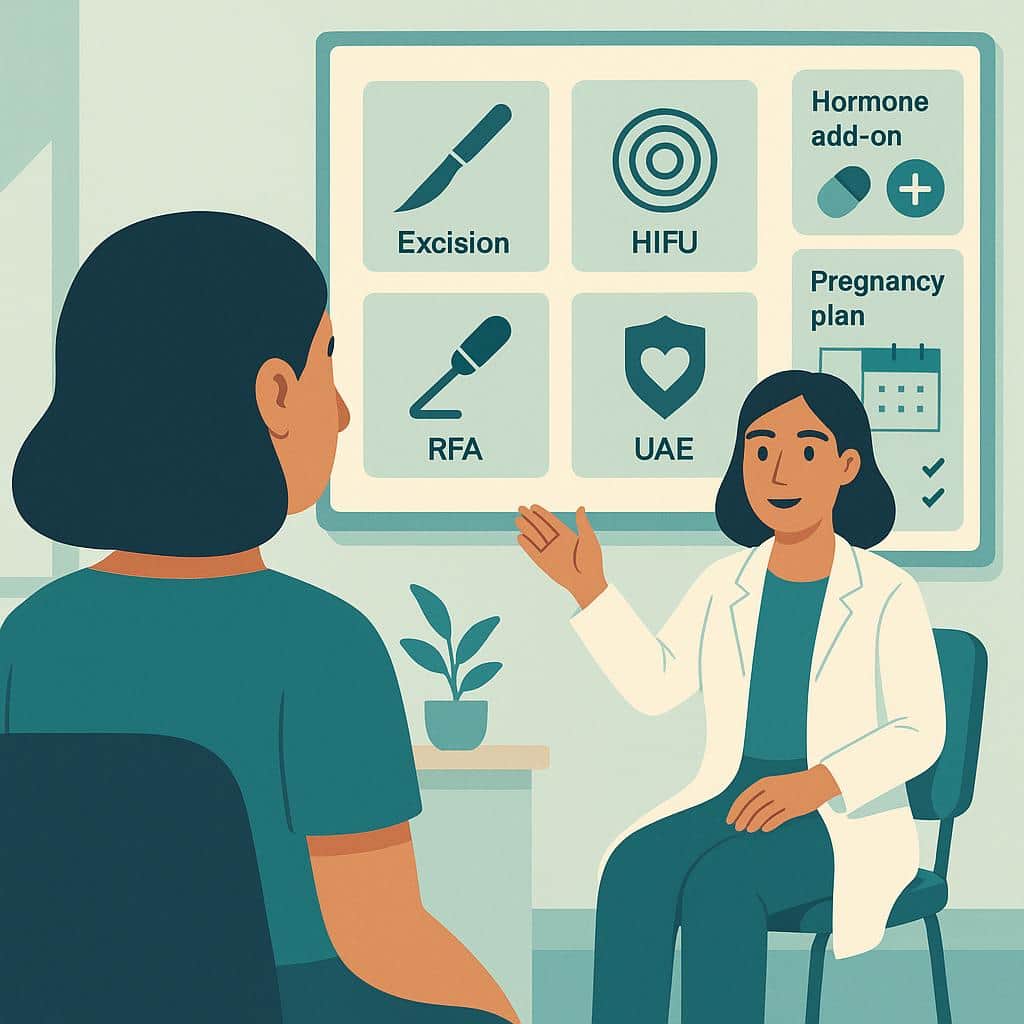
Weigh pregnancy chances, symptom relief, and risks after fertility-sparing adenomyosis treatment. Compare adenomyomectomy vs HIFU, RFA, UAE—when to add hormones
Want Pregnancy With Adenomyosis Without a Hysterectomy?
Explore fertility-sparing options for adenomyosis. Find hope in your journey to pregnancy without a hysterectomy. Understand your choices today!
Focal Adenomyosis: What Your Diagnosis Means and Next Steps
Learn what a focal adenomyosis diagnosis means, how TVUS and MRI confirm it, and your options—from medical therapy to uterus‑sparing procedures and hysterectomy.