Fertility
When should I see a fertility specialist if I'm trying to conceive?
The short answer
A common time to see a fertility specialist is after about 12 months of trying if you're under 35; at 35 or older, we typically recommend around 6 months. With known or suspected endometriosis, adenomyosis or other fertility concerns, earlier evaluation often makes sense.
If you’re under 35 and have been trying for about 12 months without success, that’s a common point to involve a fertility specialist. If you’re 35 or older, we typically recommend moving that timeline up to around 6 months, because age and ovarian reserve can make timing more important.
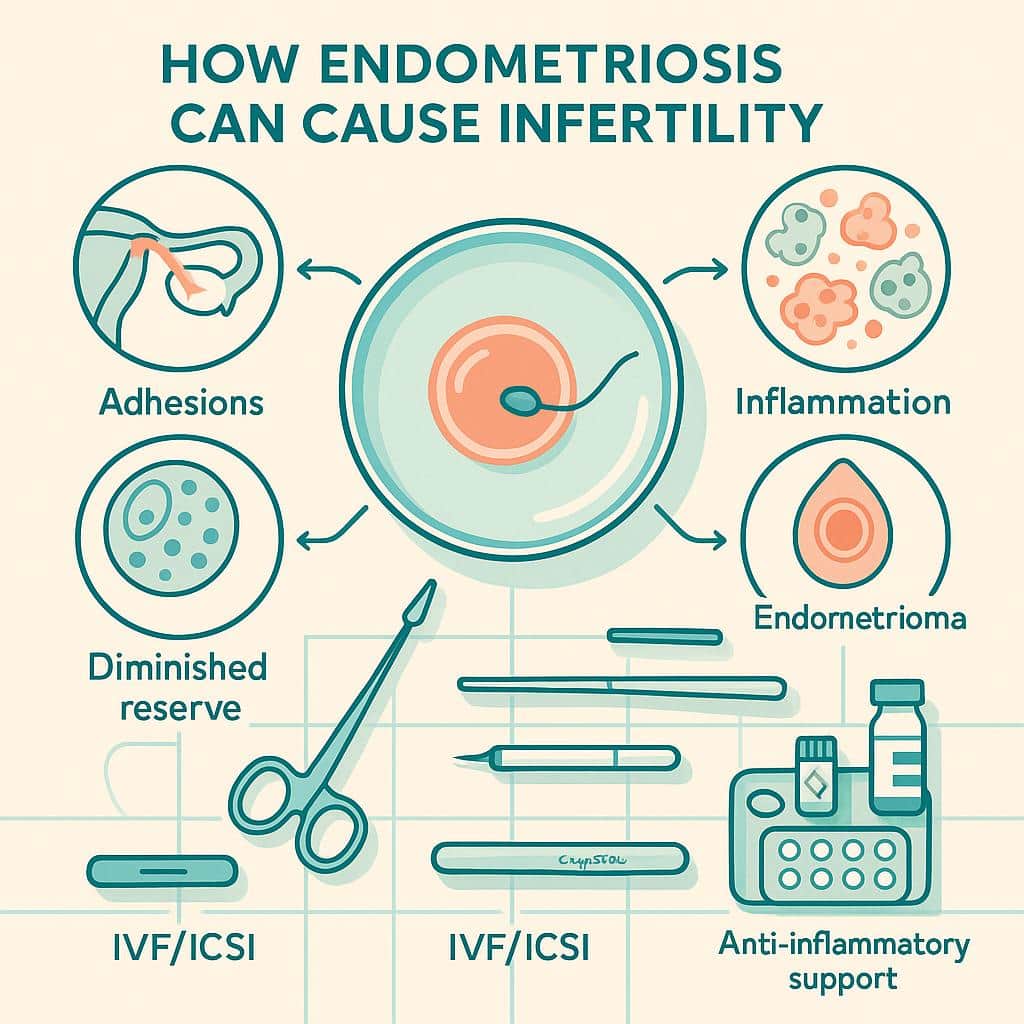
If you have known or suspected endometriosis or adenomyosis, painful periods or pelvic pain, endometriomas, prior pelvic surgery, irregular cycles, or any concern about tubal factors or sperm parameters, it often makes sense to get evaluated earlier rather than simply continuing to try. Endometriosis-related infertility can involve egg quality, tubal function, pelvic inflammation, and implantation, so clarifying what’s driving the delay helps you choose a plan that protects both fertility goals and quality of life.
Our team can coordinate a fertility-focused endometriosis evaluation and help you understand where excision surgery, fertility treatment (like IUI/IVF), or a time-limited trial of trying naturally fits best in your situation. If you’re unsure whether it’s too soon, reach out: an early consult is often less about jumping to IVF and more about being intentional about your timeline.
Where to go from here
Understand it, compare it with what you're feeling, then talk it through with us.
Step 2 · Compare
Symptoms it can relate to
Step 3 · Speak with Us
Struggling to Conceive? Get Help Now
If you've been trying to conceive without success, our specialists can assess your fertility and provide personalized guidance. Early evaluation is key, especially with endometriosis or other reproductive concerns.
Questions people ask next
All fertility questionsHow long to try conceiving before infertility evaluation?
If you suspect or know you have endometriosis, we generally recommend a fertility evaluation after about 6 months of trying naturally. We suggest evaluation sooner if you’re over 35, have severe symptoms, or have been told you may have ovarian cysts or tubal involvement.
Which infertility tests matter most with endometriosis?
The most useful infertility tests for endometriosis typically include ovarian reserve labs, a pelvic ultrasound, a test to check whether the fallopian tubes are open, and a semen analysis. Your symptom pattern and surgical history help put results in context.
What should I ask about endometriosis-related infertility?
Ask for a plan that specifically evaluates endometriosis or adenomyosis, including imaging, whether your tubes are open, and ovarian reserve. Ask how treatments affect your timeline, when an excision-focused surgical evaluation makes sense, and how pain care can support your fertility goals.
When is IVF recommended for endometriosis?
IVF is often recommended for endometriosis when older age or reduced ovarian reserve makes time a key factor, or when fallopian tubes are blocked or damaged. It may also be the next step after unsuccessful less invasive fertility treatment or when male-factor infertility is present.
Further reading
Making a Fertility Plan: Working with Your Endometriosis Care Team
Learn how to create a patient-centered fertility plan with your endometriosis care team, addressing symptoms, treatment, and desired timelines.
How Endometriosis Contributes to Infertility
How endometriosis leads to infertility: pathogenesis; effects on gametes, tubes, and endometrium; and treatments—expectant care, surgery, and ART.
Trying to Conceive With Endometriosis Without Making Symptoms Explode
Discover how to navigate pregnancy with endometriosis while managing symptoms. Explore safe options and recent research on fertility and treatment.