
Fertility
Does medication pretreatment improve IVF or FET outcomes?
The short answer
Whether medication pretreatment improves IVF or FET outcomes depends on your symptoms, where disease is suspected, and how you tolerate side effects. In some protocols, hormonal suppression before frozen embryo transfer aims to calm inflammation and reduce uterine irritability.
Some fertility protocols use a short course of hormonal suppression before a frozen embryo transfer with the goal of calming inflammation driven by endometriosis or adenomyosis and reducing uterine irritability. Common approaches include a GnRH agonist or other progestin-dominant regimens used for a couple of months, especially when symptoms or imaging suggest active disease.
Whether pretreatment improves IVF/FET outcomes depends on your individual situation, including where disease is suspected, how symptomatic you are, and how you tolerate side effects. Our team helps you weigh the potential benefit of suppression against downsides like menopausal-type symptoms, and we may discuss add-back therapy to improve comfort during treatment. If you’re considering IVF or FET and have known or suspected endometriosis or adenomyosis, we can review your history and imaging and coordinate a plan that supports your fertility goals.
Where to go from here
Understand it, compare it with what you're feeling, then talk it through with us.
Step 3 · Speak with Us
Boost IVF Success With Expert Pretreatment
Struggling with endometriosis or adenomyosis affecting fertility? Our specialists tailor hormonal pretreatment plans to optimize your IVF or FET outcomes.
Questions people ask next
All fertility questionsDo hormonal treatments like birth control or GnRH improve fertility?
Birth control pills and GnRH medications suppress ovulation and do not help you conceive while taking them. Hormonal suppression may be used before fertility treatment in certain situations, but it doesn’t reliably increase natural conception rates after you stop.
Frozen vs fresh embryo transfer with endometriosis: which is better?
A frozen embryo transfer is often preferred for many patients with endometriosis because it separates ovarian stimulation from the transfer cycle. The best choice depends on your fertility factors, age, embryo quality and response to stimulation.
Does endometriosis treatment reduce miscarriage risk or mainly aid conception?
Endometriosis treatment, especially complete excision, has the strongest evidence for improving the chances of conceiving; whether it lowers miscarriage risk is less clear. When adenomyosis is also present, optimizing the uterus before pregnancy may be more relevant to miscarriage risk.
Which ovarian stimulation protocols are best for endometriosis?
Many fertility teams favor an antagonist stimulation protocol for endometriosis, but the best choice depends on ovarian reserve, prior response, symptoms and any endometriomas. It offers timing control and can support a GnRH-agonist trigger, which may lower ovarian hyperstimulation risk.
Further reading
Fertility-Sparing Treatment for Adenomyosis: Pregnancy Chances, Symptom Relief, and Pregnancy Risks
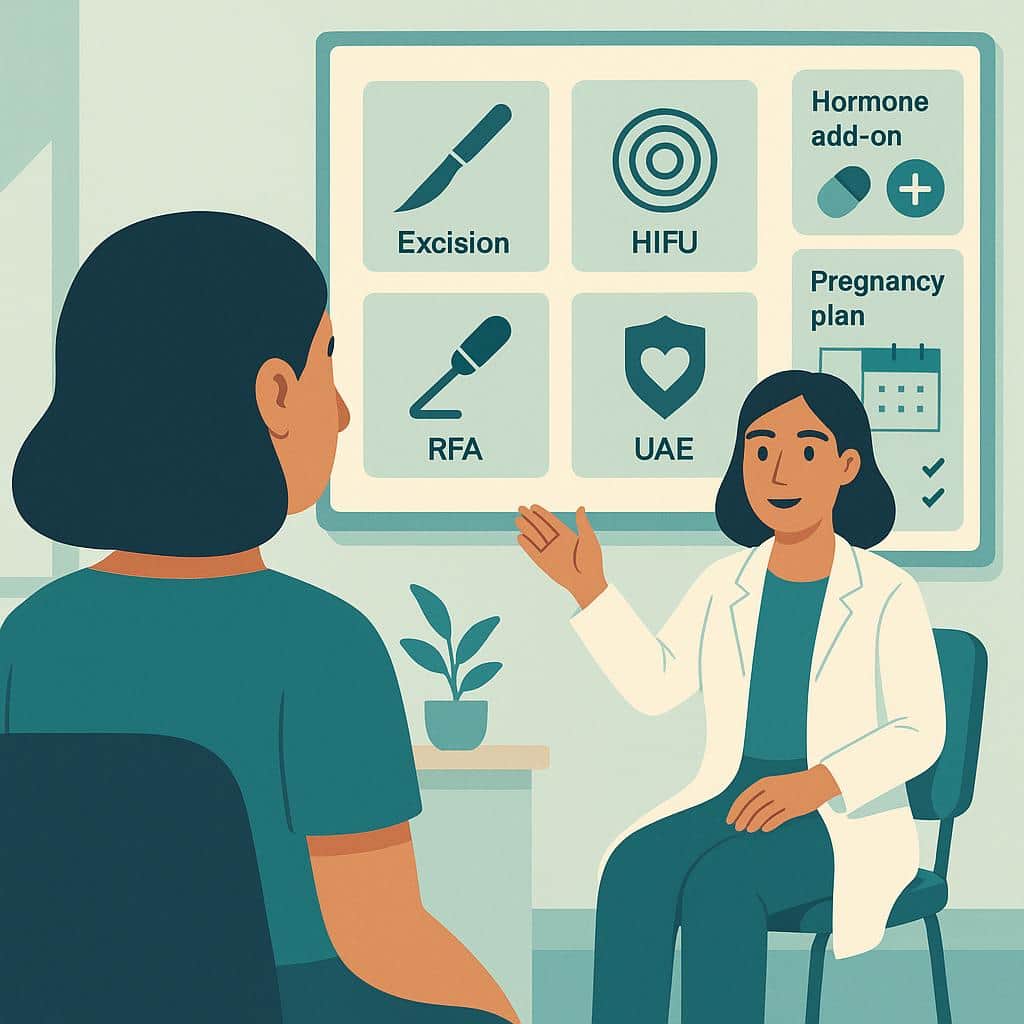
Weigh pregnancy chances, symptom relief, and risks after fertility-sparing adenomyosis treatment. Compare adenomyomectomy vs HIFU, RFA, UAE—when to add hormones
Surgery and IVF: When Are They Right for Endometriosis?
Explore when surgery or IVF is best for endometriosis. Understand the decision-making process and what to consider for fertility and health.
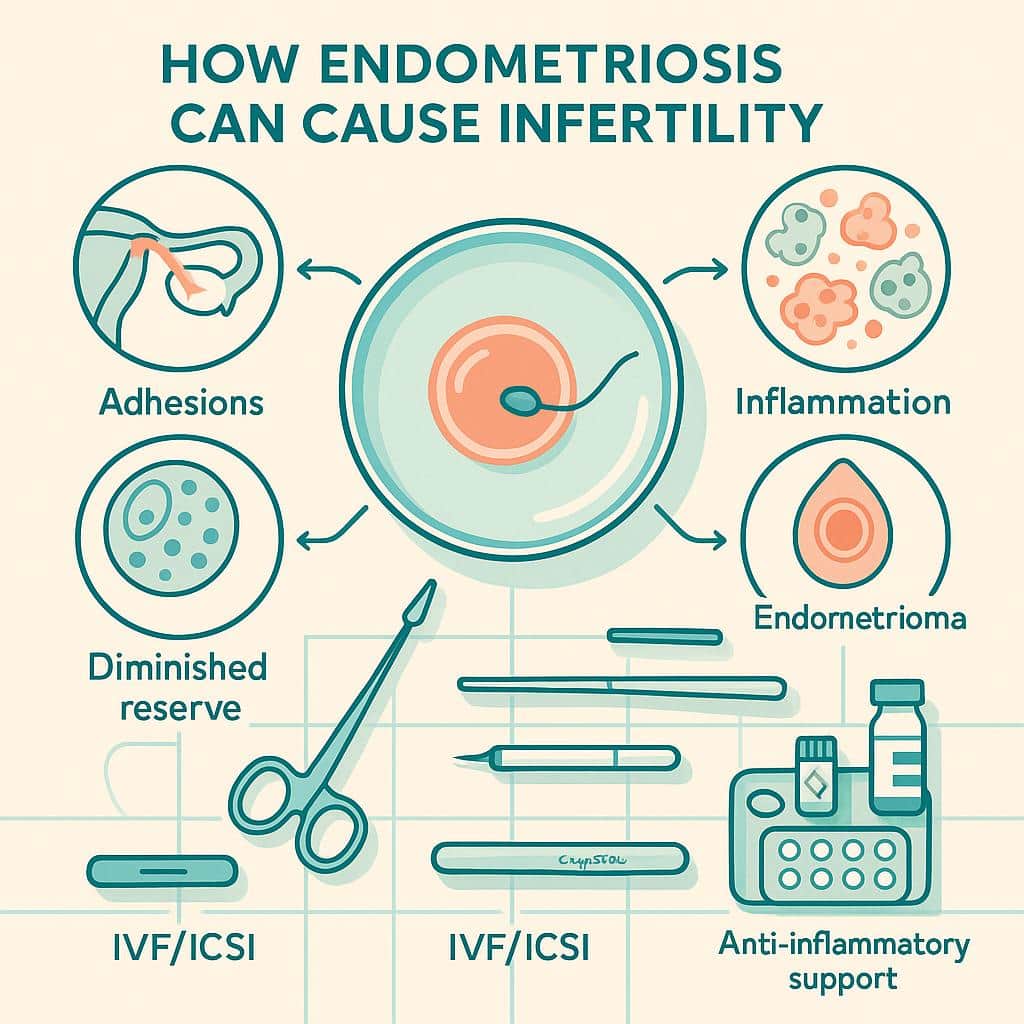
How Endometriosis Contributes to Infertility
How endometriosis leads to infertility: pathogenesis; effects on gametes, tubes, and endometrium; and treatments—expectant care, surgery, and ART.