Fertility
Frozen vs fresh embryo transfer with endometriosis: which is better?
The short answer
A frozen embryo transfer is often preferred for many patients with endometriosis because it separates ovarian stimulation from the transfer cycle. The best choice depends on your fertility factors, age, embryo quality and response to stimulation.
Often, a frozen embryo transfer (FET) is preferred for many patients with endometriosis because it lets us separate ovarian stimulation, when estrogen can be high, from the transfer cycle. That pause can matter if your symptoms flare with stimulation, if you have deep disease, or if your body needs time to calm pelvic inflammation before focusing on implantation. In contrast, a fresh transfer happens immediately after stimulation, which can be a tougher hormonal and inflammatory window for some endometriosis patients.
That said, there’s no one-size-fits-all answer: your best strategy depends on whether endometriosis is the only fertility factor or whether there are additional issues, like sperm, tubal, ovulatory, or ovarian reserve concerns, plus your age, embryo quality, and how you respond to stimulation. Our team often frames the decision around maximizing cumulative chances over a series of attempts while protecting your quality of life along the way. If you’re deciding between fresh and frozen, reach out to schedule a consultation so we can review your history (including prior surgery, endometriomas, and symptoms) and coordinate a plan that fits your goals.
Where to go from here
Understand it, compare it with what you're feeling, then talk it through with us.
Step 1 · Understand
Understand the condition
Step 3 · Speak with Us
Frozen or Fresh Transfer: What's Best?
We understand how endometriosis affects your fertility journey. Our specialists tailor embryo transfer methods to your unique needs, helping you optimize your chances while managing symptoms.
Questions people ask next
All fertility questionsDoes medication pretreatment improve IVF or FET outcomes?
Whether medication pretreatment improves IVF or FET outcomes depends on your symptoms, where disease is suspected, and how you tolerate side effects. In some protocols, hormonal suppression before frozen embryo transfer aims to calm inflammation and reduce uterine irritability.
Lupron suppression before embryo transfer with endometriosis?
Lupron is sometimes used before a frozen embryo transfer to suppress estrogen and quiet endometriosis activity. It does not remove lesions or cure the disease, and the decision is individual because side effects can include hot flashes, mood changes, and bone density effects.
Which ovarian stimulation protocols are best for endometriosis?
Many fertility teams favor an antagonist stimulation protocol for endometriosis, but the best choice depends on ovarian reserve, prior response, symptoms and any endometriomas. It offers timing control and can support a GnRH-agonist trigger, which may lower ovarian hyperstimulation risk.
Will egg retrieval worsen endometriosis?
For many patients, egg retrieval and IVF stimulation do not appear to dramatically accelerate endometriosis in the short term. Temporary pain flares are common, and limited data suggest stimulation may contribute to progression in some cases of deep infiltrating endometriosis.
Further reading
Trying to Conceive With Endometriosis Without Making Symptoms Explode
Discover how to navigate pregnancy with endometriosis while managing symptoms. Explore safe options and recent research on fertility and treatment.
Surgery and IVF: When Are They Right for Endometriosis?
Explore when surgery or IVF is best for endometriosis. Understand the decision-making process and what to consider for fertility and health.
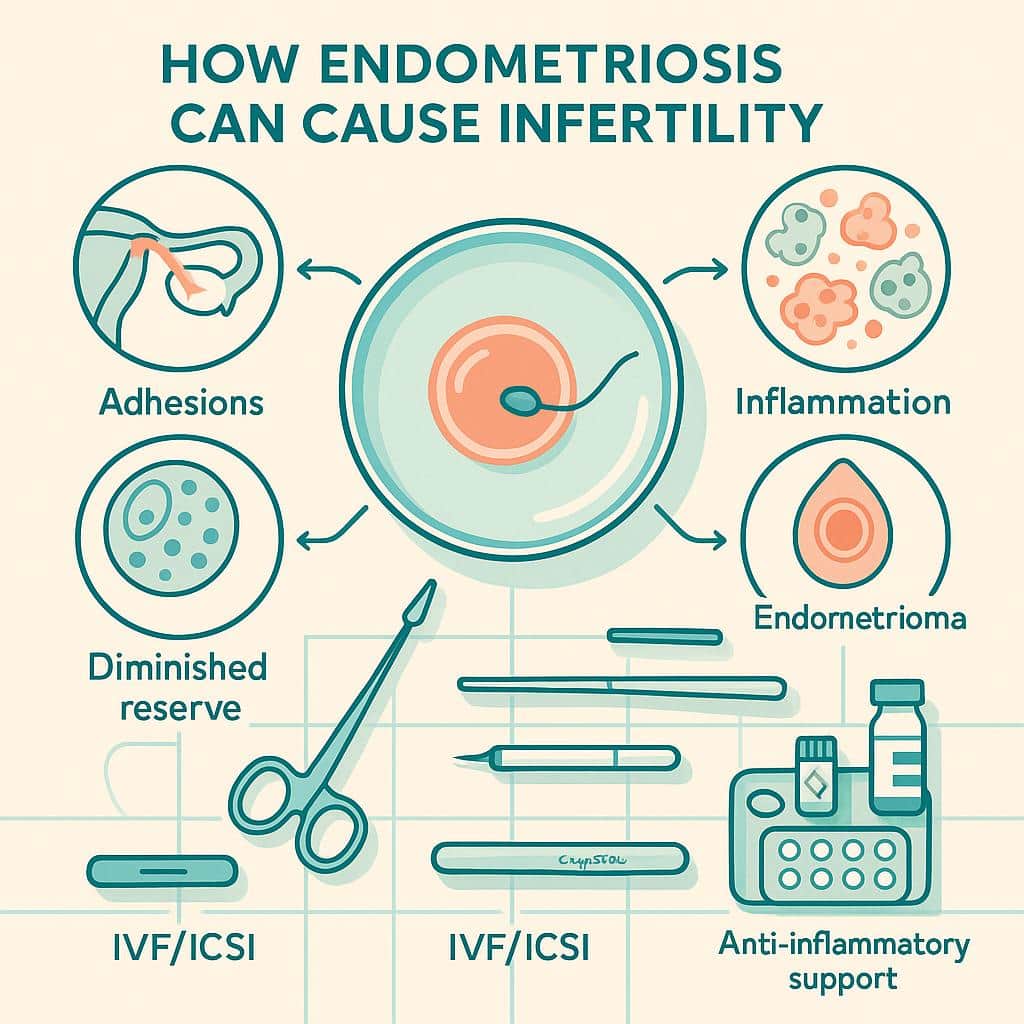
How Endometriosis Contributes to Infertility
How endometriosis leads to infertility: pathogenesis; effects on gametes, tubes, and endometrium; and treatments—expectant care, surgery, and ART.