
Fertility
Lupron suppression before embryo transfer with endometriosis?
The short answer
Lupron is sometimes used before a frozen embryo transfer to suppress estrogen and quiet endometriosis activity. It does not remove lesions or cure the disease, and the decision is individual because side effects can include hot flashes, mood changes, and bone density effects.
Lupron (a GnRH agonist) before a frozen embryo transfer is sometimes used to quiet endometriosis activity by deeply suppressing estrogen for a short time. For some patients, especially those with significant symptoms, suspected active inflammation, adenomyosis, or prior transfer failures, this suppression can be part of an IVF plan aimed at improving the uterine/pelvic environment before transfer. The trade-off is that Lupron doesn’t remove endometriosis lesions or cure the disease; it suppresses symptoms and activity, and symptoms commonly return after stopping.
The decision is very individual because the downsides can be real: hot flashes, sleep disruption, mood changes, vaginal dryness, and bone density effects (which is why these medications are typically used only short-term, sometimes with add-back therapy). If you’re considering Lupron specifically as a bridge to embryo transfer, it’s worth considering the broader strategy: whether you may benefit more from addressing disease at its root, often through expert excision when appropriate, versus proceeding with time-limited suppression to optimize timing for transfer. Our team can help you weigh your endometriosis history, imaging, symptoms, and fertility timeline so your plan supports both pregnancy goals and long-term health. Reach out to schedule a consultation if you’d like us to review your case.
Where to go from here
Understand it, compare it with what you're feeling, then talk it through with us.
Step 1 · Understand
Understand the condition
Step 2 · Compare
Symptoms it can relate to
Step 3 · Speak with Us
Optimize Your Embryo Transfer
Our specialists can tailor Lupron suppression to improve your IVF success by managing endometriosis activity. Let us help create the best environment for your embryo transfer journey.
Questions people ask next
All fertility questionsDoes medication pretreatment improve IVF or FET outcomes?
Whether medication pretreatment improves IVF or FET outcomes depends on your symptoms, where disease is suspected, and how you tolerate side effects. In some protocols, hormonal suppression before frozen embryo transfer aims to calm inflammation and reduce uterine irritability.
Frozen vs fresh embryo transfer with endometriosis: which is better?
A frozen embryo transfer is often preferred for many patients with endometriosis because it separates ovarian stimulation from the transfer cycle. The best choice depends on your fertility factors, age, embryo quality and response to stimulation.
Do hormonal treatments like birth control or GnRH improve fertility?
Birth control pills and GnRH medications suppress ovulation and do not help you conceive while taking them. Hormonal suppression may be used before fertility treatment in certain situations, but it doesn’t reliably increase natural conception rates after you stop.
Do medications shrink or cure endometriosis?
Medications don’t cure endometriosis and typically don’t eliminate lesions. They can quiet hormonal signals that stimulate lesions and reduce inflammation, which often improves pain while you’re on treatment, but symptoms commonly return when medication is stopped.
Further reading
Surgery and IVF: When Are They Right for Endometriosis?
Explore when surgery or IVF is best for endometriosis. Understand the decision-making process and what to consider for fertility and health.
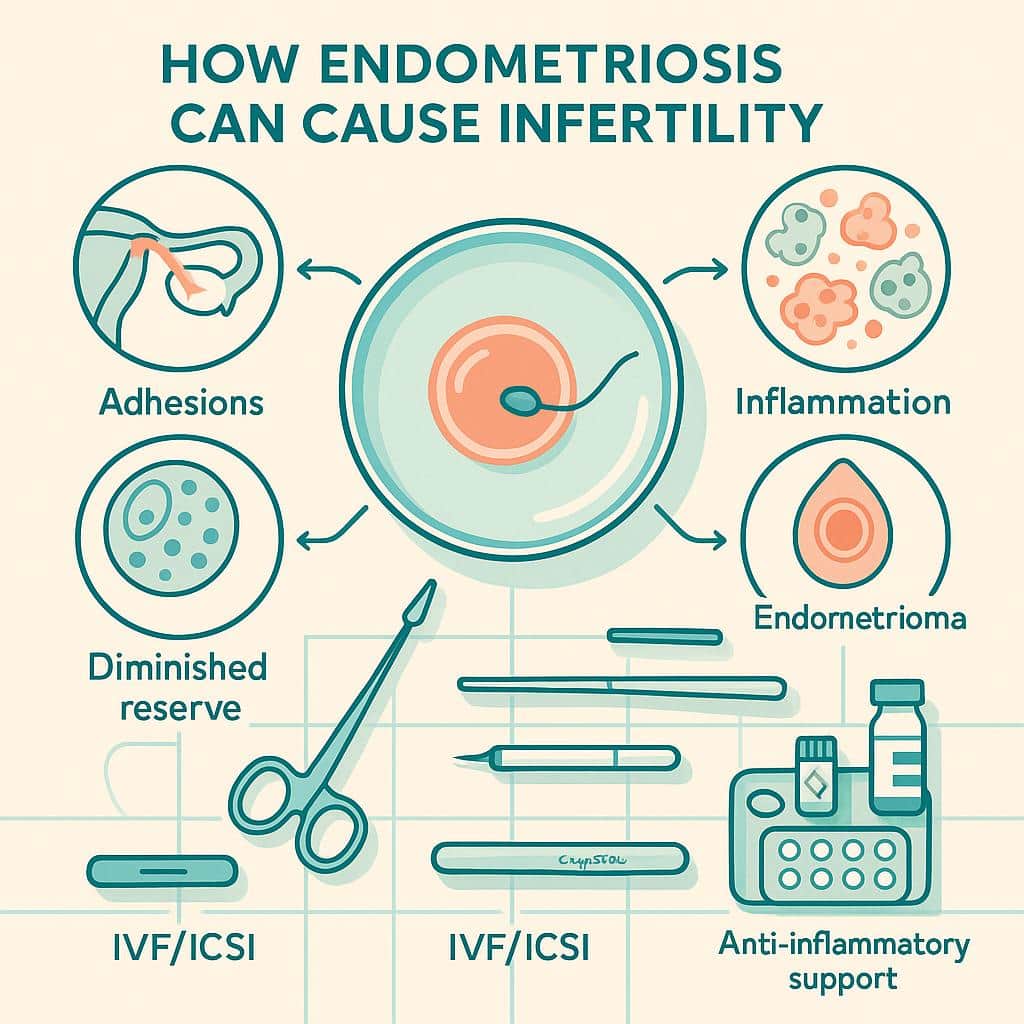
How Endometriosis Contributes to Infertility
How endometriosis leads to infertility: pathogenesis; effects on gametes, tubes, and endometrium; and treatments—expectant care, surgery, and ART.
Trying to Conceive With Endometriosis Without Making Symptoms Explode
Discover how to navigate pregnancy with endometriosis while managing symptoms. Explore safe options and recent research on fertility and treatment.