Fertility
How does deep infiltrating endometriosis affect fertility?
The short answer
Deep infiltrating endometriosis can make conception harder by distorting pelvic anatomy and limiting how freely the ovaries, tubes, and uterus function. Inflammation and scarring may reduce tubal mobility, even when the ovaries are still producing eggs.
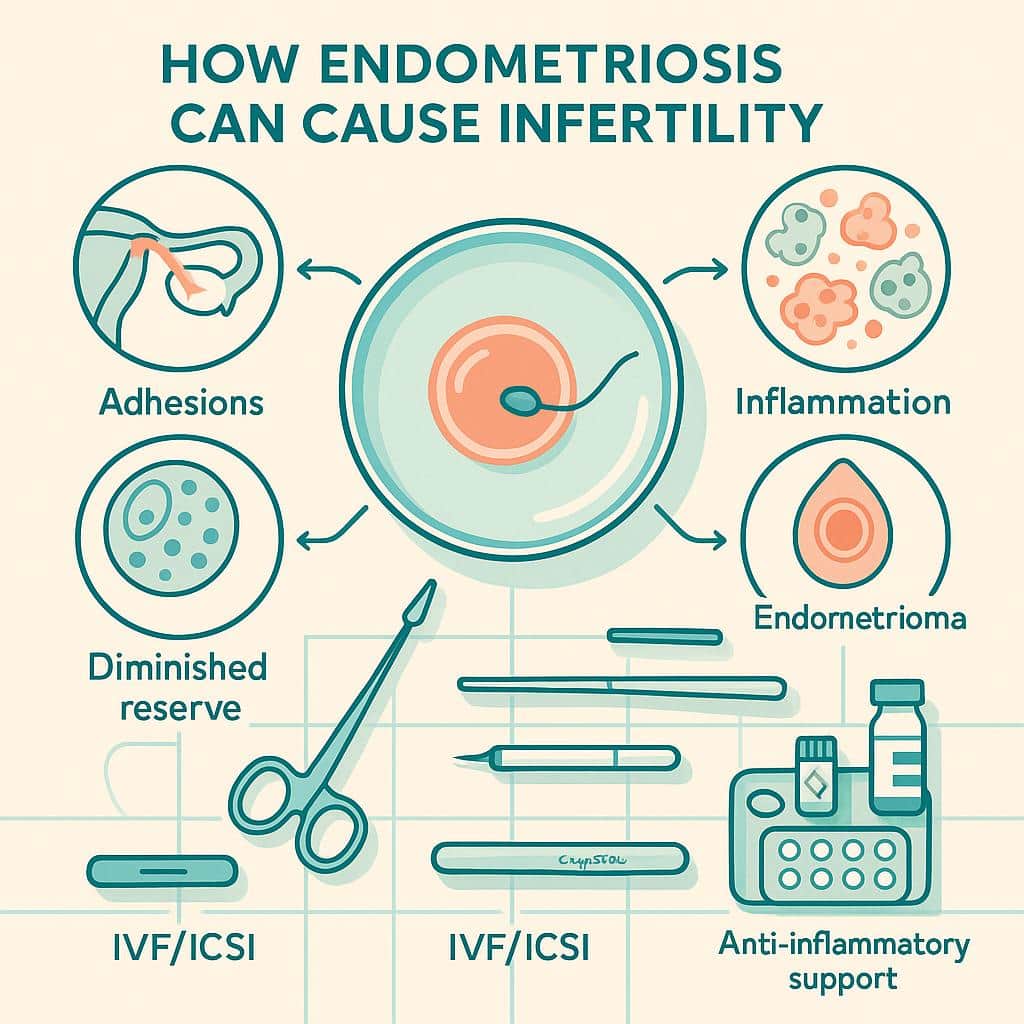
Deep infiltrating endometriosis (DIE) can affect fertility by distorting pelvic anatomy and limiting how freely the ovaries, tubes, and uterus can function. When disease involves areas such as the uterosacral ligaments or the rectovaginal space, inflammation and scarring may contribute to pain with sex, reduced tubal mobility, or other barriers to conception, even when the ovaries are still producing eggs.
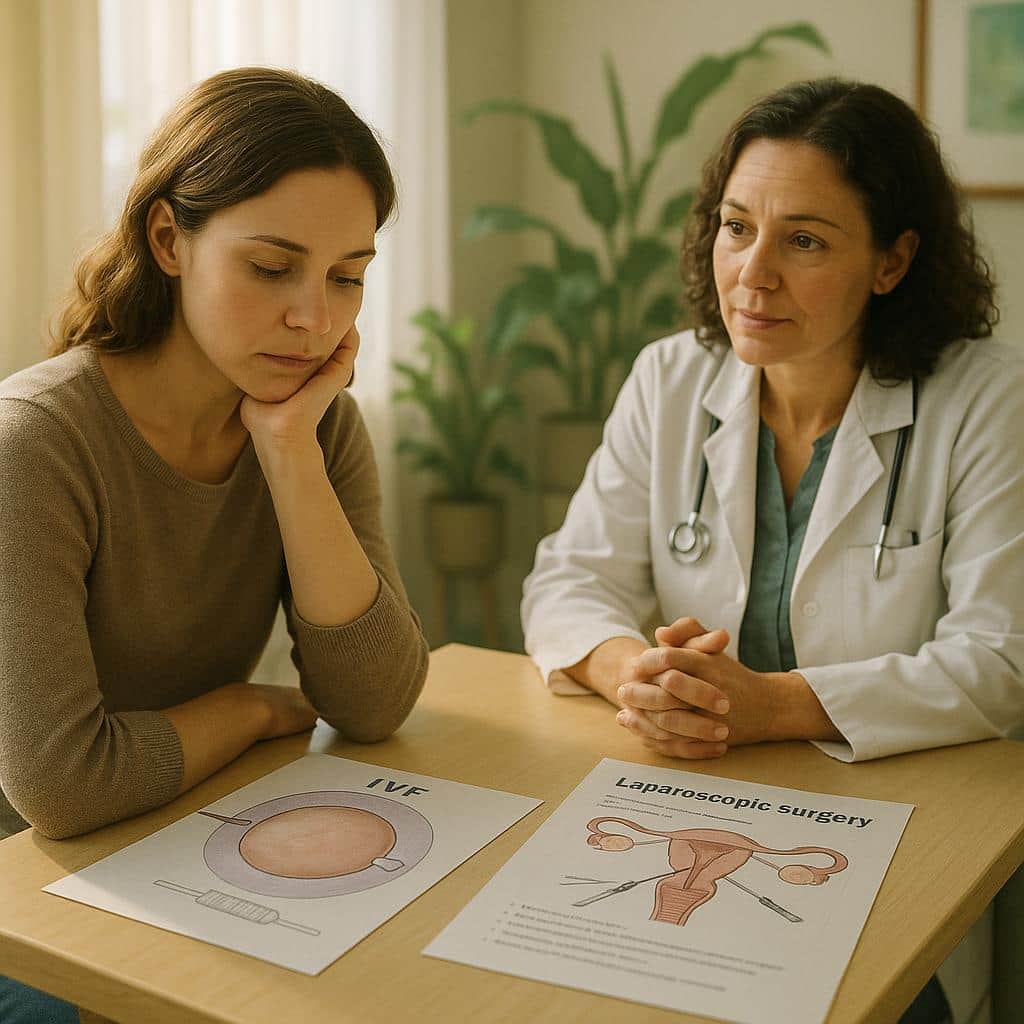
Planning for pregnancy with DIE is highly individualized, and the right next step depends on your age, ovarian reserve, symptoms, and timeline. In some situations, excision surgery can help by removing disease and restoring anatomy; in others, it may make more sense to move directly toward assisted reproduction. Our team can review your imaging, history, and goals to develop a plan that prioritizes both symptom relief and your chances of pregnancy.
Where to go from here
Understand it, compare it with what you're feeling, then talk it through with us.
Step 1 · Understand
Understand the condition
Step 2 · Compare
Symptoms it can relate to
Step 3 · Speak with Us
Worried About Fertility?
Deep infiltrating endometriosis can affect your chances of conceiving by causing pain and anatomical changes. Our specialists can create a personalized plan to support your fertility journey.
Questions people ask next
All fertility questionsCan endometriosis surgery improve my chances of conceiving?
Excision surgery can improve the chances of conceiving for some patients with endometriosis, particularly when removing superficial disease helps restore more normal pelvic anatomy. Outcomes vary, and surgery on the ovaries can affect ovarian reserve.
What surgery treats deep infiltrating endometriosis (DIE)?
The primary surgery for deep infiltrating endometriosis (DIE) is laparoscopic excision, sometimes with robotic assistance, to remove deep nodules. The goal is thorough removal while protecting nearby organs and pelvic nerves whenever possible.
Can endometriosis surgery affect fertility?
Yes, endometriosis surgery can affect fertility in both positive and negative ways, depending on where the disease is and what surgery involves. Removing disease can improve the chances of conception, but surgery on the ovaries can reduce ovarian reserve.
How does endometriosis affect fertility, and when to seek help?
Endometriosis can affect fertility through inflammation and scarring, but many people do conceive. In general, evaluation is recommended after 12 months of trying without success, or 6 months if you’re 35 or older; earlier evaluation is reasonable with severe pain or other risk factors.
Further reading
Bowel Endometriosis and Infertility - What Should You Try First?
Explore options for bowel endometriosis and infertility. Understand whether surgery or IVF should be your first step. Get reliable insights now.
Surgery and IVF: When Are They Right for Endometriosis?
Explore when surgery or IVF is best for endometriosis. Understand the decision-making process and what to consider for fertility and health.
How Endometriosis Contributes to Infertility
How endometriosis leads to infertility: pathogenesis; effects on gametes, tubes, and endometrium; and treatments (expectant care, surgery, and ART).