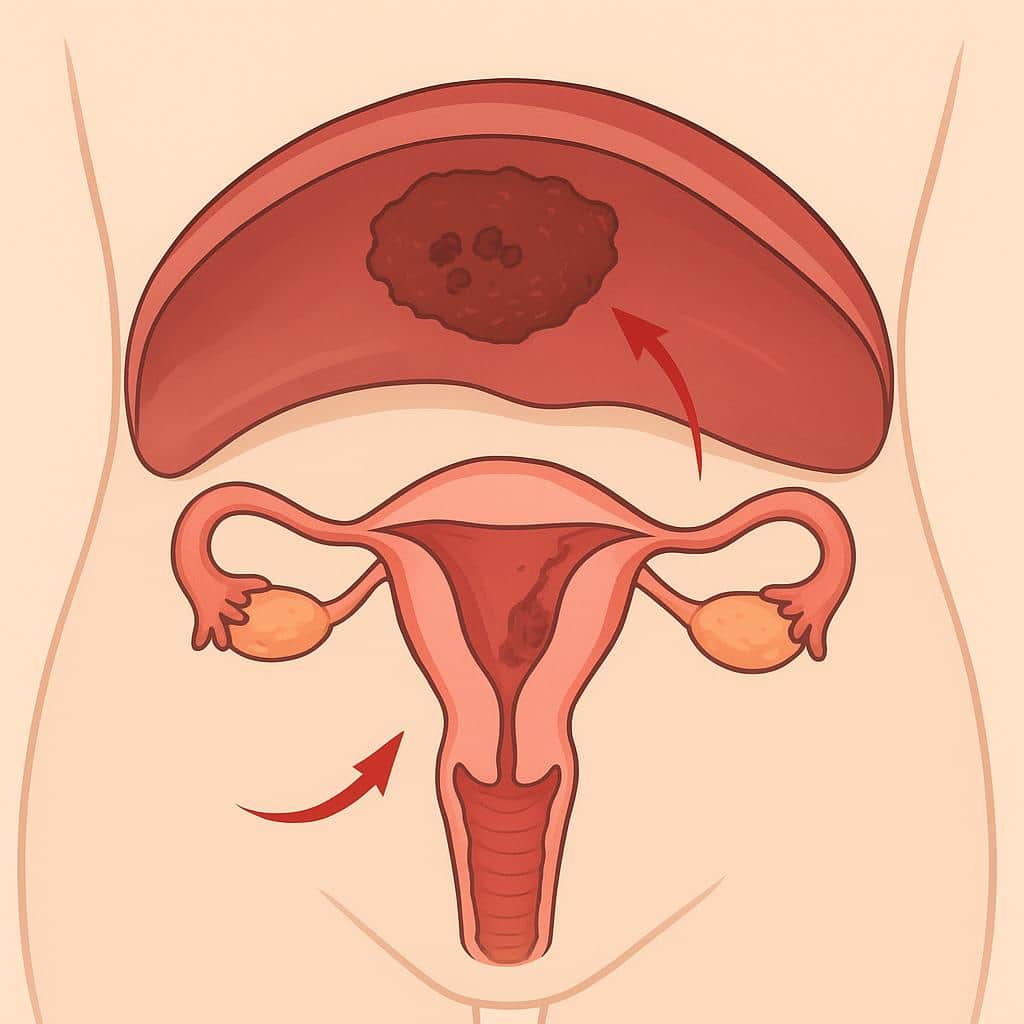

Deep Disease
How is diaphragmatic endometriosis diagnosed?
The short answer
The most reliable way to diagnose diaphragmatic endometriosis is minimally invasive surgery to inspect the diaphragm and remove suspicious lesions for pathology when appropriate. Imaging can help guide evaluation, but a normal scan does not rule it out.
Diaphragmatic endometriosis can be difficult to confirm because symptoms may be subtle or absent, and imaging doesn’t always detect superficial implants. We start with your full symptom history and patterns, especially cyclical right upper abdominal, rib, chest, shoulder, or arm pain that flares around your period or with deep breaths or coughing. We then pair that with a targeted exam and a careful review of prior workups so we don’t miss look-alike or coexisting conditions.
Imaging such as MRI, and sometimes CT depending on the situation, can help raise suspicion, map anatomy, and guide surgical planning, but a normal scan does not rule it out. The most reliable way to diagnose diaphragmatic endometriosis is minimally invasive surgery (laparoscopy or robotic surgery) with deliberate inspection of the diaphragm and, when appropriate, removal of suspicious lesions for confirmation by pathology.
If symptoms suggest disease may extend into the chest (thoracic endometriosis), diagnosis may require coordination with a thoracic surgeon and, in select cases, a chest procedure such as VATS in addition to laparoscopy. Our team plans for this proactively when your history or imaging points in that direction, so you’re not left with an incomplete evaluation or surgery that isn’t equipped to address the full extent of disease.
Where to go from here
Understand it, compare it with what you're feeling, then talk it through with us.
Step 1 · Understand
Understand the condition
Step 2 · Compare
Symptoms it can relate to
Step 3 · Speak with Us
Struggling with Upper Abdominal Pain?
Our specialists understand the subtle signs of diaphragmatic endometriosis and use precise exams and imaging to diagnose it. Let us help you find clarity and relief with expert care tailored to your symptoms.
Questions people ask next
All deep disease questionsCan imaging detect diaphragm or chest endometriosis?
Sometimes imaging can suggest endometriosis on the diaphragm or in the chest, but normal imaging doesn’t rule it out. Even MRI can miss small or superficial lesions, though imaging can help map other potential causes of chest symptoms and support surgical planning when suspicion is high.
Why is diaphragmatic endometriosis often found only during surgery?
Diaphragmatic endometriosis is frequently missed before surgery because standard exams and imaging focus on the pelvis, and some lesions are hard to see. Surgery allows direct inspection of the diaphragm, which can reveal implants that scans miss.
Best long-term treatment for diaphragmatic endometriosis?
For many patients, complete excision by a surgeon with advanced experience in upper-abdominal endometriosis offers the most durable long-term relief for diaphragmatic endometriosis. Mapping before surgery and a tailored surgical plan are key to treatment success.
Is my shoulder or chest pain from diaphragmatic endometriosis?
Diaphragmatic endometriosis can cause shoulder or chest pain that tends to be cyclical and frequently right-sided, flaring before or during your period. Many non-gynecologic causes can also explain this pain, especially if it’s left-sided or not tied to your cycle.
Further reading
Diaphragmatic Endometriosis: Symptoms and Treatment Options
Learn what diaphragmatic endometriosis is, how it affects the diaphragm, key symptoms, causes, diagnosis options, treatments, and potential complications.
Thoracic Endometriosis: Understanding Symptoms, Diagnosis, and Treatment Options
Chest pain or shortness of breath during your period? Thoracic Endometriosis Syndrome is a rare but serious condition often missed for years. Learn the signs.
Endometriosis Biopsy: A Definitive Method for Diagnosis
Learn when a biopsy is essential for confirming endometriosis or adenomyosis. Explore symptoms, research findings, and options beyond surgery.