
Deep Disease
Why is diaphragmatic endometriosis often found only during surgery?
The short answer
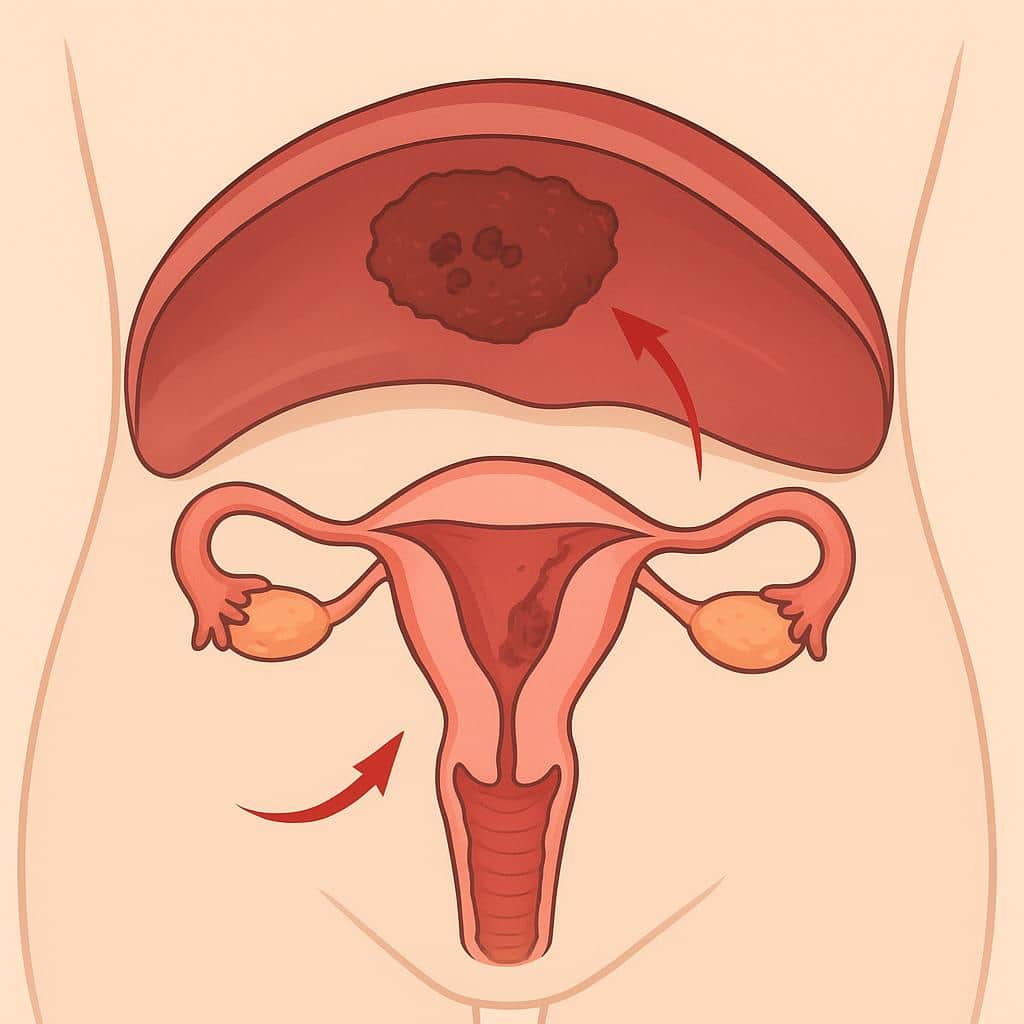
Diaphragmatic endometriosis is frequently missed before surgery because standard exams and imaging focus on the pelvis, and some lesions are hard to see. Surgery allows direct inspection of the diaphragm, which can reveal implants that scans miss.
Diaphragmatic endometriosis is frequently missed before surgery because it sits outside the typical pelvic areas that most exams and standard imaging focus on. Even high-quality ultrasound or MRI doesn’t give a simple yes-or-no answer: some lesions are small, superficial, or positioned in ways that make them hard to visualize, and some people have little to no diaphragm-specific symptoms. When symptoms do occur, they’re often mistaken for non-gynecologic issues unless the timing is clearly cyclical (for example, right upper abdominal, chest, or shoulder-tip pain that flares around periods).
Surgery is often when it’s finally identified because minimally invasive laparoscopy or robotic surgery allows direct inspection of the diaphragm, which can reveal implants that scans and routine pelvic evaluation miss. This is also why surgical planning matters: diaphragm excision requires specific skill and careful decision-making, since the diaphragm is thin and disease can, in rarer cases, extend toward the chest. If your diaphragm endometriosis wasn’t recognized until surgery, it doesn’t mean it wasn’t real earlier; it usually reflects the limits of pre-op testing and how easily this location can be overlooked. If you’re still having cyclical chest, shoulder, or rib pain or breathing-related flares, our team can help review your history, imaging, and operative findings and plan next steps with the right expertise in place.
Where to go from here
Understand it, compare it with what you're feeling, then talk it through with us.
Step 2 · Compare
Symptoms it can relate to
Step 3 · Speak with Us
Still searching for answers?
Diaphragmatic endometriosis can hide from scans and mimic non-gynecologic problems, so it’s often only confirmed during surgery. Our endometriosis specialists can evaluate cyclical chest/shoulder or right upper abdominal pain and discuss the right diagnostic and surgical plan for deep disease.
Questions people ask next
All deep disease questionsCan imaging detect diaphragm or chest endometriosis?
Sometimes imaging can suggest endometriosis on the diaphragm or in the chest, but normal imaging doesn’t rule it out. Even MRI can miss small or superficial lesions, though imaging can help map other potential causes of chest symptoms and support surgical planning when suspicion is high.
How is diaphragmatic endometriosis diagnosed?
The most reliable way to diagnose diaphragmatic endometriosis is minimally invasive surgery to inspect the diaphragm and remove suspicious lesions for pathology when appropriate. Imaging can help guide evaluation, but a normal scan does not rule it out.
Can endometriosis be missed during surgery?
Yes, endometriosis can be missed during surgery, especially when lesions are subtle or hidden under normal-looking tissue. Finding it depends heavily on the surgeon’s endometriosis-specific training, visibility, and how thoroughly the pelvis is evaluated.
Can medication manage diaphragmatic endometriosis, or is surgery needed?
Medication can help many patients manage diaphragmatic endometriosis symptoms, but it does not remove the disease. Surgery becomes more likely when pain continues despite medication, deeper nodules are suspected, or symptoms raise concern for chest involvement.
Further reading
Diaphragmatic Endometriosis: Symptoms and Treatment Options
Learn what diaphragmatic endometriosis is, how it affects the diaphragm, key symptoms, causes, diagnosis options, treatments, and potential complications.
Can Scans and Tests Find Endometriosis? Know the Limits
Discover why ultrasounds may miss endometriosis. Learn about imaging limits and recent research in our latest blog. Find clarity in your diagnosis.
Thoracic Endometriosis: Understanding Symptoms, Diagnosis, and Treatment Options
Chest pain or shortness of breath during your period? Thoracic Endometriosis Syndrome is a rare but serious condition often missed for years. Learn the signs.