
Fertility
Progesterone or baby aspirin to prevent miscarriage?
The short answer
Progesterone may help some people with early pregnancy bleeding and prior miscarriages; baby aspirin is most clearly beneficial for recurrent loss linked to antiphospholipid syndrome. Routine progesterone hasn't consistently prevented miscarriage; aspirin hasn't reliably helped unexplained losses.
Progesterone support is commonly used after IVF, and it may help some people who have early pregnancy bleeding and a history of prior miscarriages. However, routinely using progesterone for everyone with a positive pregnancy test hasn’t consistently been shown to prevent miscarriage, so the decision usually depends on your specific history and how the pregnancy was conceived.
Low-dose (baby) aspirin is most clearly beneficial when recurrent loss is linked to antiphospholipid syndrome, often as part of a coordinated plan that may also include anticoagulation. For unexplained miscarriages, aspirin hasn’t reliably improved outcomes, and using it without a clear indication can add unnecessary risk or confusion. Our team can review your prior losses, labs, and fertility treatment details to recommend an approach that fits your situation. Reach out to schedule a consultation if you’d like a personalized plan.
Where to go from here
Understand it, compare it with what you're feeling, then talk it through with us.
Step 3 · Speak with Us
Concerned About Miscarriage?
Our specialists understand the challenges of early pregnancy and can guide you on progesterone or baby aspirin use based on your unique history. Get personalized support to improve your chances for a healthy pregnancy.
Questions people ask next
All fertility questionsDoes endometriosis increase miscarriage risk?
Yes, endometriosis is associated with a modest increase in miscarriage risk, particularly in the first trimester. Most pregnancies in people with endometriosis are successful, and age, pregnancy history and other uterine factors matter for individual risk.
What pain treatments are safe during pregnancy?
Acetaminophen is typically the first-line pain medication during pregnancy. NSAIDs are generally avoided after 20 weeks and need obstetric guidance earlier. Non-medication options include targeted heat, gentle activity changes and pelvic floor physical therapy with a prenatal-trained clinician.
Are ICSI or PGT-A recommended for endometriosis?
ICSI isn’t routinely recommended for endometriosis alone, while PGT-A can help in specific situations. ICSI decisions usually depend on semen results and past fertilization; PGT-A may help older patients or those with recurrent pregnancy loss or repeated implantation failure.
Further reading
Endometriosis and Miscarriage: What Research Suggests
Learn how endometriosis may affect miscarriage risk, the roles of inflammation, hormones, and surgery, what current studies show, and ways to manage fertility.
Fertility-Sparing Treatment for Adenomyosis: Pregnancy Chances, Symptom Relief, and Pregnancy Risks
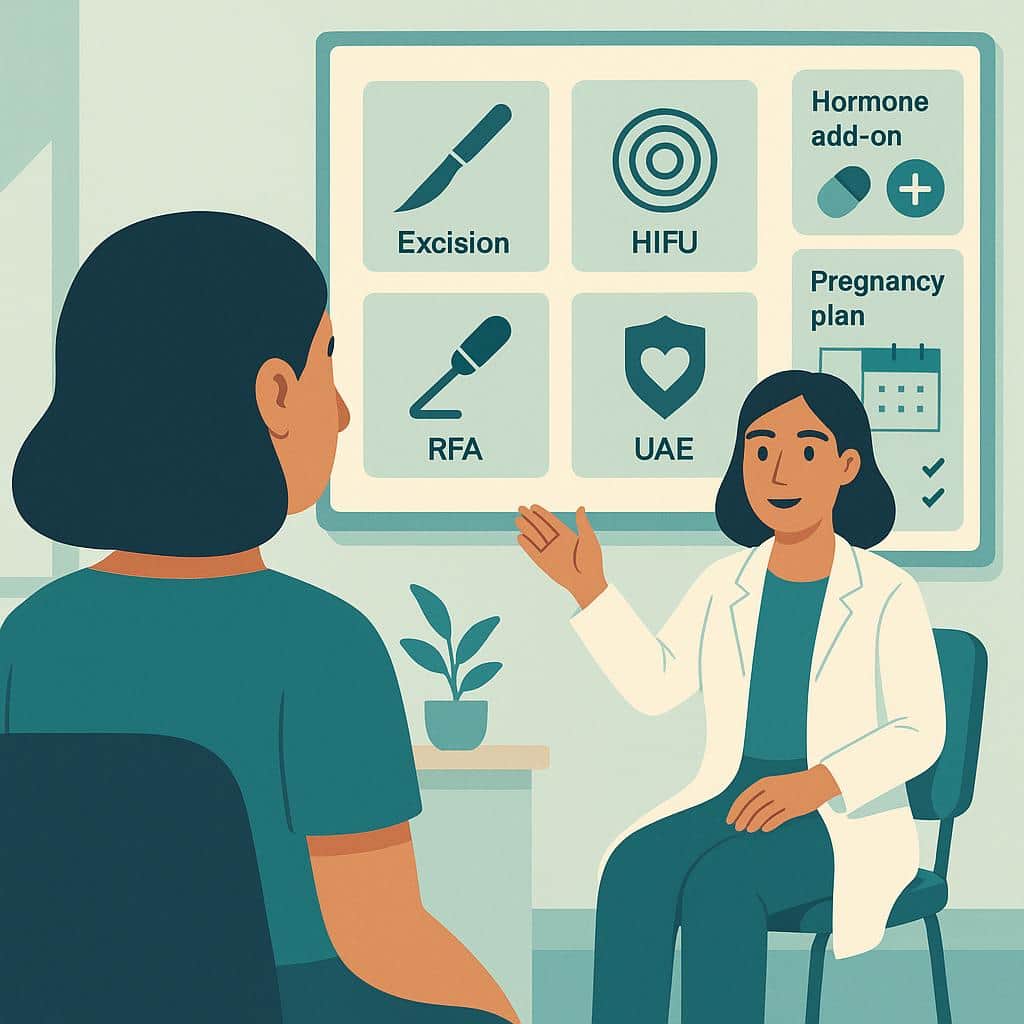
Weigh pregnancy chances, symptom relief, and risks after fertility-sparing adenomyosis treatment. Compare adenomyomectomy vs HIFU, RFA, UAE—when to add hormones
Endometriosis And Preeclampsia What You Should Know
Learn how endometriosis and adenomyosis may affect preeclampsia risk during pregnancy. Get informed for a healthier journey.