Fertility
Should hydrosalpinx be removed before IVF with endometriosis?
The short answer
Yes, when a true hydrosalpinx is present, removing or disconnecting the affected tube before embryo transfer is often recommended. Its inflammatory fluid can flow into the uterus and interfere with implantation. The approach depends on your anatomy and goals.
Yes, when a true hydrosalpinx is present, removing or otherwise disconnecting the affected tube before embryo transfer is often recommended because the inflammatory fluid can reflux into the uterus and interfere with implantation. In people with endometriosis, a hydrosalpinx also commonly signals broader pelvic inflammation, scarring, or adhesions, so addressing it can be a meaningful way to reduce a second factor that may be lowering IVF odds.
The right approach depends on your anatomy and goals: sometimes this means a minimally invasive salpingectomy (tube removal), and in other cases a proximal tubal occlusion is considered to block the fluid from reaching the uterine cavity. If endometriosis is also driving pain or distorting pelvic anatomy, we often coordinate surgery to treat endometriosis and the tube issue in the same setting when it’s safe and appropriate, so you can recover efficiently and move on to fertility treatment.
If you’ve been told you have a hydrosalpinx, our team can review your imaging and fertility history, confirm the diagnosis (hydrosalpinx can be confused with other cystic findings), and help you map out a timeline that balances symptom relief, surgical complexity, and your IVF plans.
Where to go from here
Understand it, compare it with what you're feeling, then talk it through with us.
Step 2 · Compare
Symptoms it can relate to
Step 3 · Speak with Us
Improve IVF Success with Expert Care
Our specialists understand how hydrosalpinx affects IVF outcomes in endometriosis patients. We can guide you on the best treatment to optimize your chances of pregnancy.
Questions people ask next
All fertility questionsDoes excision surgery improve IVF success with endometriosis?
Sometimes, but it depends on why IVF isn’t working and what endometriosis is doing in your pelvis. Excision can improve the IVF environment when disease distorts anatomy or causes tubal problems, but surgery is not a universal prerequisite for IVF.
Can endometriosis surgery affect fertility?
Yes, endometriosis surgery can affect fertility in both positive and negative ways, depending on where the disease is and what surgery involves. Removing disease can improve the chances of conception, but surgery on the ovaries can reduce ovarian reserve.
When is IVF recommended for endometriosis?
IVF is often recommended for endometriosis when older age or reduced ovarian reserve makes time a key factor, or when fallopian tubes are blocked or damaged. It may also be the next step after unsuccessful less invasive fertility treatment or when male-factor infertility is present.
Does medication pretreatment improve IVF or FET outcomes?
Whether medication pretreatment improves IVF or FET outcomes depends on your symptoms, where disease is suspected, and how you tolerate side effects. In some protocols, hormonal suppression before frozen embryo transfer aims to calm inflammation and reduce uterine irritability.
Further reading
Surgery and IVF: When Are They Right for Endometriosis?
Explore when surgery or IVF is best for endometriosis. Understand the decision-making process and what to consider for fertility and health.
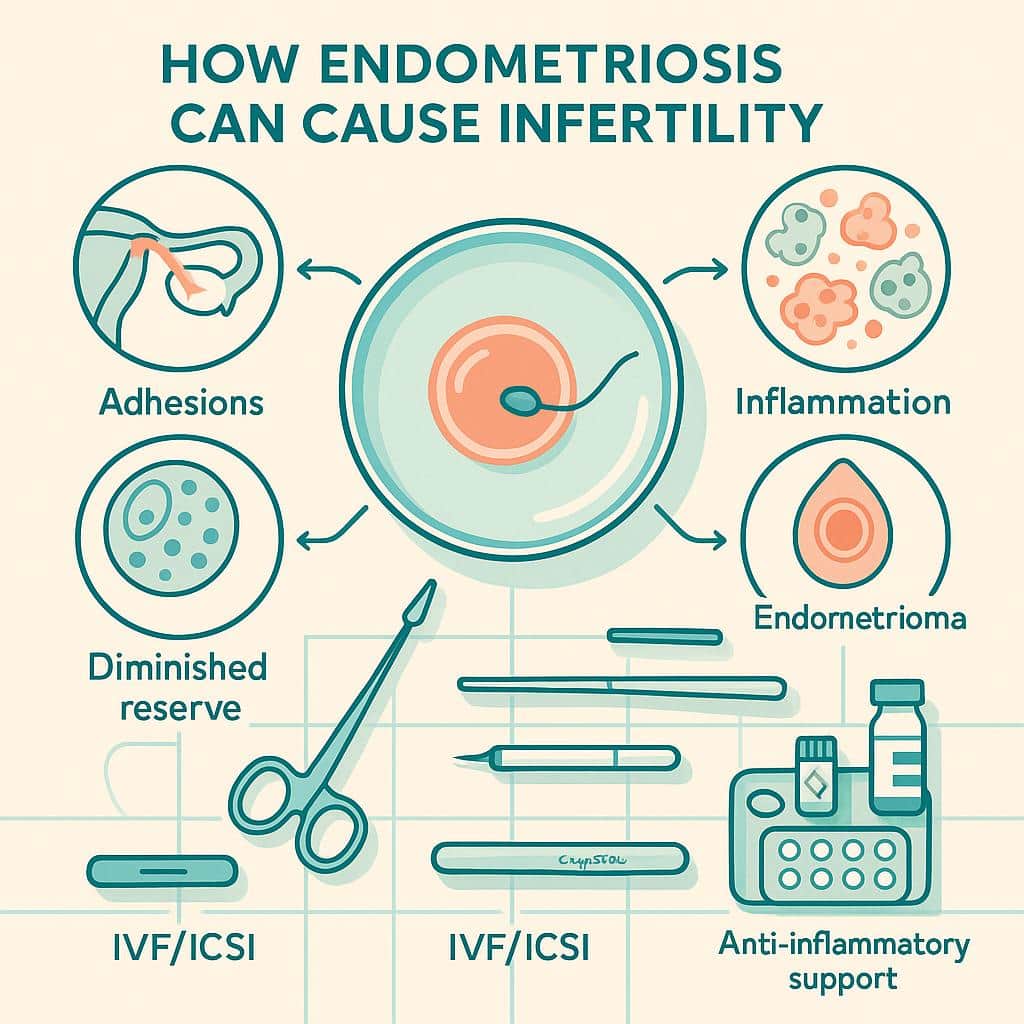
How Endometriosis Contributes to Infertility
How endometriosis leads to infertility: pathogenesis; effects on gametes, tubes, and endometrium; and treatments—expectant care, surgery, and ART.