Deep Disease
What is adenomyosis?
The short answer
Adenomyosis is a condition where tissue similar to the uterine lining grows into the muscular wall of the uterus. This tissue responds to hormonal cycles and can cause heavy or prolonged bleeding, severe cramping, pelvic pain or pressure, and pain with sex.
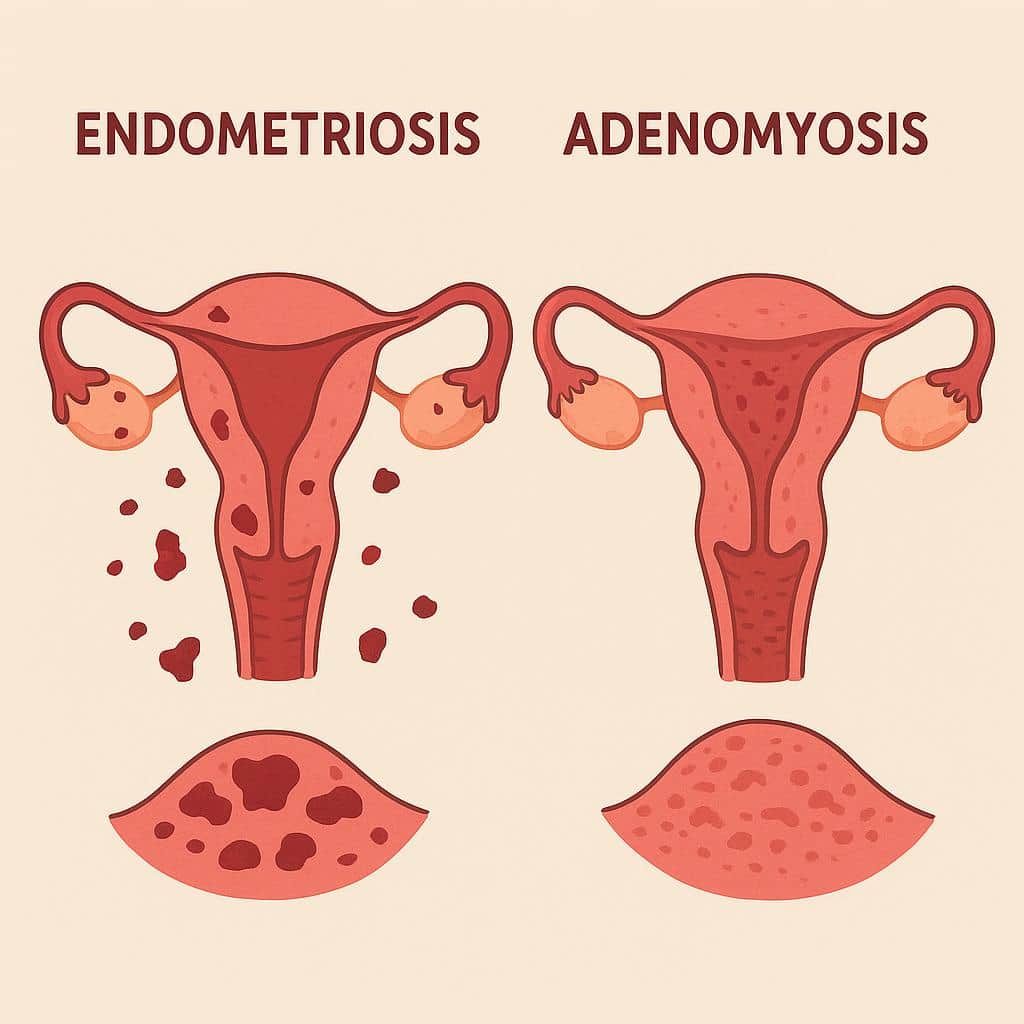
Adenomyosis is a condition in which tissue similar to the uterine lining grows into the muscular wall of the uterus (the myometrium). Because this tissue still responds to hormonal cycles, it can swell and bleed with your period, often leading to inflammation and an enlarged, tender uterus. Common symptoms include heavy or prolonged bleeding, severe cramping, pelvic pain or pressure, pain with sex, and sometimes fertility challenges.
Unlike endometriosis, adenomyosis stays within the uterus rather than spreading outside it. It may be diffuse, meaning spread throughout the uterine muscle, or more localized (sometimes forming an adenomyoma). It also frequently overlaps with endometriosis, which can make symptoms more intense and diagnosis more complex. Our team can help you make sense of your symptoms and imaging and talk through treatment paths that match your goals, whether that’s symptom control, fertility planning, or more definitive options.
Where to go from here
Understand it, compare it with what you're feeling, then talk it through with us.
Step 2 · Compare
Symptoms it can relate to
Step 3 · Speak with Us
Wondering About Adenomyosis?
If you're experiencing heavy periods or pelvic pain, our specialists can help diagnose and manage adenomyosis. We provide compassionate care tailored to your symptoms and fertility concerns.
Questions people ask next
All deep disease questionsWhich adenomyosis symptoms most affect daily life?
Heavy or prolonged periods and severe period pain usually cause the biggest disruption to daily life with adenomyosis. Bleeding can affect work, school, travel, and sleep, while fatigue, pelvic pressure, and pain with sex for some people can add to the burden.
Why can adenomyosis cause heavy menstrual bleeding?
Adenomyosis can cause heavy bleeding because tissue within the uterine muscle responds to monthly hormones, triggering swelling, bleeding and inflammation. The uterus may also enlarge, and muscle contractions can be disrupted, contributing to heavier or longer periods.
Can you have both endometriosis and adenomyosis?
Yes, many patients can have both endometriosis and adenomyosis at the same time. Their symptoms may blend together, and having both can affect treatment planning because endometriosis is outside the uterus while adenomyosis is within the uterine muscle.
Are heavy periods always adenomyosis?
No, heavy periods can be a symptom of adenomyosis, but many people with heavy bleeding have a different underlying cause. Fibroids and other uterine conditions can also cause heavy bleeding and cramping, and it’s possible to have more than one issue at the same time.
Further reading
Adenomyosis Basics: What Is It and Why Is It Overlooked?
Discover what adenomyosis is, why it's often overlooked, and treatment options. Understand its symptoms and relation to endometriosis.
Do My Symptoms Mean Adenomyosis or Endometriosis?
Discover the truth about endometriosis and adenomyosis symptoms. Understand how common they really are, and gain insights for effective advocacy.
Endometriosis and Adenomyosis: How They Drive Pelvic Pain
Compare endometriosis and adenomyosis: similarities, differences in location and prevalence, diagnosis methods, and treatment options for pelvic pain.