
Surgery
Does fluorescence-guided surgery help find endometriosis?
The short answer
Fluorescence-guided surgery with ICG is not a dependable way to find endometriosis lesions. It can help improve surgical safety by checking blood flow after delicate dissection and helping identify and protect structures such as the ureters.
Fluorescence-guided surgery typically uses indocyanine green (ICG) with near-infrared imaging to visualize blood flow in real time. In endometriosis surgery, we most often use it to confirm healthy perfusion after delicate dissection or reconstruction and to help identify and protect critical anatomy, such as the ureters.
It’s important to know that ICG is not a dependable way to reveal endometriosis lesions themselves, so it shouldn’t be viewed as a stand-alone method for finding disease. It can add value by improving surgical decision-making and safety, supporting well-vascularized, lower-risk resections when operating near bowel, bladder, or ureters. Allergic reactions are uncommon, but we’ll review your history carefully, especially prior reactions to contrast/dyes, iodine/iodide sensitivity, and liver disease, so we can choose the safest approach for you.
Where to go from here
Understand it, compare it with what you're feeling, then talk it through with us.
Step 1 · Understand
Understand the condition
Step 2 · Compare
Symptoms it can relate to
Step 3 · Speak with Us
Need safer endometriosis surgery?
Our specialists use advanced imaging to enhance surgical precision and protect vital anatomy during your procedure. We’re here to guide you through safe, effective treatment options tailored to you.
Questions people ask next
All surgery questionsIs laparoscopy the only way to confirm endometriosis?
Yes. At this time, the only definitive way to confirm endometriosis is laparoscopy, with direct visualization and biopsy of suspected lesions. Imaging and exams can strongly suggest it, but can’t reliably rule it in or out in every case.
Why use robotic-assisted (da Vinci) surgery for endometriosis?
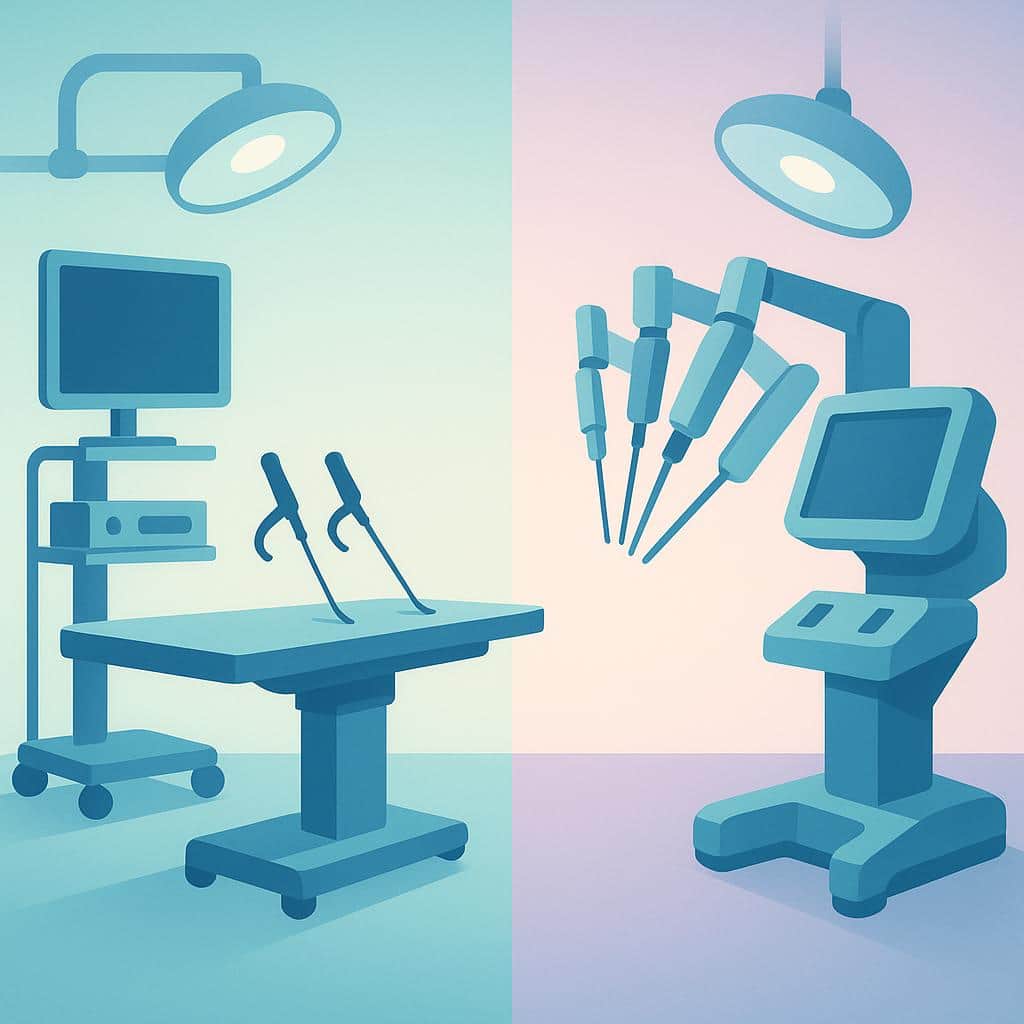
Robotic-assisted (da Vinci) surgery may be used for endometriosis when precision matters most, such as with deep disease or disease near sensitive organs. It provides a magnified 3D view and finer control to help remove disease while protecting healthy tissue.
Can imaging predict if I’ll need bowel, bladder, or ureter surgery?
Yes, high-quality pelvic ultrasound and MRI can often help anticipate whether bowel, bladder, or ureter surgery may be needed. Imaging helps plan the safest approach, but the definitive assessment and exact surgical plan are confirmed during surgery.
Can imaging be negative and still help plan endometriosis surgery?
Yes, imaging can be negative and still help plan endometriosis surgery. Small or superficial disease may not show up, but imaging can help map deeper disease and assess whether nearby organs may be involved, helping plan the surgical team and anticipate complexity.
Further reading
Deep Infiltrating Endometriosis: Current and Future Treatments
Deep infiltrating endometriosis: symptoms, causes, diagnosis and treatment. Medical therapy, ICG-guided surgery, stenting, pathology, and future outlook.
Endometriosis Biopsy: A Definitive Method for Diagnosis
Learn when a biopsy is essential for confirming endometriosis or adenomyosis. Explore symptoms, research findings, and options beyond surgery.
Conventional Laparoscopy vs Robotic Surgery for Endometriosis and Adenomyosis: What Patients Need to Know
Comparing safety, effectiveness, and recovery: a patient-friendly overview of different surgery approaches and what they can mean for your treatment.