
Surgery
Why use robotic-assisted (da Vinci) surgery for endometriosis?
The short answer
Robotic-assisted (da Vinci) surgery may be used for endometriosis when precision matters most, such as with deep disease or disease near sensitive organs. It provides a magnified 3D view and finer control to help remove disease while protecting healthy tissue.
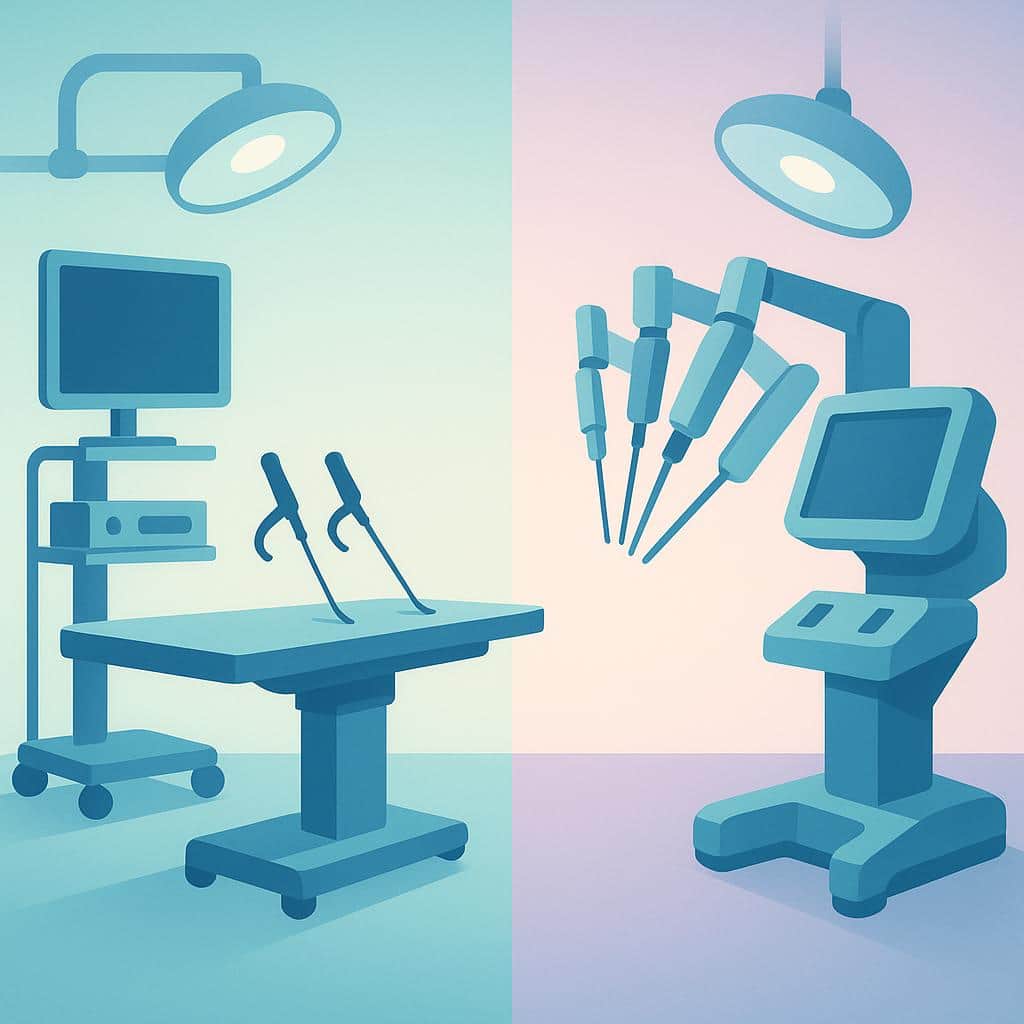
Robotic-assisted (often called da Vinci) surgery is a minimally invasive approach that uses small incisions, a high-definition 3D camera, and wristed instruments that can rotate and articulate more than standard straight laparoscopic tools. This gives us a magnified view and finer control in the tight spaces of the pelvis.
We may use robotic assistance for endometriosis when precision matters most, such as when disease is deep, scarred in, or close to sensitive structures like the bowel, bladder, ureters, and pelvic nerves. The goal is meticulous excision while protecting healthy tissue, which can help reduce surgical trauma and support a smoother recovery. Whether robotic assistance is the right fit depends on your anatomy, disease pattern, and prior surgeries. Our team can walk you through the options during a consultation.
Where to go from here
Understand it, compare it with what you're feeling, then talk it through with us.
Step 1 · Understand
Understand the condition
Step 2 · Compare
Symptoms it can relate to
Step 3 · Speak with Us
Consider Robotic Surgery for Precision
Our specialists use robotic-assisted surgery to remove deep and complex endometriosis with greater precision and care. This minimally invasive approach helps protect vital structures and promotes faster recovery.
Questions people ask next
All surgery questionsIs robotic surgery better than laparoscopy for endometriosis?
With an expert team, robotic surgery and standard laparoscopy generally have similar outcomes for endometriosis. The surgeon’s skill usually matters more, though robotics can be especially helpful in certain complex cases and can add time and cost.
Who is a good candidate for robotic endometriosis surgery?
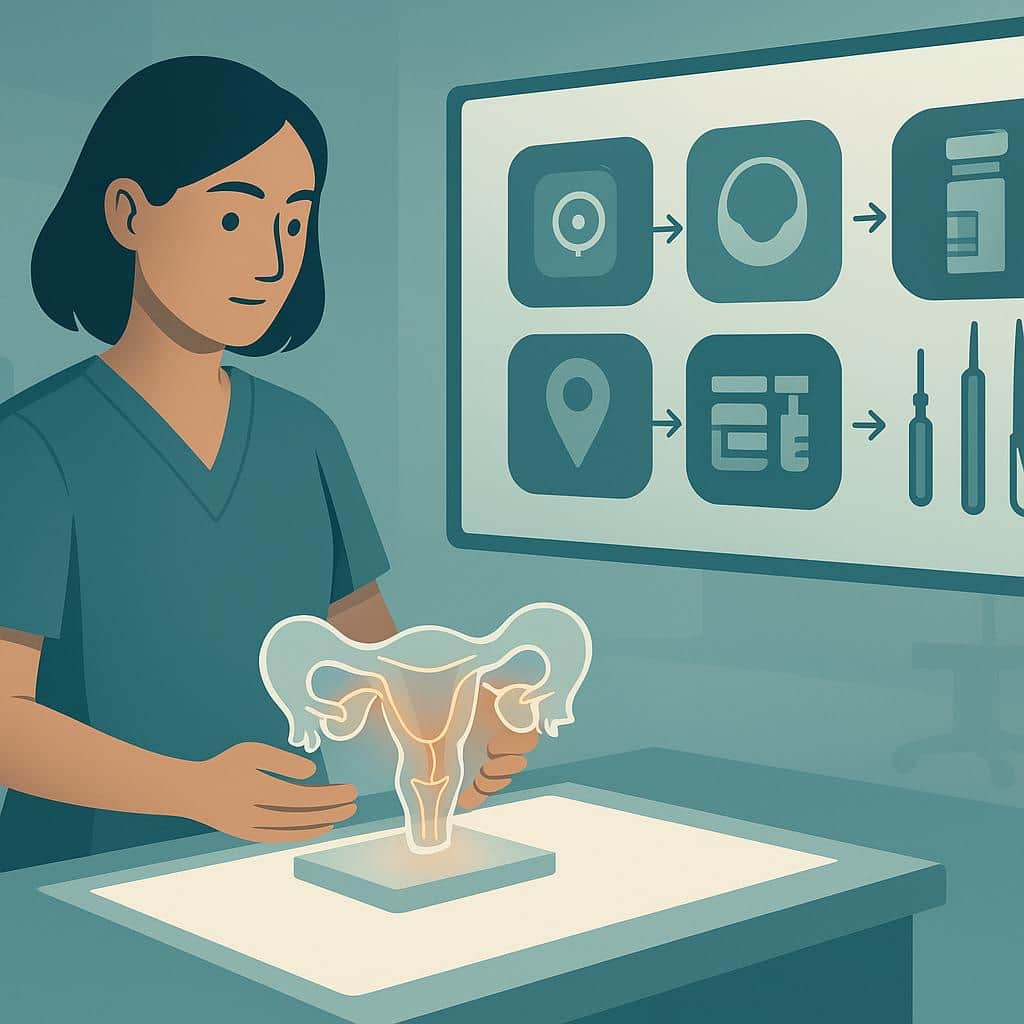
Robotic surgery can be a good fit when complex, deep endometriosis is anticipated or disease may involve the bowel, bladder, or ureters. Candidacy is individualized, based on disease mapping, surgical goals, and which approach allows thorough, safe removal.
Benefits of minimally invasive/robotic surgery for endometriosis?
Minimally invasive and robotic surgery can mean less pain, less blood loss, and a smoother early recovery compared with larger-incision surgery. Enhanced visualization and precise instrument control can help remove endometriosis while minimizing unnecessary tissue trauma.
Will a robot do my endometriosis surgery?
No, a robot does not operate on its own during endometriosis surgery. In robotic-assisted surgery, the surgeon stays at the console for the entire procedure and directs every movement in real time; the robot never makes decisions or performs steps independently.
Further reading
Conventional Laparoscopy vs Robotic Surgery for Endometriosis and Adenomyosis: What Patients Need to Know
Comparing safety, effectiveness, and recovery — a patient-friendly overview of different surgery approaches and what they can mean for your treatment.
Deep Infiltrating Endometriosis: Current and Future Treatments
Deep infiltrating endometriosis: symptoms, causes, diagnosis and treatment. Medical therapy, ICG-guided surgery, stenting, pathology, and future outlook.
Gynecologic Oncologists - Safest Choice for Complex Endometriosis Surgery?
For deep or advanced endometriosis, oncology-trained surgeons often provide safer, more complete excision. Learn what this means for you at the Lotus Endometriosis Institute.