
Fertility
Should I be tested for endometritis after IVF failures?
The short answer
Yes, testing for endometritis, inflammation of the uterine lining, can be worth considering after repeated IVF failures, especially with good-quality embryos. The testing pathway can differ depending on failed implantation, recurrent miscarriage or poor embryo development.
Yes, endometritis (often chronic, low-grade inflammation of the uterine lining) can be worth evaluating after repeated IVF failures, especially when embryos appear good-quality, transfers are well-timed, and implantation problems or early pregnancy loss keep occurring. It’s not the only possible explanation, but it’s one of the missed contributors that can coexist with endometriosis, adenomyosis, fibroids, polyps, or immune/hormonal factors that affect the uterine environment.
The key is choosing a workup targeted to your specific pattern (failed implantation vs recurrent miscarriage vs poor embryo development), because the testing pathway can differ. In our evaluation, we look for coexisting drivers that can be treated or optimized before you commit to another cycle. We use a careful history, imaging interpreted with endometriosis/uterine expertise, and selective testing when the history fits.
If IVF hasn’t worked despite multiple attempts, reach out to our team so we can review your full fertility timeline and symptoms and decide whether endometritis testing makes sense as part of a broader, actionable plan.
Where to go from here
Understand it, compare it with what you're feeling, then talk it through with us.
Step 3 · Speak with Us
Struggling After IVF? Get Tested Now
Repeated IVF failures can be frustrating, but testing for endometritis may reveal hidden causes affecting implantation. Our specialists design targeted evaluations to improve your chances for success.
Questions people ask next
All fertility questionsCan endometriosis cause recurrent implantation failure in IVF?
Yes, endometriosis can be one contributing factor in recurrent implantation failure for some IVF patients. It may affect how the uterine lining functions, but implantation failure is rarely due to one diagnosis, and many people with endometriosis still have successful IVF outcomes.
What tests are done after two miscarriages with endometriosis?
After two miscarriages with endometriosis, we typically review your history and use pelvic imaging, often ultrasound and, when helpful, MRI. We may also evaluate thyroid function and other hormonal factors, and consider autoimmune overlap when symptoms or history point that way.
Does medication pretreatment improve IVF or FET outcomes?
Whether medication pretreatment improves IVF or FET outcomes depends on your symptoms, where disease is suspected, and how you tolerate side effects. In some protocols, hormonal suppression before frozen embryo transfer aims to calm inflammation and reduce uterine irritability.
Are ICSI or PGT-A recommended for endometriosis?
ICSI isn’t routinely recommended for endometriosis alone, while PGT-A can help in specific situations. ICSI decisions usually depend on semen results and past fertilization; PGT-A may help older patients or those with recurrent pregnancy loss or repeated implantation failure.
Further reading
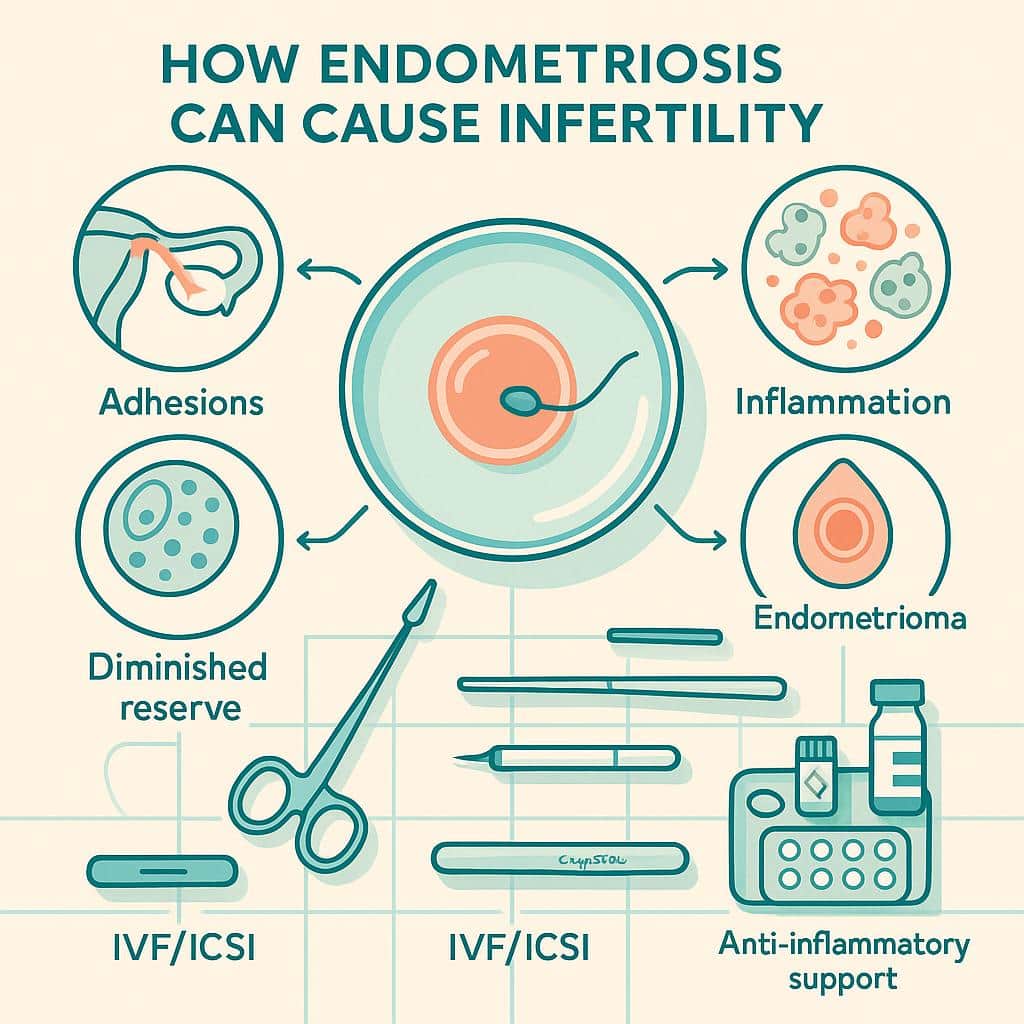
How Endometriosis Contributes to Infertility
How endometriosis leads to infertility: pathogenesis; effects on gametes, tubes, and endometrium; and treatments—expectant care, surgery, and ART.
Endometriosis and Miscarriage: What Research Suggests
Learn how endometriosis may affect miscarriage risk, the roles of inflammation, hormones, and surgery, what current studies show, and ways to manage fertility.
Surgery and IVF: When Are They Right for Endometriosis?
Explore when surgery or IVF is best for endometriosis. Understand the decision-making process and what to consider for fertility and health.