


Ovarian Scarring and Endometriosis: Key Molecular Insights
How fibrosis may affect eggs, hormones, and fertility—and what you can do now
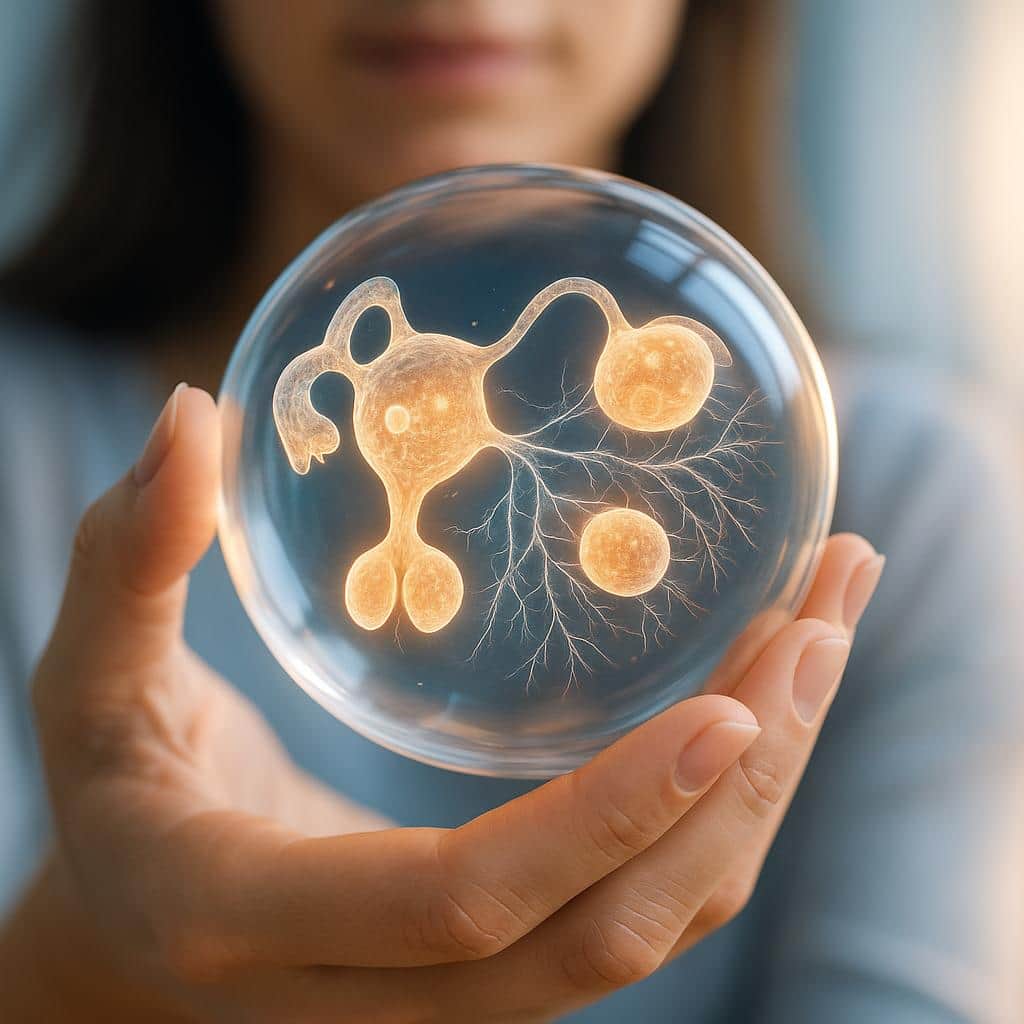
If you live with endometriosis or adenomyosis, you’ve probably heard words like “scar tissue,” “adhesions,” or “damage”—especially if you have an endometrioma (an ovarian cyst caused by endometriosis) or you’re trying to protect your fertility. But there’s another concept that can matter for your ovaries and future options: ovarian fibrosis.
Fibrosis is essentially stiffening/scarring inside the ovarian tissue itself, caused by chronic inflammation and “over-repair.” It’s not the same as adhesions (bands of scar tissue that glue organs together). Fibrosis is more like the ovarian tissue becoming less flexible and more collagen-heavy over time—potentially making it harder for the ovary to do its job.
Recent evidence-based reviews describe ovarian fibrosis as a process linked with ovarian aging and reduced ovarian function, and they include ovarian endometriosis among the conditions associated with it. This doesn’t mean endometriosis automatically causes ovarian failure—far from it. But it does give you a practical framework to discuss with your clinician if you’re weighing surgery, fertility timing, or long-term hormone suppression.
What “ovarian fibrosis” actually means (in plain language)
Your ovary isn’t a static organ. Every cycle, it remodels itself: follicles grow, ovulation occurs, and then the ovary heals. In a healthy system, that healing is balanced—repair happens, inflammation settles, and the tissue returns to normal.
With fibrosis, the “healing” response stays switched on too long or repeats too often. The ovary lays down extra extracellular matrix (ECM)—think collagen and fibronectin, the scaffolding material in tissues. Over time that scaffolding can become excessive and stiff, which may interfere with:
- Follicle development (how eggs mature)
- Ovulation-related remodeling (the physical changes needed for ovulation)
- Granulosa–oocyte communication (support cells talking to the egg)
- Steroid hormone production (estrogen/progesterone signaling)
If you’ve ever felt dismissed with “your ultrasound looks fine,” it can be validating (and frustrating) to know that some harmful changes aren’t just “big visible lesions.” Tissue-level stiffness and scarring can be subtler—and not always captured by routine imaging.
Why this matters if you have endometriosis (especially ovarian endometriosis)
Endometriosis can affect fertility for multiple reasons—anatomy, inflammation, pain that disrupts sex, immune changes, and more. Ovarian fibrosis matters because it suggests another pathway: the ovary’s internal environment may become less supportive for egg development.
So why is this particularly relevant if you have (or had) an endometrioma? It's because endometriomas are most strongly tied to inflammatory endometriosis activity around ovarian tissue. Many patients also face a difficult tradeoff: leaving an endometrioma alone versus removing it surgically to reduce pain or improve access for IVF—while also trying to protect ovarian reserve.
Here’s the key patient-centered point: fibrosis is one reason ovarian reserve can be vulnerable in ovarian endometriosis, but it’s not the only reason, and it doesn’t let anyone predict your personal outcome without your actual labs, imaging, and history.
Does this change your treatment options today?
Not directly. The most important reality check from current evidence is this: antifibrotic treatments for ovarian fibrosis are still largely experimental. You may see drug names pop up in research (for example, pirfenidone or TGF‑β–targeting approaches), but these are not established, or proven, routine treatments for people with endometriosis who want to preserve ovarian function.
So what can you do with this information right now? Use it to make smarter decisions about interventions that are available—especially around surgery, suppression, and fertility planning.
What might actually help you in real life (right now)
1) Protecting ovarian reserve when surgery is on the table
If you’re considering endometriosis excision surgery, especially if there is imaging evidence of an endometrioma, the practical question isn’t “Is excision surgery good or bad?” The question is more like, "How do we maximize symptom relief while minimizing harm to ovarian tissue?"
That means discussing technique and goals clearly. Cystectomy (stripping the cyst wall) can reduce recurrence and pain for some people, but it can also remove healthy ovarian tissue along with the abnormal cyst wall in some cases. This is especially true if a non-expert is performing the surgery. Ablation/vaporization may spare tissue in some scenarios but can have different recurrence outcomes with higher failure rates. Your best approach depends on your age, ovarian reserve, symptoms, cyst size, prior surgeries, and fertility timeline.
Fibrosis adds weight to the idea that ovarian tissue may already be under stress—so it’s reasonable to be extra thoughtful about repeat surgeries and to ask whether you’re being offered the approach that best matches your priority (pain control, fertility preservation, both, or neither).
Protect Your Fertility Today
Our specialists are here to help you understand your condition and explore your treatment options.
Schedule Your Consultation2) Considering ovulation suppression as a tool (not a moral judgment)
This review frames ovulation as an “injury-like” event that requires repair. That does not mean ovulation is “bad” or that everyone should suppress it. But if you’re someone whose endometriosis flares cyclically, or you have recurrent endometriomas, ovulation suppression can be a strategic choice to reduce repeated inflammatory events and endometriosis activity.
In real-world care, suppression could include options like natural or synthetic progestogens, combined hormonal contraception, or GnRH analog/antagonist approaches (chosen based on your side-effect tolerance, contraindications, and goals). The goal is not perfection—it’s improving your quality of life and protecting future options when that matters to you.
3) Taking fertility planning seriously if your ovaries are involved
If ovarian endometriosis is part of your story, it’s reasonable to have a lower threshold to discuss:
- Ovarian reserve testing (AMH + antral follicle count or AFC)
- Whether you should consider fertility preservation sooner rather than later (if you want genetic children and timing is uncertain)
- Whether surgery is truly needed before IVF (sometimes it is; sometimes it isn’t)
Fibrosis research won’t tell you “you will be infertile.” But it supports the idea that time and repeated ovarian injury/inflammation can matter, so delaying decisions indefinitely can reduce your choices.
How long would it take to see changes—if fibrosis is happening?
Fibrosis is typically a slow, cumulative process, not something that flips overnight. You usually won’t “feel” ovarian fibrosis as a distinct symptom. What you might notice instead are the downstream issues that often overlap with endometriosis anyway—fertility struggles, changes in ovarian reserve markers over time, or persistent ovarian pain.
This is also why it’s important not to blame yourself for not catching it earlier. The healthcare system often doesn’t monitor ovarian reserve unless you specifically ask or you’re already in subfertility care.
Practical takeaways for your next appointment
Bring the conversation back to decisions you can actually make.
- “Given my history (endometrioma/prior surgeries), what is my current ovarian reserve?” Ask for AMH and antral follicle count, and ask what they mean for you.
- “If surgery is recommended, what technique will you use to protect healthy ovarian tissue?” Ask about expected impact on AMH, risk of repeat surgery, and the surgeon’s experience with fertility-sparing approaches.
- “Do we have a plan to reduce recurrence?” If you’re not trying to conceive immediately, ask what suppression strategy is most tolerable and effective for you.
- “Should I meet with a reproductive endocrinologist now?” You don’t have to do IVF to get counseling; you can use the consult to understand timelines and options.
- “What would make you change the plan?” For example: cyst growth, worsening pain, drop in AMH, failed suppression, or fertility timeline changes.
Reality check (so you don’t get misled)
Ovarian fibrosis is a compelling explanation for why ovaries sometimes function differently in the setting of chronic inflammation, including ovarian endometriosis—but it’s not a crystal ball. A few important cautions:
Fibrosis is hard to measure directly in routine care. The risk is inferred and based on history (endometriomas, repeated surgeries), symptoms, imaging, and ovarian reserve tests. Also, research discussions of pathways like TGF‑β/Smad help scientists target future therapies, but they don’t yet give you a proven medication to “reverse” ovarian scarring.
Most importantly: even if fibrosis is present, you still have options—pain management plans, suppression strategies, surgical expertise choices, fertility preservation, and fertility treatments. The best move is developing a plan that matches your priorities and protects future flexibility.
References
Edepli E, Yaba A. Molecular mechanisms of ovarian fibrosis. Molecular Human Reproduction. 2026.. DOI: 10.1093/molehr/gaaf058
Quick Answers
Why does ovarian cyst pain keep coming back?
Ovarian cyst pain can feel recurrent for a few different reasons. Some cysts are functional: they form with ovulation and then resolve, so the pain returns in a similar spot month after month even though it’s not the exact same cyst. In other cases, the cyst itself can come back or persist, especially if it’s an endometrioma (an ovarian cyst caused by endometriosis), which can behave differently than a simple cyst and may be associated with deeper pelvic disease.
Another common reason is that the cyst isn’t the whole story: endometriosis on the pelvic sidewall, uterosacral ligaments, bowel, bladder, or around the ovary can irritate the same nerves and tissues. This can make it feel like the cyst is back when the pain is actually driven by inflammatory disease nearby. Adhesions (scar-like bands) can also tether the ovary and cause recurring pulling or sharp pain, even when imaging doesn’t show a large cyst. If your pain cycles, escalates, returns quickly after a normal ultrasound, or keeps recurring despite prior treatment, our team can help you map the pattern, interpret imaging with an endometriosis lens, and decide whether targeted evaluation and, when appropriate, excision surgery is the next best step.
Can endometriosis cause infertility and pelvic pain in your 20s?
Yes. Endometriosis can absolutely show up in your late 20s and cause both chronic pelvic pain and fertility challenges. Pain can include severe or worsening period cramps, pain with sex, bowel or bladder pain, and flares that track with your cycle, although symptom severity doesn’t always match how much disease is present.
Endometriosis can affect fertility in several ways, including adhesions that distort tubo‑ovarian anatomy, inflammation and immune signaling that interfere with fertilization or embryo development, and ovarian factors, especially when endometriomas are involved. For some patients, the uterine environment also matters, particularly when adenomyosis is present alongside endometriosis. In our practice, we focus on listening to your full symptom and fertility story, then planning an evaluation that looks for endometriosis and checks for common look‑alikes or coexisting issues. This helps us tailor a plan to your goals, whether that’s pain relief, preserving fertility, or both.
Why do I have chronic fatigue and pelvic pain?
Chronic fatigue and pelvic pain often feel unexplainable because they’re rarely caused by just one issue, and many of the most common drivers don’t show up on routine labs or a quick ultrasound. Endometriosis and adenomyosis can cause persistent pelvic pain, painful periods, bowel and bladder symptoms, and deep fatigue through inflammation, disrupted sleep, heavy bleeding (and possible iron deficiency), and the sheer energy cost of living with ongoing pain. It’s also common for more than one gynecologic condition to coexist, including fibroids, polyps, or benign cysts, so a single label may not fully capture what you’re experiencing.
Another reason symptoms can persist is that the nervous system can become more pain-sensitive over time, often called central sensitization. This means pain can spread, linger outside your cycle, or feel disproportionate to what imaging shows. In those cases, symptom relief alone can miss the bigger picture: we think in terms of both treating disease (for example, addressing endometriosis lesions or uterine drivers like adenomyosis or fibroids) and building a personalized pain-management plan so your body can turn down the volume on pain signals.
If your fatigue and pelvic pain have been brushed off or left without a clear plan, our team can help you sort through the likely contributors, including endometriosis, adenomyosis, and common coexisting conditions, and map out next steps that fit your goals. You can explore our educational resources on fatigue, chronic pelvic pain, and comprehensive treatment approaches, and reach out to schedule a consultation when you’re ready.
Why is my period pain so severe it disrupts my daily life?
Severe, life-disrupting period pain isn’t normal cramps, and it often points to an underlying cause that deserves a real explanation, rather than symptom masking. One common cause is endometriosis, where tissue similar to the uterine lining grows outside the uterus and can irritate pelvic structures, trigger inflammatory chemicals, and sometimes involve organs like the bowel or bladder. Pain severity doesn’t reliably match stage, so someone can have intense pain even if imaging looks normal or disease appears limited.
When period pain is severe, worsens over time, starts years after your first period, or comes with heavy bleeding, painful sex, bowel pain with periods, urinary pain, or fatigue, we look for patterns because endometriosis and related conditions can overlap with pelvic floor dysfunction, nerve pain/central sensitization, GI dysbiosis, vascular issues, or adenomyosis. We take your full timeline and flare pattern seriously, then tailor the evaluation with a careful exam and expertly interpreted imaging when helpful. If your pain is disrupting school, work, relationships, or daily functioning, reach out to schedule a consultation. Our team can help you identify what’s driving it and map out a plan aimed at lasting relief.
How do I choose an adenomyosis specialist or surgeon?
Choosing an adenomyosis specialist starts with matching the team’s focus to your goal: controlling heavy bleeding and anemia, reducing pain and pressure, preserving fertility, or pursuing definitive treatment. Because adenomyosis often can’t be confirmed with absolute certainty unless the uterus is examined by a pathologist after hysterectomy, the right clinician is comfortable working with a diagnosis based on imaging and symptoms and can clearly explain how that uncertainty affects your options. You should feel that your plan is individualized, rather than a one-size-fits-all default to hormones or a reflex straight to hysterectomy.
When surgery is on the table, look for a surgeon who routinely performs complex minimally invasive pelvic surgery and can describe what they do when adenomyosis overlaps with endometriosis, adhesions, fibroids, or bladder, bowel, or ureter involvement. Ask how they decide between uterus-preserving strategies and hysterectomy, how they plan to protect organs and manage bleeding risk, and what they do to reduce repeat procedures. Our team takes a coordinated approach, with careful pre-op planning, meticulous minimally invasive technique when appropriate, and clear goal-based decision-making. You can explore our approach on the site or reach out to schedule a consultation to review your symptoms, imaging, and priorities.