


Acupuncture for Endometriosis: Effectiveness and Benefits
How acupuncture may relieve endometriosis pain—and fit into your care plan
Endometriosis is a complex, multifaceted condition that primarily affects women of reproductive age. Defined by endometrial-like tissue growing outside the uterus, it often results in chronic pelvic pain, dysmenorrhea, and infertility, severely affecting quality of life. Current care relies on expert surgical excision and hormonal manipulation, with variable success. In recent years, acupuncture has drawn attention as a complementary option for endometriosis-related pain, with potential to provide meaningful relief and support overall well-being.
Understanding Endometriosis
Endometriosis is an estrogen-dependent, inflammatory gynecological disorder that can cause chronic visceral pelvic pain and infertility. It is believed to affect approximately 10% to 15% of women during their reproductive years. Common symptoms include chronic pelvic pain that may interfere with daily activities, deep dyspareunia that can make intercourse painful, and dysmenorrhea marked by severe menstrual cramps. Many patients also experience dyschezia, especially during menstruation, as well as dysuria or discomfort with urination. Additional related symptoms and discomforts can occur depending on the location and extent of the disease.
Endometriosis-related changes are theorized to involve alterations in the peripheral and central nervous systems, which may predispose individuals to other persistent pain conditions.
Although hormonal, pharmacological, and surgical options are available, these interventions often do not sufficiently address perceived pain and can carry significant side effects, adding further symptom burden and potential harm.
The Science of Acupuncture
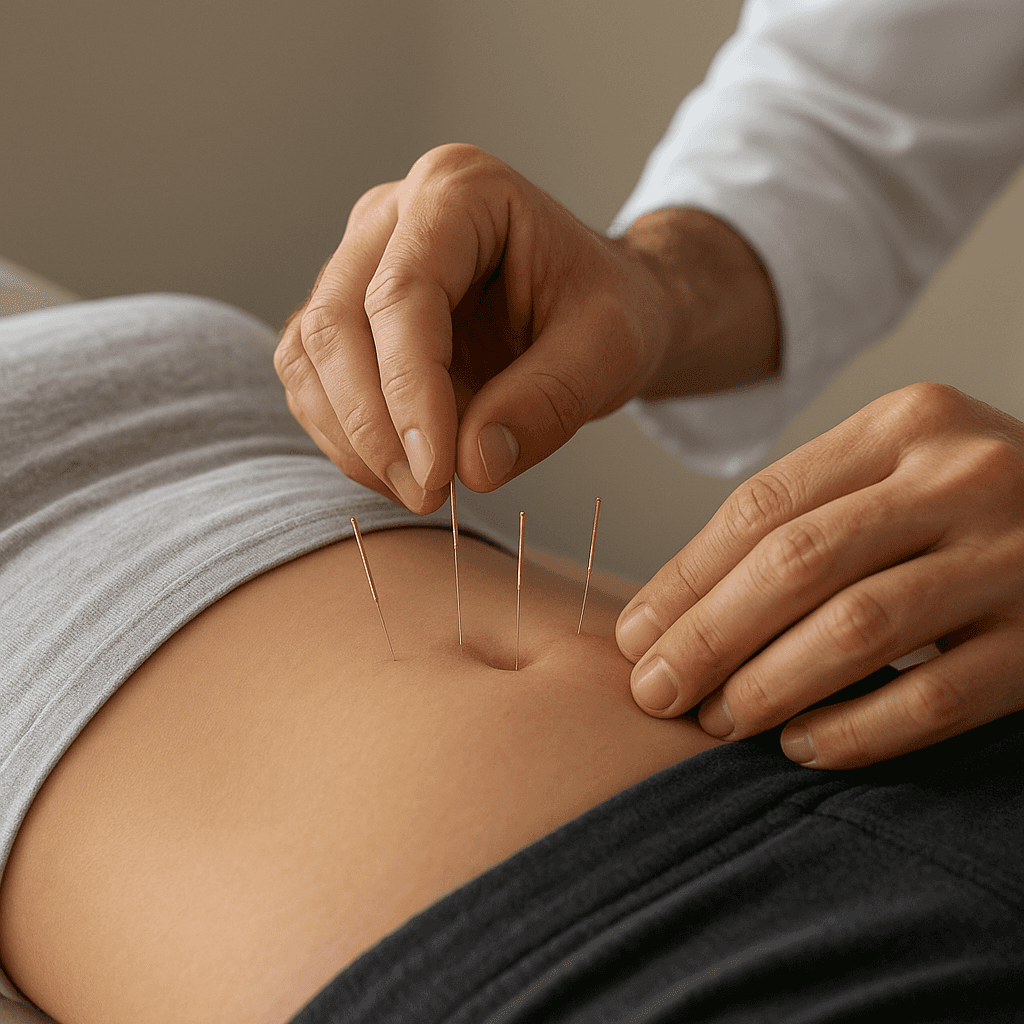
Acupuncture, a traditional Chinese medicine technique, involves inserting thin needles at specific points to balance the flow of energy, or “Qi.” Historically used for pain and inflammation, its modern corollary suggests acupuncture may:
- Stimulate nerves, muscles, and connective tissues
- Increase blood flow
- Activate the body’s natural painkillers
While current evidence supports acupuncture’s use, energy medicine remains poorly understood. Acupuncture is an ancient form of energy medicine, and much more research is needed to clarify mechanisms and guide individualized adjustments.
Acupuncture and Endometriosis
Pain Relief
For many with endometriosis, pain relief is the most notable benefit. A study by Wayne et al. (2008) found that acupuncture significantly reduces pelvic pain, dysmenorrhea, and discomfort associated with endometriosis, improving quality of life. Proposed modern mechanisms include the release of endorphins and the reduction of inflammatory markers.
Ready to Ease Your Pain Now?
Our specialists are here to help you understand your condition and explore your treatment options.
Book Your ConsultationHormonal Balance
Endometriosis frequently coincides with hormonal imbalances, particularly excess estrogen. Acupuncture is believed to influence hormonal levels via the hypothalamus-pituitary-ovarian (HPO) axis, which regulates reproductive hormones. A more balanced hormonal environment may help manage symptoms and slow lesion progression. However, most studies show acupuncture increases estrogen levels, creating a seeming contradiction—suggesting other acupuncture-induced mechanisms related to hormonal balance and homeostasis may also be involved.
Improved Blood Flow
Acupuncture is known to enhance circulation in the pelvic region. Better blood flow may reduce inflammation, support healing of endometrial lesions, and alleviate ischemia and hypoxia often found in endometriotic tissues—potentially limiting the development of new lesions.
Reduced Stress and Anxiety
Chronic pain and symptoms can elevate stress and anxiety. Acupuncture is reputed to help by modulating the amygdala and other brain regions involved in emotion regulation, encouraging relaxation and improved mental well-being.
Empirical Evidence
- Zhu et al. (2011) conducted a systematic review concluding that acupuncture can be considered an effective and safe alternative for relieving endometriosis-related pain.
- Rubi-Klein et al. (2010) demonstrated that acupuncture reduces the severity and duration of menstrual pain in women with endometriosis.
Integrating with Conventional Treatment
Acupuncture shows promise but should be viewed as a complementary therapy rather than a standalone treatment for endometriosis. Combining acupuncture with conventional options—such as hormonal therapy, non-narcotic pharmaceuticals, and excisional surgery—can create a holistic plan that addresses both physiological symptoms and psychological stress, potentially improving overall quality of life.
Read more: Integrative Therapies for Endometriosis
Limitations and Considerations
- Variability in acupuncture techniques and a lack of standardized protocols
- Effectiveness may differ among individuals, underscoring the need for personalized approaches
- Patients should consult experts to assess suitability based on medical history and specific circumstances
Conclusions
Acupuncture emerges as a valuable complementary therapy for endometriosis, offering potential benefits that include pain relief, hormonal modulation, improved blood flow, and reduced stress and anxiety. Empirical evidence supports its efficacy, and integration with conventional treatments can provide comprehensive, patient-centered care. Given individual variability and the absence of standardized protocols, personalized treatment plans and consultation with acupuncture experts and endometriosis specialists are essential. As research continues to clarify mechanisms, acupuncture holds promise for improving quality of life for those living with endometriosis.
References
Wayne, P.M. et al. (2008). Acupuncture for pelvic and back pain in pregnancy: a systematic review. American Journal of Obstetrics & Gynecology, 198(3), 254-259. DOI: 10.1136/bmjopen-2021-056878ret
Zhu, X. et al. (2011). Acupuncture for pain in endometriosis. Cochrane Database of Systematic Reviews, (9), CD007864. DOI: 10.1089/jicm.2022.0659
Rubi-Klein K, Kucera-Sliutz E, Nissel H, Bijak M, Stockenhuber D, Fink M, Wolkenstein E. Is acupuncture in addition to conventional medicine effective as pain treatment for endometriosis? A randomised controlled cross-over trial. Eur J Obstet Gynecol Reprod Biol. 2010 Nov;153(1):90-3. doi: 10.1016/j.ejogrb.2010.06.023. Epub 2010 Aug 21. PMID: 20728977.
Lund I, Lundeberg T (2016). Is acupuncture effective in the treatment of pain in endometriosis? J Pain Res; 9: 157–165. DOI: 10.1089/jicm.2022.0659
Quick Answers
How long do endometriosis flare-ups last?
Endometriosis flare-ups don’t have one usual length: some people feel a spike in symptoms for a few hours to a couple of days, while others have flares that last through an entire cycle window or blend into more constant pain. Many flares track with hormonal shifts (often before and during a period), but bowel, bladder, pelvic floor, or nerve-related pain can flare at different times and may not follow a predictable calendar pattern.
When flares start lasting longer or happening more often, it can be a sign that multiple sources of pain are adding up: ongoing inflammation from lesions, adhesions/fibrosis that can tether organs, and sometimes central sensitization, where the nervous system becomes more reactive over time. That’s why symptom management alone can feel like a band-aid if active disease is still present. If you’re noticing prolonged, unpredictable, or escalating flares, our team can help you map your pattern, identify what’s likely driving it, and discuss a plan that addresses both symptom control and the underlying endometriosis.
Can I fly with a large endometrioma?
Yes, many people can fly with an endometrioma, even a large one, but safe depends on your individual risk profile and symptoms. The main in-flight concern with a larger ovarian cyst is an acute complication such as torsion (the ovary twisting) or, less commonly, rupture. These events can happen on any day but feel especially stressful when you’re far from care. Cabin pressure changes aren’t known to make endometriomas expand, but dehydration, constipation, prolonged sitting, and limited access to pain control can make a pelvic pain flare much harder to manage mid-flight.
If you’re having escalating one-sided pelvic pain, significant nausea/vomiting, fevers, dizziness/faintness, or pain that suddenly becomes severe, we generally want you to be evaluated before you travel. Those can be warning signs that change the plan. If you do fly, think through logistics that reduce strain: choose an aisle seat if possible, plan for gentle movement and hydration, and have a clear pain plan for the travel day so you’re not improvising at 30,000 feet. If the endometrioma is growing, very symptomatic, or affecting fertility planning, our team can help you map out next steps, whether that’s careful monitoring, symptom control while you travel, or discussing targeted treatment options designed to treat the disease rather than just chasing flares.
Can I keep working with endometriosis?
Yes, many people with endometriosis keep working, but it often requires a realistic plan around symptoms like pain, fatigue, brain fog, heavy bleeding, and unpredictable flares. Work becomes harder when endometriosis pain involves a complex, whole‑nervous‑system experience that goes beyond period pain, can persist throughout the month, and sometimes continues even after partial treatments. If your job performance is being affected, that’s not a personal failure. It’s a sign your symptoms need more targeted evaluation and a clearer strategy.
In our practice, we think about work in two parallel tracks: managing symptoms so you can function day to day, and treating the underlying disease when it’s driving ongoing inflammation, adhesions, or organ involvement. Depending on your situation, this may include a structured, often multimodal pain management approach and, when appropriate, planning excision surgery based on a careful review of your history, imaging, and prior operative/pathology reports. If you’re wondering what’s realistic for you (whether that’s staying at work with accommodations, reducing hours temporarily, or planning time off for treatment), reach out to schedule a consultation so our team can review your records and help you map out next steps.
How do I explain endometriosis to my employer?
It often helps to keep your explanation simple and work-focused: endometriosis is a chronic inflammatory condition in which tissue similar to the uterine lining grows outside the uterus and can cause significant pelvic pain, fatigue, and GI or bladder symptoms. Symptoms can flare unpredictably and aren’t always limited to your period, which is why you may need flexibility at certain times. You don’t need to share intimate details, just how it affects your work (for example, pain, fatigue, and medical appointments can affect attendance, tolerance for sitting or standing, or concentration).
If you’re requesting support, be specific about what would help you do your job well, such as intermittent time off for flares, the ability to work from home when symptoms spike, scheduled breaks, or flexibility around medical visits and potential procedures. Many patients find it useful to describe this as a long-term health condition with symptoms that vary from day to day rather than a one-time illness, and to document patterns of symptoms and missed work so your needs are clear.
If you’d like, our team can help you describe your condition and anticipated care in medically accurate terms that support workplace accommodations, especially if symptoms are affecting your ability to function consistently. You can also explore our educational resources on endometriosis and how it affects work, and reach out to schedule a consultation if you’re looking for a clearer plan for diagnosis and treatment.
How long does pelvic floor therapy take to help endometriosis?
Most patients don’t feel a dramatic change after one visit: the benefits of pelvic floor therapy for endometriosis tend to build over time. When pelvic floor overactivity, protective muscle guarding, and nerve sensitization are driving symptoms, early sessions often focus on assessment, calming pain signaling, and learning strategies your body can tolerate. Many people notice the first meaningful changes over several weeks as muscles start to relax and coordination improves, especially in pain with sex, bladder/bowel symptoms, and daily pelvic tension.
How long it takes overall depends on what’s keeping your pain going: active disease, adhesions, central sensitization, posture and movement compensations, or a mix. If endometriosis lesions are still a major source of pain, therapy can still help reduce pelvic floor spasm and improve function, but it may work best as part of a broader plan that also addresses the disease itself. In our practice, we often use pelvic floor therapy as a complement before and/or after excision (when indicated) to support recovery, improve comfort with exams or intimacy, and reduce the odds that muscle and nerve patterns keep pain going. If you’d like, our team can help you figure out whether pelvic floor dysfunction is a key driver of your symptoms and what a realistic therapy timeline could look like for you.