



Hyperbaric Oxygen Treatment for Endometriosis
Can hyperbaric oxygen help in endometriosis? Mechanisms, evidence, and when HBOT may fit as adjunct care.
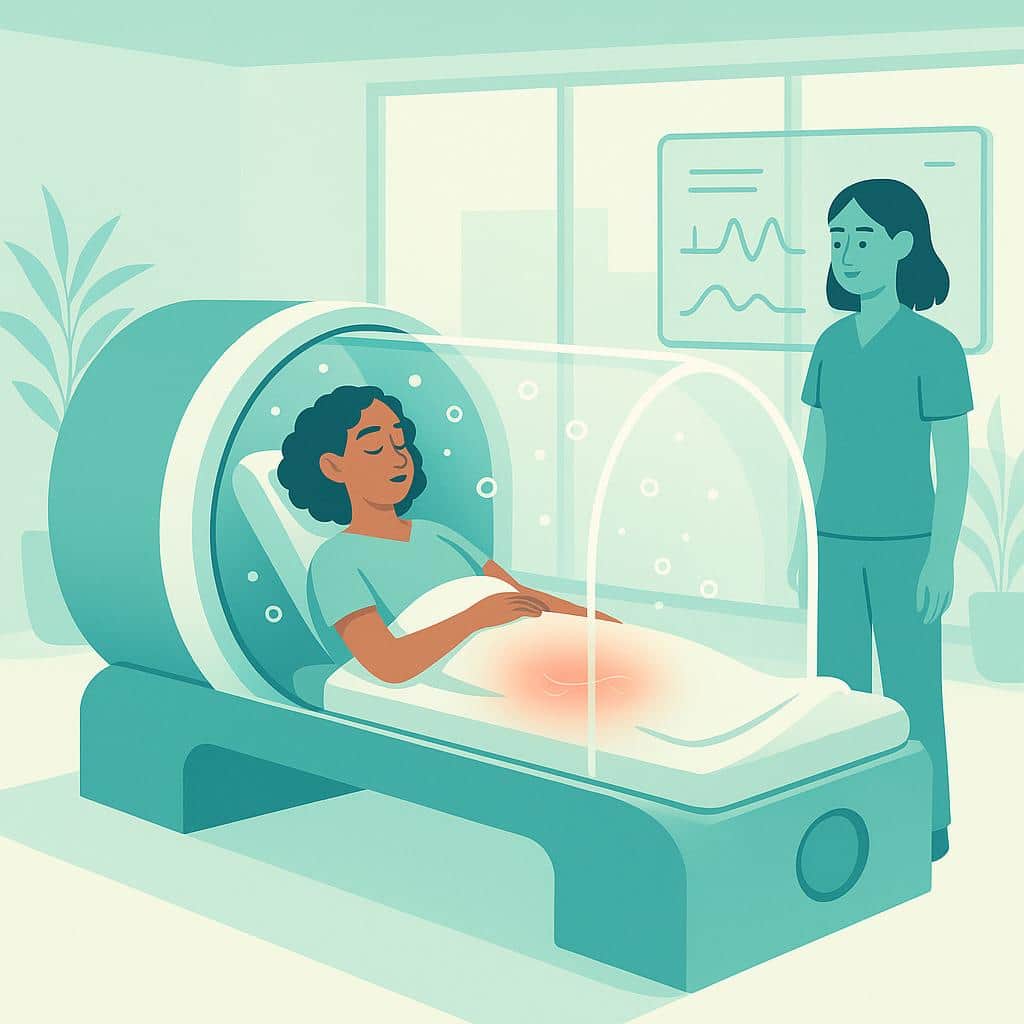
Hyperbaric Oxygen Therapy and Endometriosis: A Reframed Overview
Hyperbaric oxygen therapy (HBOT) is being investigated as a biologically targeted adjunct for endometriosis based on its ability to directly modify tissue oxygen tension—an upstream driver of inflammatory signaling, angiogenesis, and lesion persistence. Rather than acting on hormones or pain pathways alone, HBOT addresses the hypoxic microenvironment that enables endometriotic tissue to survive and propagate, positioning oxygen modulation as a distinct and mechanistically novel therapeutic avenue.
Understanding Hyperbaric Oxygen Therapy
Hyperbaric oxygen therapy entails breathing 100% oxygen in a pressurized chamber at levels above atmospheric pressure. In this environment, oxygen dissolves more effectively into the bloodstream and tissues, leading to a significant rise in tissue oxygenation. HBOT has long-standing applications in wound healing, radiation injury, decompression sickness, and chronic infections.
Oxygen and Endometriosis Biology
Endometriosis lesions frequently inhabit hypoxic, or low-oxygen, microenvironments that drive inflammation, angiogenesis, fibrosis, and pain signaling. Within endometriotic tissue, hypoxia-inducible factors (HIFs) are upregulated and support lesion survival and progression. By elevating tissue oxygen levels, HBOT may help counteract these hypoxia-driven pathways.
How HBOT Might Influence Disease Processes
Research indicates several potential benefits of HBOT in the context of endometriosis. It may reduce both local and systemic inflammation, downregulate hypoxia-inducible factors, inhibit angiogenesis within lesions, improve mitochondrial function alongside cellular repair, and enhance immune modulation. In animal models, exposure to hyperbaric oxygen has been shown to decrease the size and activity of endometriotic implants and to lower inflammatory cytokine levels.
Explore Hyperbaric Oxygen for Relief
Our specialists are here to help you understand your condition and explore your treatment options.
Book Your ConsultationEvidence to Date
Early clinical observations and limited studies suggest that HBOT may alleviate pelvic pain and improve symptoms in individuals with endometriosis. Some reports describe diminished lesion vascularity and reductions in inflammatory markers following treatment. Despite these encouraging signals, large-scale randomized controlled trials in humans remain limited, and HBOT is not regarded as a standalone therapy.
Integrating HBOT Into a Treatment Plan
- HBOT functions best as a complementary therapy rather than a substitute for excision surgery or medical management.
- It may be considered for select patients within an integrative plan, particularly when persistent inflammation, impaired healing, or complex pain syndromes are present.
- Treatment protocols vary, but they typically comprise multiple sessions delivered over several weeks.
- Administration should occur in accredited medical facilities under physician supervision.
Safety Profile and Treatment Screening
- Potential risks include ear or sinus barotrauma.
- Temporary vision changes can occur.
- Oxygen toxicity is a concern with prolonged exposure.
- Claustrophobia may affect tolerance.
- Patients should undergo careful screening before starting treatment.
Key Points
Hyperbaric oxygen therapy offers a promising adjunctive option for targeting hypoxia-driven inflammation and tissue dysfunction in endometriosis. While preliminary findings are encouraging, additional clinical research is needed to refine protocols, identify ideal candidates, and clarify long-term outcomes. When thoughtfully integrated into care, HBOT may aid healing and symptom relief for select patients.
References
Becker CM, et al. Hypoxia and endometriosis. Hum Reprod Update. 2011;17(6):771–783. DOI: 10.1007/s43032-025-02024-0
Wu MH, et al. Hypoxia promotes the survival of endometriotic cells. Am J Pathol. 2007;170(1):272–284. PMID: 26914112
Erdem M, et al. Effects of hyperbaric oxygen therapy on endometriosis in an experimental rat model. Fertil Steril. 2013;99(3):864–870.
Thom SR. Hyperbaric oxygen therapy. J Intensive Care Med. 2011;26(3):131–145. DOI: 10.1371/journal.pone.0339455
Quick Answers
When is hysterectomy recommended for adenomyosis?
A hysterectomy is typically considered for adenomyosis when you’re not planning future pregnancy and symptoms are severe and clearly uterus-driven, most often heavy bleeding (sometimes with anemia), intense cramping, pelvic pressure, and disruption to daily quality of life. It’s the most definitive option because adenomyosis is within the uterine muscle, so removing the uterus removes the source of the problem.
In practice, we usually consider hysterectomy most seriously when conservative options haven’t brought acceptable relief, aren’t tolerated, or don’t fit your goals. The decision also depends on the pattern and extent of disease (diffuse adenomyosis versus a more focal adenomyoma that may be removable while preserving the uterus) and whether endometriosis may also be present. If endometriosis is part of the picture, it’s important to know that hysterectomy alone doesn’t treat disease outside the uterus. Durable symptom relief depends on addressing all pain generators.
If you’re wondering whether hysterectomy makes sense for you at this point, our team can help clarify what’s most likely driving your symptoms, review imaging, and walk you through uterus-preserving versus definitive surgical options so you can choose the one that best matches your relief and fertility priorities.
Why does ovarian cyst pain keep coming back?
Ovarian cyst pain can feel recurrent for a few different reasons. Some cysts are functional: they form with ovulation and then resolve, so the pain returns in a similar spot month after month even though it’s not the exact same cyst. In other cases, the cyst itself can come back or persist, especially if it’s an endometrioma (an ovarian cyst caused by endometriosis), which can behave differently than a simple cyst and may be associated with deeper pelvic disease.
Another common reason is that the cyst isn’t the whole story: endometriosis on the pelvic sidewall, uterosacral ligaments, bowel, bladder, or around the ovary can irritate the same nerves and tissues. This can make it feel like the cyst is back when the pain is actually driven by inflammatory disease nearby. Adhesions (scar-like bands) can also tether the ovary and cause recurring pulling or sharp pain, even when imaging doesn’t show a large cyst. If your pain cycles, escalates, returns quickly after a normal ultrasound, or keeps recurring despite prior treatment, our team can help you map the pattern, interpret imaging with an endometriosis lens, and decide whether targeted evaluation and, when appropriate, excision surgery is the next best step.
Why do I have chronic fatigue and pelvic pain?
Chronic fatigue and pelvic pain often feel unexplainable because they’re rarely caused by just one issue, and many of the most common drivers don’t show up on routine labs or a quick ultrasound. Endometriosis and adenomyosis can cause persistent pelvic pain, painful periods, bowel and bladder symptoms, and deep fatigue through inflammation, disrupted sleep, heavy bleeding (and possible iron deficiency), and the sheer energy cost of living with ongoing pain. It’s also common for more than one gynecologic condition to coexist, including fibroids, polyps, or benign cysts, so a single label may not fully capture what you’re experiencing.
Another reason symptoms can persist is that the nervous system can become more pain-sensitive over time, often called central sensitization. This means pain can spread, linger outside your cycle, or feel disproportionate to what imaging shows. In those cases, symptom relief alone can miss the bigger picture: we think in terms of both treating disease (for example, addressing endometriosis lesions or uterine drivers like adenomyosis or fibroids) and building a personalized pain-management plan so your body can turn down the volume on pain signals.
If your fatigue and pelvic pain have been brushed off or left without a clear plan, our team can help you sort through the likely contributors, including endometriosis, adenomyosis, and common coexisting conditions, and map out next steps that fit your goals. You can explore our educational resources on fatigue, chronic pelvic pain, and comprehensive treatment approaches, and reach out to schedule a consultation when you’re ready.
Why is my period pain so severe it disrupts my daily life?
Severe, life-disrupting period pain isn’t normal cramps, and it often points to an underlying cause that deserves a real explanation, rather than symptom masking. One common cause is endometriosis, where tissue similar to the uterine lining grows outside the uterus and can irritate pelvic structures, trigger inflammatory chemicals, and sometimes involve organs like the bowel or bladder. Pain severity doesn’t reliably match stage, so someone can have intense pain even if imaging looks normal or disease appears limited.
When period pain is severe, worsens over time, starts years after your first period, or comes with heavy bleeding, painful sex, bowel pain with periods, urinary pain, or fatigue, we look for patterns because endometriosis and related conditions can overlap with pelvic floor dysfunction, nerve pain/central sensitization, GI dysbiosis, vascular issues, or adenomyosis. We take your full timeline and flare pattern seriously, then tailor the evaluation with a careful exam and expertly interpreted imaging when helpful. If your pain is disrupting school, work, relationships, or daily functioning, reach out to schedule a consultation. Our team can help you identify what’s driving it and map out a plan aimed at lasting relief.
Is uterine artery embolization (UAE) right for adenomyosis?
Uterine artery embolization (UAE), sometimes called adenomyosis embolization, can be a good fit when your main goal is symptom relief while preserving the uterus, especially if heavy bleeding and uterine bulk symptoms are a big part of your day-to-day life. It’s a radiology procedure that reduces blood flow to targeted uterine tissue to shrink or calm adenomyosis-related changes. Many patients report meaningful improvement in quality of life after UAE, and recovery is typically shorter than with major surgery.
Whether it’s right for you depends on what you’re trying to address (bleeding, pain, fertility, or all three) and whether adenomyosis is the primary cause of your symptoms or endometriosis is also part of the picture. In head-to-head research involving people with MRI-confirmed, therapy-resistant adenomyosis who were eligible for hysterectomy and not trying to conceive, both UAE and hysterectomy improved quality of life at 1 year, but hysterectomy tended to have an advantage for pain relief and satisfaction. If you want the most definitive option for uterus-driven symptoms, hysterectomy is the clearest treatment for removing the source, while UAE is better viewed as a uterus-preserving option that may help substantially but isn’t guaranteed to be as durable.
If you’re weighing UAE, our team can help you clarify your diagnosis (including whether endometriosis may be contributing), review your imaging and goals, and work out a plan that matches the level of relief you need, now and long-term. Explore our adenomyosis care resources, and reach out to schedule a consultation if you want personalized guidance for your decision.