


Endometriosis and Autoimmune Disease: Understanding the Link
How immune dysregulation connects endometriosis with autoimmune diseases—what the science shows, comorbid risks, and implications for diagnosis and care.
Unraveling the Connection Between Endometriosis and Autoimmune Diseases
Endometriosis causes pain, multiple bowel symptoms, and infertility, among many other debilitating symptoms, and affects about 10% of women, mostly in the reproductive age range. Developing research has indicated a link between endometriosis and various autoimmune conditions.
Understanding Endometriosis
Endometriosis is a chronic gynecological disorder characterized by the presence of endometrial-like tissue growing outside the uterus. The cells resemble those lining the inner part of the uterus but differ markedly in multiple ways at the molecular level. The more we learn, the less certain the origins appear to be. They are likely partly genetic and partly influenced by multiple environmental factors acting on the body and genes.
The Immune System’s Role
Research suggests that abnormalities in the immune system may play a key role in the development of endometriosis. These abnormalities could prevent the immune system from effectively clearing ectopic endometrial cells, regardless of how they arrive there, allowing them to implant and grow outside the uterus. This hypothesis suggests that endometriosis might be, at least in part, an immunity-associated disorder.
Endometriosis is often accompanied by a chronic inflammatory response, triggered by the presence of ectopic endometrial-like cells. This inflammation, coupled with the immune system’s inability to effectively remove ectopic cells, could partly explain the chronic pain often associated with the condition.
Is Endometriosis an Autoimmune Disease?
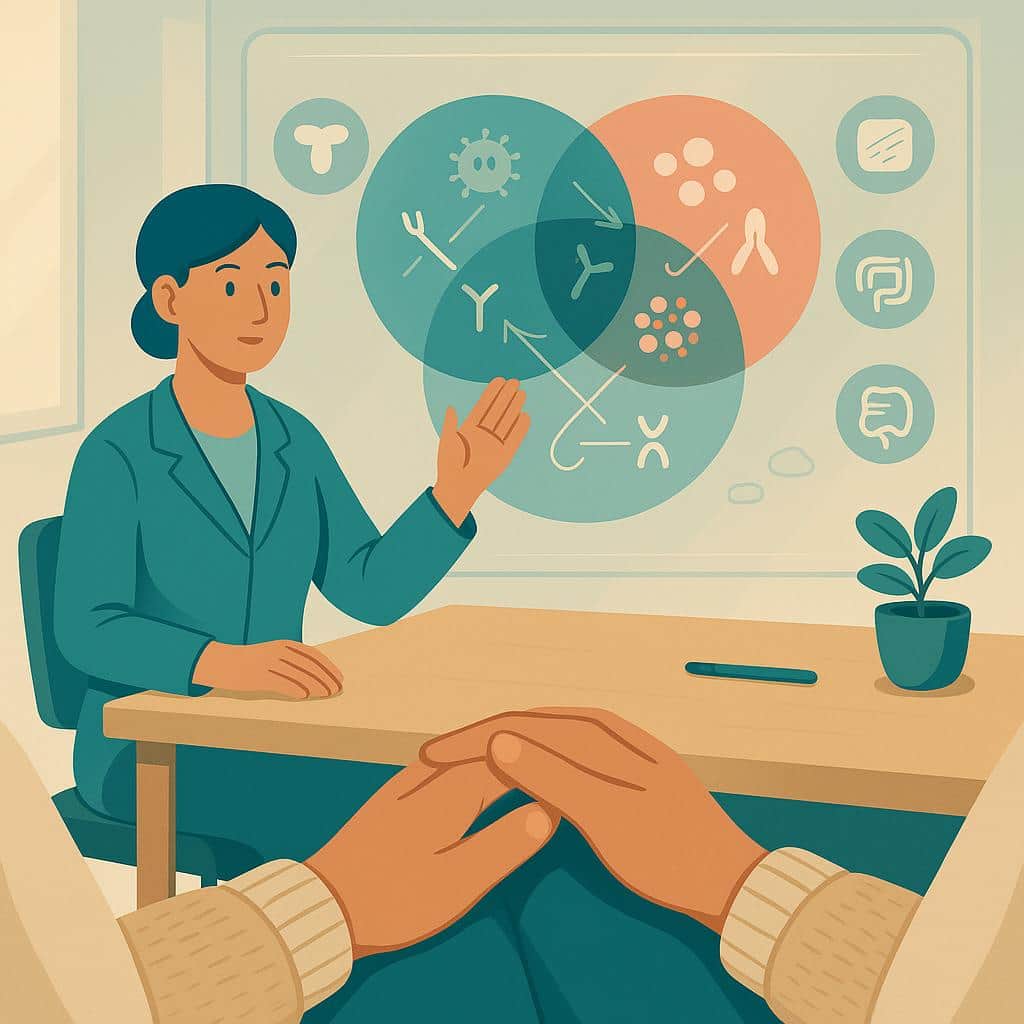
Autoimmune diseases occur when the immune system mistakenly attacks the body’s own cells, treating them as foreign invaders. The link between endometriosis and autoimmune diseases is still being explored, and multiple studies suggest that women with endometriosis may have a higher risk for certain autoimmune conditions. It is not clear whether endometriosis carries a risk of developing autoimmune diseases, whether the reverse is true, or whether they simply share common molecular mechanisms that could result in both occurring in any given individual. At this point, it is important to stress that an association does not mean cause.
This review aims to delve into the current state of research on whether endometriosis is an autoimmune disease, presenting key findings from population-based studies, discussing potential implications, and highlighting areas for future research.
Systemic Lupus Erythematosus (SLE) and Endometriosis
Systemic Lupus Erythematosus (SLE) is an autoimmune disease characterized by inflammation and damage to various tissues, including the skin, joints, kidneys, and heart. Some studies suggest a positive association between endometriosis and SLE. One study reported a seven-fold increase in the odds of having SLE among women with endometriosis, though it relied on self-reported diagnoses, which may introduce bias. A more recent cohort study found a more modest but still significant elevation in SLE risk among women with endometriosis.
Sjögren’s Syndrome (SS) and Endometriosis
Sjögren’s Syndrome (SS) is an autoimmune disorder marked by dry eyes and mouth, often accompanied by other systemic symptoms. A meta-analysis of three case-control studies found a 76% higher odds of SS in women with endometriosis. These studies had small sample sizes and wide confidence intervals, indicating a need for further research. Confidence intervals describe the range around a measurement that indicates how accurate the conclusion might be; the tighter the range among measurements, the better.
Rheumatoid Arthritis (RA) and Endometriosis
Rheumatoid Arthritis (RA) is a chronic inflammatory disorder affecting many joints, including those in the hands and feet. Some research suggests a link between endometriosis and an increased risk of developing RA. One meta-analysis found a 50% increased risk of RA among women with endometriosis, but the studies included had limitations such as small sample sizes and wide confidence intervals.
Struggling with Endometriosis Symptoms?
Our specialists are here to help you understand your condition and explore your treatment options.
Schedule Your ConsultAutoimmune Thyroid Disorders (ATD) and Endometriosis
Autoimmune thyroid disorders (ATDs), including Graves’ disease and Hashimoto’s thyroiditis, arise when the immune system attacks the thyroid gland, leading to either overactivity (hyperthyroidism) or underactivity (hypothyroidism). A meta-analysis of three case-control studies suggested a non-significant increase in the odds of ATD in women with endometriosis. The studies showed high heterogeneity and low-quality scores, underscoring the need for further research.
Coeliac Disease (CLD) and Endometriosis
Coeliac disease (CLD) is an autoimmune disorder in which ingestion of gluten leads to damage in the small intestine. A meta-analysis of two case-control studies found a four-fold increase in the odds of CLD among women with endometriosis. As with several other findings, small sample sizes and wide confidence intervals point to the need for additional investigation.
Multiple Sclerosis (MS) and Endometriosis
Multiple Sclerosis (MS) is a chronic disease that attacks the central nervous system. Current research on the association between MS and endometriosis is limited and inconclusive, with some studies suggesting a possible link and others finding no significant association.
Inflammatory Bowel Disease (IBD) and Endometriosis
Inflammatory bowel disease (IBD), including Crohn’s disease and ulcerative colitis, is characterized by chronic inflammation of the gastrointestinal tract. One study reported a 50% increase in the risk of IBD among women with endometriosis, although the sample size was small and the confidence interval was wide, indicating a need for further research.
The Bigger Picture
While the evidence for an association between endometriosis and certain autoimmune diseases is compelling, correlation or association does not imply causation. Further research is needed to determine whether endometriosis actually increases the risk of developing autoimmune diseases or vice versa, or whether the two share common risk factors or underlying mechanisms. The potential link highlights the importance of a comprehensive approach to women’s health. For women with endometriosis, awareness of a possible increased risk of autoimmune diseases can inform healthcare decisions and monitoring.
Study Findings at a Glance
Condition | Study Type | Reported Association | Key Limitations |
|---|---|---|---|
SLE | Case-control | Seven-fold increase in odds among women with endometriosis | Self-reported diagnoses may introduce bias |
SLE | Cohort | Modest but significant elevation in risk | General study limitations not fully detailed |
Sjögren’s Syndrome | Meta-analysis of 3 case-control studies | 76% higher odds in women with endometriosis | Small sample sizes; wide confidence intervals |
Rheumatoid Arthritis | Meta-analysis | 50% increased risk in women with endometriosis | Small samples; wide confidence intervals |
Autoimmune Thyroid Disorders | Meta-analysis of 3 case-control studies | Non-significant increase in odds | High heterogeneity; low-quality scores |
Coeliac Disease | Meta-analysis of 2 case-control studies | Four-fold increase in odds | Small sample sizes; wide confidence intervals |
Multiple Sclerosis | Mixed/limited studies | Limited and inconclusive; mixed findings | Insufficient data; inconsistent results |
Inflammatory Bowel Disease | Single study | 50% increase in risk in women with endometriosis | Small sample size; wide confidence interval |
The Path Ahead
The intersection of endometriosis and autoimmune diseases is a complex and evolving field of research. Better understanding the relationship between these conditions could improve diagnosis, treatment, and ultimately, the quality of life for patients with endometriosis. Continued exploration of this connection is providing new insights into the pathophysiology of endometriosis and autoimmune diseases, potentially leading to novel treatments and preventive strategies.
Quick Answers
Why do I have painful urination and pelvic cramping between periods?
Painful urination with pelvic cramping between periods can happen when the bladder, ureters, uterus, pelvic floor, or nerves are irritated, sometimes in a subtle cycle pattern even if you’re not actively bleeding. Endometriosis can contribute by affecting the bladder wall or tissues around the bladder and ureters, and symptoms don’t have to include visible blood in the urine. Importantly, urinary tract endometriosis isn’t always obviously urinary, and ureter involvement can be quiet but still significant. That’s why we take these symptoms seriously.
These symptoms can also come from conditions that overlap with or mimic endometriosis, such as bladder pain syndrome/interstitial cystitis, pelvic floor overactivity, adenomyosis-related uterine cramping, or other pelvic pain drivers. In our evaluation, we focus on your full flare pattern: what triggers it, how it relates to your cycle, and whether urine tests have been repeatedly negative. We then use a targeted exam and the right imaging, often expertly interpreted ultrasound and/or MRI, to map what’s actually going on.
If you’re noticing recurring burning with urination, pressure, cramping, or symptoms that predictably flare mid-cycle or before your period, that pattern is useful diagnostic information, not something to dismiss. You can explore our urinary symptom and diagnostic evaluation resources to see how we approach UTI-like symptoms with negative cultures, and you’re welcome to reach out to schedule a consultation so our team can help you sort out whether this is bladder/ureter endometriosis, a look-alike condition, or a combination.
Why do I get low back and leg pain during my period?
Low back and leg pain that predictably flares with your period can happen when pelvic inflammation irritates pain pathways that refer pain to the back, hips, buttocks, and down the leg. In some patients, endometriosis can play a role: either indirectly (pelvic inflammation and scarring increasing pressure and sensitivity around nearby nerves) or more directly if the disease affects areas close to major nerves.
When period-related leg pain resembles sciatica, with deep buttock pain, tingling, burning, or pain radiating down the back of the thigh, it raises the possibility of endometriosis-related sciatic irritation or pelvic floor involvement (often described as piriformis-type pressure on the nerve). These symptoms may start before bleeding, peak during the period, and linger afterward. In more significant cases, they can be associated with weakness or changes in walking.
Because back and leg pain can also come from the spine, hips, or muscles, the key is the pattern and the full set of symptoms, including pelvic pain, bowel/bladder symptoms, or pain with sex. Our team can help you sort out whether your pain fits an endometriosis/adenomyosis pattern and, if needed, plan the next steps in evaluation, such as targeted imaging and a strategy focused on lasting relief rather than temporary suppression.
Can endometriosis cause infertility and pelvic pain in your 20s?
Yes. Endometriosis can absolutely show up in your late 20s and cause both chronic pelvic pain and fertility challenges. Pain can include severe or worsening period cramps, pain with sex, bowel or bladder pain, and flares that track with your cycle, although symptom severity doesn’t always match how much disease is present.
Endometriosis can affect fertility in several ways, including adhesions that distort tubo‑ovarian anatomy, inflammation and immune signaling that interfere with fertilization or embryo development, and ovarian factors, especially when endometriomas are involved. For some patients, the uterine environment also matters, particularly when adenomyosis is present alongside endometriosis. In our practice, we focus on listening to your full symptom and fertility story, then planning an evaluation that looks for endometriosis and checks for common look‑alikes or coexisting issues. This helps us tailor a plan to your goals, whether that’s pain relief, preserving fertility, or both.
Why is my period pain so severe it disrupts my daily life?
Severe, life-disrupting period pain isn’t normal cramps, and it often points to an underlying cause that deserves a real explanation, rather than symptom masking. One common cause is endometriosis, where tissue similar to the uterine lining grows outside the uterus and can irritate pelvic structures, trigger inflammatory chemicals, and sometimes involve organs like the bowel or bladder. Pain severity doesn’t reliably match stage, so someone can have intense pain even if imaging looks normal or disease appears limited.
When period pain is severe, worsens over time, starts years after your first period, or comes with heavy bleeding, painful sex, bowel pain with periods, urinary pain, or fatigue, we look for patterns because endometriosis and related conditions can overlap with pelvic floor dysfunction, nerve pain/central sensitization, GI dysbiosis, vascular issues, or adenomyosis. We take your full timeline and flare pattern seriously, then tailor the evaluation with a careful exam and expertly interpreted imaging when helpful. If your pain is disrupting school, work, relationships, or daily functioning, reach out to schedule a consultation. Our team can help you identify what’s driving it and map out a plan aimed at lasting relief.
How rare is endosalpingiosis?
Endosalpingiosis is generally considered uncommon, but how rare it is depends heavily on who’s being studied and how it’s found. Many cases are discovered incidentally on pathology, meaning tissue is identified under the microscope after surgery done for other reasons, so it’s likely underrecognized in the general population. In other settings, such as surgical cohorts, it may appear more often simply because more tissue is sampled and examined carefully.
What matters most for patients is that endosalpingiosis can be confused with endometriosis on imaging or even at surgery, but it doesn’t always behave the same way clinically. If you’ve been told you have endosalpingiosis and also have pelvic pain, bowel/bladder symptoms, or fertility concerns, our team can help interpret what that finding means in the context of your symptoms and operative/pathology reports. You’re welcome to explore our educational content on related endometriosis and uterine conditions, and reach out to schedule a consultation if you want a personalized plan.